
Optimized Pediatric Chest CT Protocol Cuts Radiation Exposure by Up to 19 Percent: Study
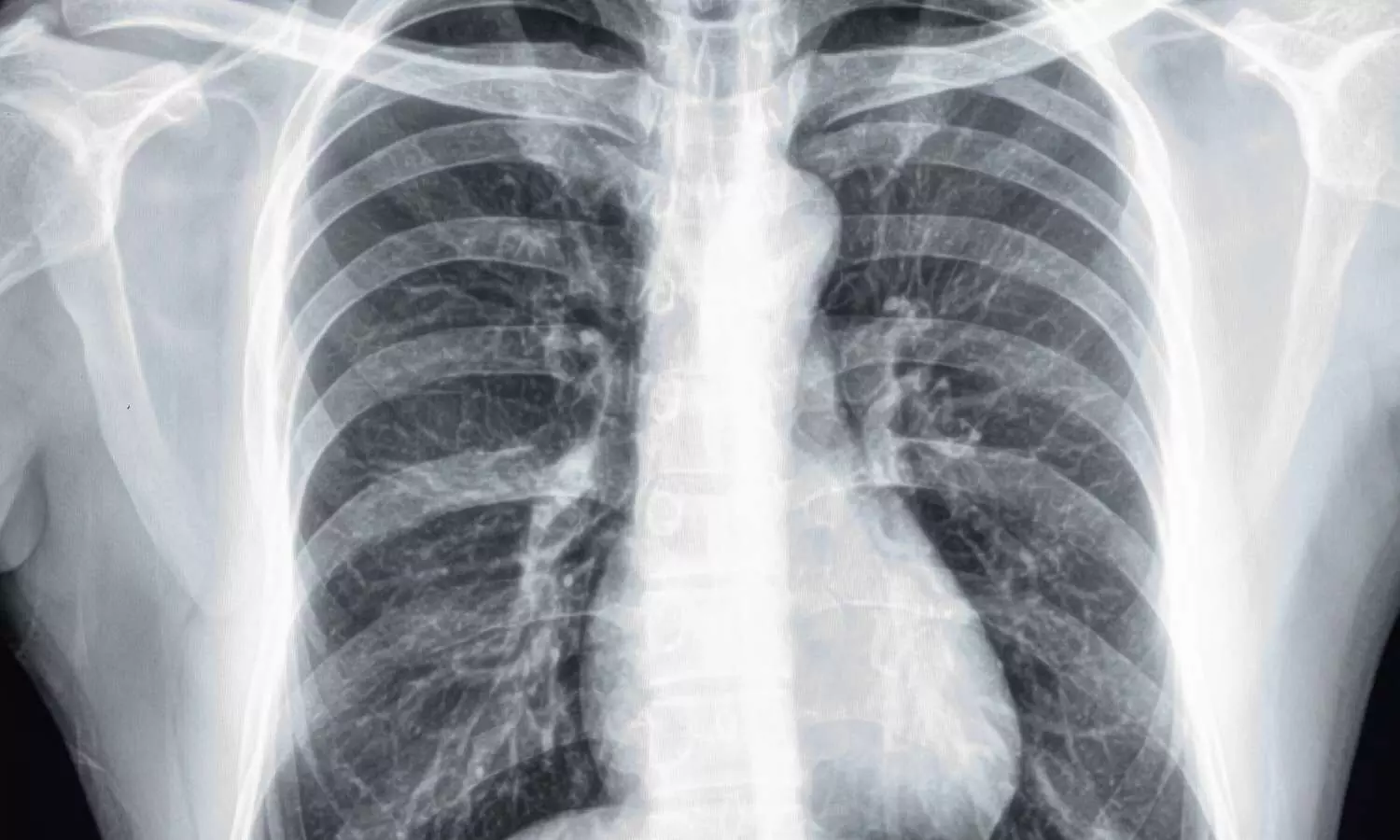


China: Researchers have developed a standardized chest CT scanning protocol that reduces radiation exposure in children by approximately 17% to 19% while maintaining diagnostic image quality. The optimized approach uses age-specific anatomical landmarks to define scan boundaries, minimizing unnecessary radiation exposure without compromising lung coverage. The findings suggest the protocol could improve consistency among radiologic technologists and provide a safer approach to pediatric chest CT imaging.
The findings were published in Clinical Radiology by Fengfeng Yang from the Department of Radiology, The Second Hospital of Tianjin Medical University, Tianjin, China, and colleagues.
Although chest CT is an important diagnostic tool in children, minimizing radiation exposure remains a priority because children are more sensitive to ionizing radiation than adults. Differences in patient positioning and diaphragm movement during breathing can make it difficult to standardize scan ranges, often resulting in unnecessary radiation exposure. To address this challenge, the researchers developed and validated an age-specific protocol that accurately defines the upper and lower scan boundaries while preserving complete lung visualization.
The study included 3,174 children aged 3 to 14 years who underwent unenhanced chest CT scans. Researchers divided the participants into two cohorts. The first cohort (1,894 children) was used to determine the optimal scan boundaries by analyzing lung anatomy, while the second cohort (1,280 children) validated the new protocol and compared it with conventional scanning methods.
Under the optimized protocol, the upper scan boundary was aligned with the first rib (0-mm offset), while the lower boundary was positioned 35 mm below the costophrenic angle for children aged 3–6 years and 40 mm below it for those aged 7–14 years. This standardized approach replaced the traditional technician-dependent lower boundary.
Key findings
- The optimized protocol reduced z-axis scan coverage by 4.7% in children aged 3–6 years and by 6.1% in those aged 7–14 years.
- The probability of missing lung tissue remained below 5%, indicating that diagnostic lung coverage was preserved.
- Among children aged 3–6 years, the protocol reduced the effective radiation dose by 19.2% and the dose-length product (DLP) by 17.7%.
- In children aged 7–14 years, the effective radiation dose and DLP were both reduced by 17.0%.
- The standardized protocol also reduced variability in scan positioning among radiologic technologists, improving consistency across examinations.
The researchers noted that the protocol maintained diagnostic accuracy while reducing radiation exposure and variability in scan positioning among radiologic technologists.
The researchers acknowledged the need for multi-center validation and suggested that AI-driven automation could further improve scan positioning, consistency, and clinical adoption.
They concluded that the standardized protocol achieves precise lung coverage while reducing radiation exposure by 17%–19%, offering a scalable and safer approach to pediatric chest CT imaging without compromising diagnostic quality.
Reference:
Yang, F., Wang, X., Cai, H., Li, H., Liu, H., & Zhao, Y. (2026). Optimizing Chest CT Scan Ranges in Pediatric Patients to Reduce Radiation Exposure. Clinical Radiology, 107420. https://doi.org/10.1016/j.crad.2026.107420

Next Story