Photon-Counting CT Improves Image Quality in Patients With Obesity: Study
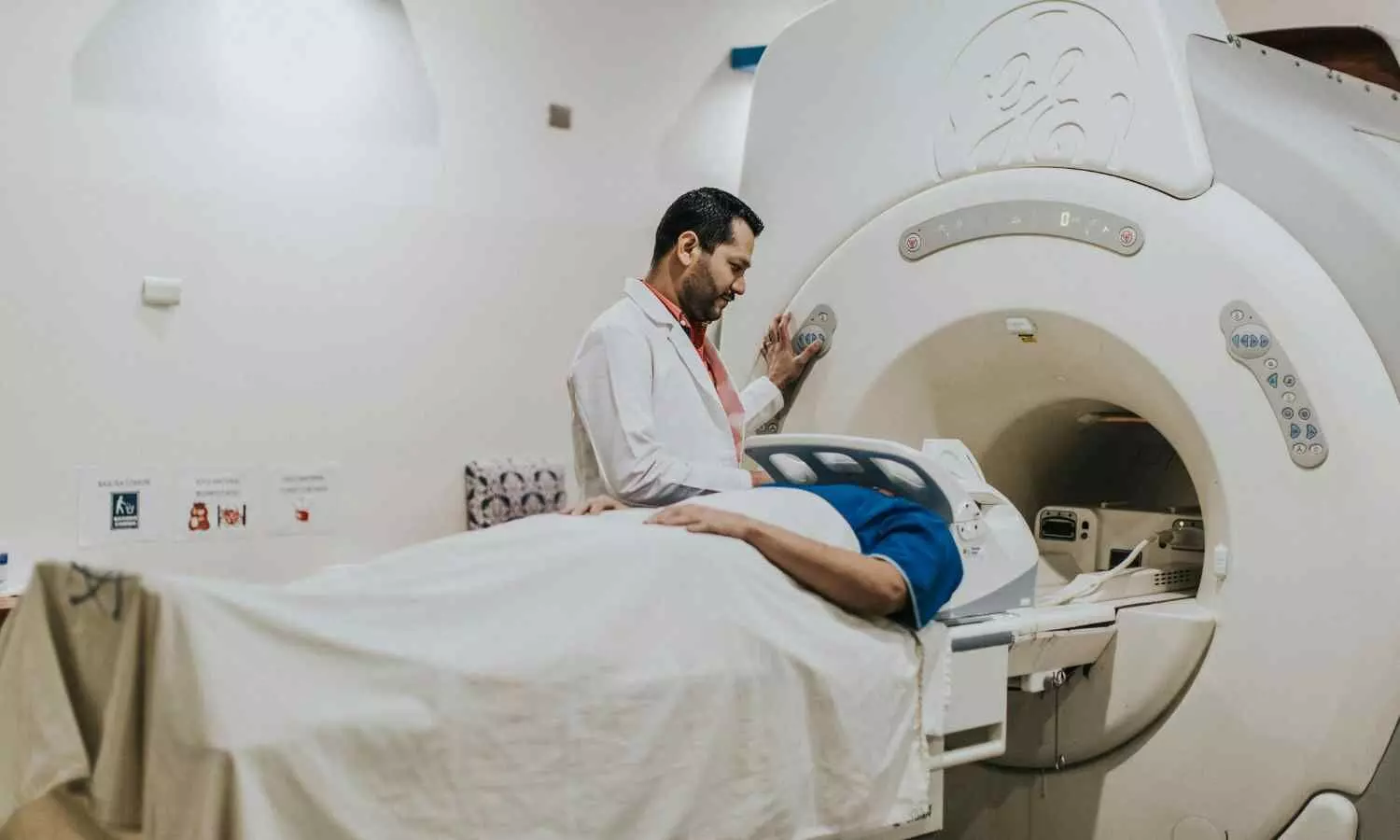


Photon-counting CT (PCCT) demonstrated superior quantitative and subjective image quality compared with conventional energy-integrating detector (EID) CT in patients with obesity, while delivering a lower radiation dose. Published in Radiology on October 20, the findings suggest that PCCT may improve diagnostic imaging in this population while reducing radiation exposure. The study was conducted by Jan H. and colleagues.
To compare radiation dose, image metrics, and subjective scores of readers between PCCT and EID CT in the same patients, a retrospective intraindividual study was done at a tertiary care center. The study consisted of 51 obese patients (median age 56 years; interquartile range, 51-66.5 years; 33 males) that underwent both thoracic and/or abdominal PCCT and EID CT scans from December 1, 2022, to January 31, 2025.
Objective measures of attenuation signal, image noise, and signal-to-noise ratio (SNR) were calculated for vascular, parenchymal, muscular, and subcutaneous adipose tissue. Subjective image parameters were assessed by two independent, blinded radiologists using a six-point Likert scale. Radiation dose parameters including CTDIvol, DLP, and effective dose were recorded and compared using paired parametric and non-parametric statistical tests.
Key findings:
- Qualitative and quantitative analyses in the 51 patient-matched datasets indicated consistently superior performance of PCCT compared with EID CT in all tissue beds.
- PCCT resulted in higher attenuation signal in vascular structures, parenchymal organs, and muscle and lower attenuation signal in subcutaneous fat (all P < 0.001), whereas the objective image noise was not significantly different between the two modalities (P = 0.09-0.84).
- Significant improvements in vascular SNR (ascending aorta mean: 19.65 ± 6.47 vs. 13.22 ± 4.83; P < 0.001) and parenchymal SNR (liver mean: 5.53 ± 1.69 vs. 4.71 ± 1.89; P = 0.02) with PCCT were noted.
- The superior quantitative SNR with PCCT was correlated with a higher body mass index in both vascular structures (r = 0.36, P < 0.001) and parenchymal organs (r = 0.51, P < 0.001).
- Both radiologists independently found PCCT to be superior in terms of image quality, image contrast, sharpness, and artifact burden (all P < 0.001).
- CTDIvol (median, 11.99 vs. 17.05 mGy; P < 0.001) and DLP (median, 526.25 vs. 709.32 mGy · cm; P < 0.001) were markedly lower with PCCT.
The results from the intraindividual comparison show that PCCT has better tissue signal, improved contrast-to-noise ratios, and superior image quality compared to EID CT in obese patients. It is important to note that the main findings of the paper reveal that PCCT accomplishes these diagnostic benefits with a reduction in radiation doses.
Reference
Hegmanns, J., Zensen, S., Rosok, D., Drews, M. A., Holtkamp, M., Li, Y., & Schaarschmidt, B. M. (2026). Intraindividual comparison of radiation dose and image quality: Photon-counting versus energy-integrating detector CT in obesity. Radiology, 321(1), e260573. https://doi.org/10.1148/radiol.260573