
Ablative Radiotherapy Shows Promise in Locally Advanced Pancreatic Cancer: JAMA
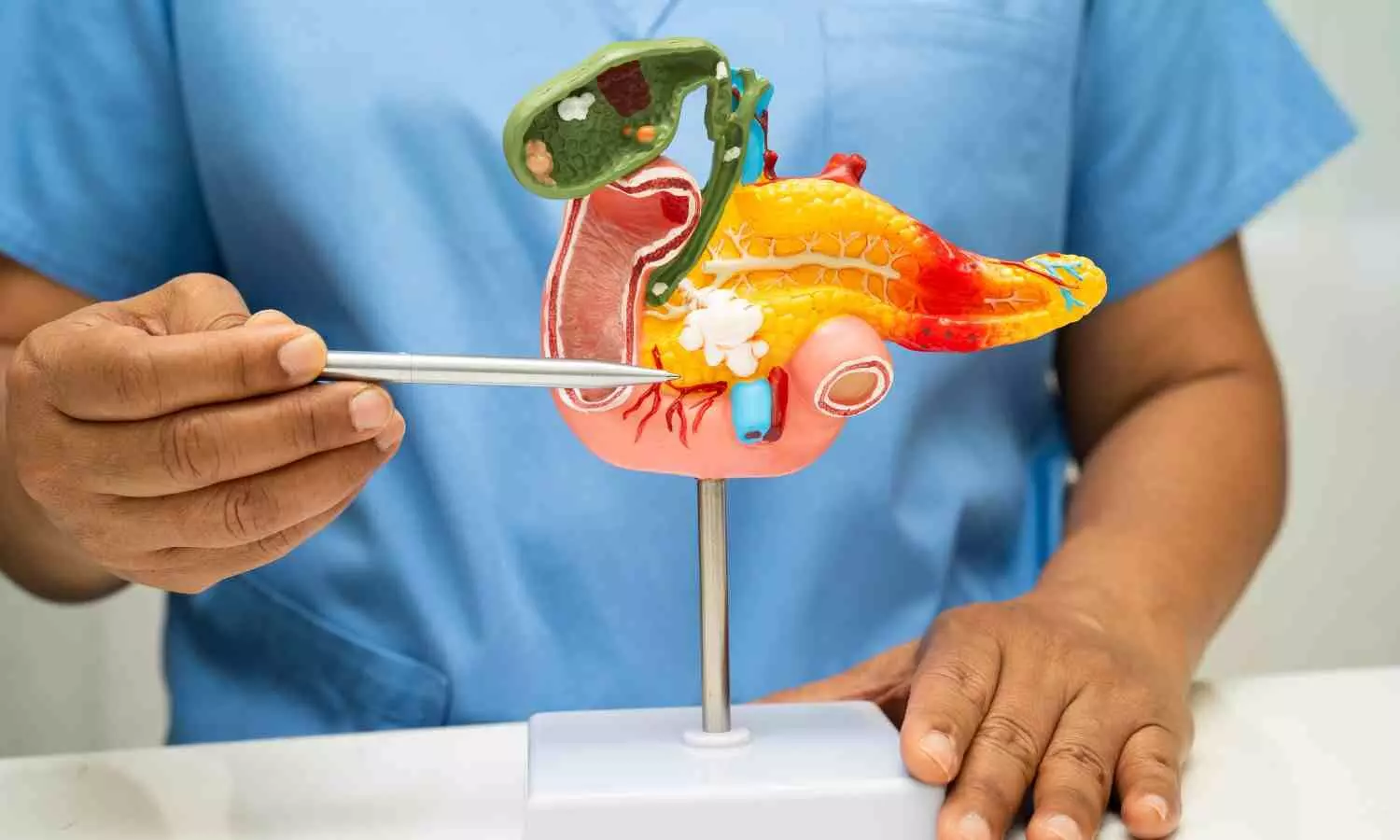


A new study found hypofractionated ablative radiotherapy (A-RT) to show overall survival in patients with locally advanced pancreatic cancer (LAPC) and extensive vascular encasement who remained unresectable after induction chemotherapy, whether or not patients ultimately underwent surgery. A-RT did not compromise surgical resectability or increase postoperative morbidity; among 48 patients, 27% underwent resection and there were no 90-day postoperative deaths. These findings published in the JAMA Surgery suggest A-RT may serve both as a bridge to surgery and an effective definitive treatment when resection is not possible
The single-arm, nonrandomized trial enrolled 48 patients between June 2018 and April 2024. All participants had biopsy-confirmed pancreatic adenocarcinoma with persistent arterial and venous involvement after at least 3 months of chemotherapy using either modified FOLFIRINOX or gemcitabine plus nab-paclitaxel. Nearly all patients (98%) had extensive vascular encasement, making surgical removal of the tumor highly challenging.
Following chemotherapy, patients received hypofractionated A-RT with capecitabine before being reassessed for surgery. Of the 48 participants, 17 underwent exploratory laparoscopy and 13 patients (27%) ultimately received curative-intent surgical resection. Most of these procedures were pancreaticoduodenectomies, while two patients underwent distal pancreatectomy.
The overall two-year survival rate following A-RT was 38%. Patients who successfully underwent surgery achieved a two-year overall survival rate of 54%, while those who remained unresectable still recorded a notable survival rate of 31%, suggesting that A-RT may provide meaningful disease control even when surgery is not feasible.
At two years, local progression occurred in just 11% of unresected patients and 15% of those who underwent surgery. Although distant metastasis remained the primary challenge, affecting 73% of patients within two years, investigators noted that local disease control was substantially improved.
There were no deaths within 90 days after surgery, and treatment-related complications were considered acceptable. Twelve patients experienced late grade III or higher radiation-related adverse events, with ascites being the most common, while acute severe toxicities occurred in 12.5% of participants. Overall, these findings support A-RT as a potential treatment strategy for LAPC patients with extensive vascular involvement, particularly when standard chemotherapy alone is insufficient to achieve resectability.
Reference:
Reyngold, M., Wei, A. C., O’Reilly, E. M., D’Angelica, M. I., Kingham, T. P., Soares, K. C., Varghese, A. M., White, C., Zinovoy, M., Romesser, P. B., Wu, A., Hajj, C., Cuaron, J. J., Khalil, D. N., Balogun, F., Park, W., Yu, K. H., Balachandran, V. P., Drebin, J. A., … Crane, C. H. (2026). Maximal ablative irradiation because of encasement for patients with locally advanced pancreatic cancer: A nonrandomized clinical trial: A nonrandomized clinical trial. JAMA Surgery. https://doi.org/10.1001/jamasurg.2026.2988

