
Adjunctive drug-coated balloon Shows Short-Term Benefit After Bailout Stenting in femoropopliteal artery Lesions: Study
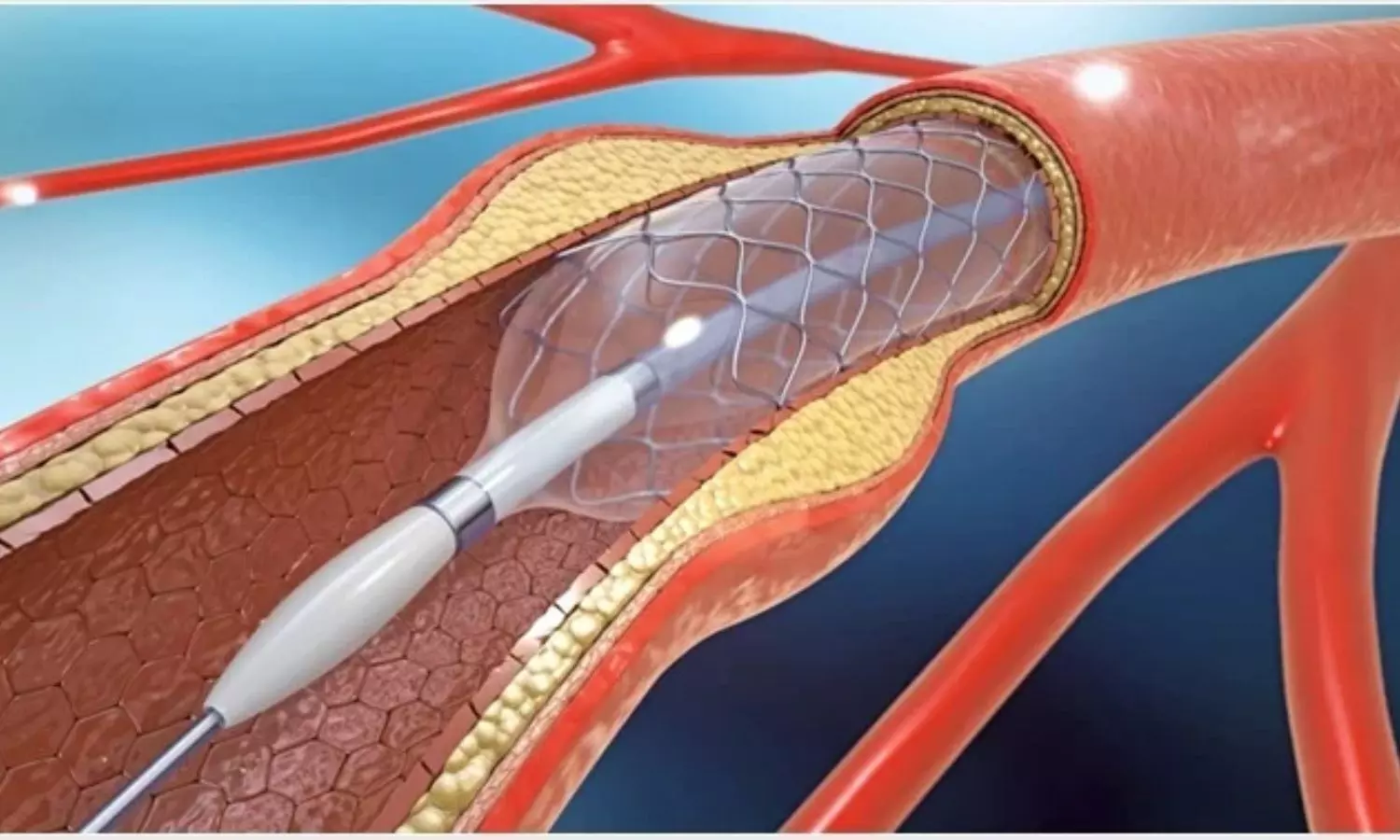


A new study published in the BMC Surgery that the addition of a drug-coated balloon (DCB) was associated with lower clinically driven target lesion revascularization (CD-TLR) at 1 year, in patients undergoing bailout stenting for femoropopliteal artery (FPA) lesions. However, this benefit was not sustained at 2 years, and findings remain hypothesis-generating due to the retrospective design and small sample size, with no clear increase in short-term mortality observed.
While bare metal stents (BMS) remain a common bailout solution when standard balloon angioplasty falls short, their long-term effectiveness is often compromised by in-stent restenosis (ISR) that frequently leads to additional procedures. Thus, this research examined whether adding DCBs could improve patient outcomes when used along with bailout stenting.
The study analyzed 148 consecutive patients treated between January 2019 and September 2023 for FPA lesions requiring bailout stenting after plain old balloon angioplasty (POBA). Of these, 118 patients received POBA followed by BMS alone, while 30 patients were treated with POBA and DCB prior to BMS placement.
The patients who received the combination of DCB and BMS showed significantly higher freedom from CD-TLR which indicates whether additional procedures were needed. Only two patients in the DCB group required reintervention, when compared to 29 in the BMS-only group, a difference that reached statistical significance.
When researchers adjusted for baseline differences using inverse probability of treatment weighting (IPTW), the reduction in reintervention risk did not reach statistical significance. Also, a multivariable Cox regression analysis suggested a meaningful association, which indicated that DCB use may reduce the risk of repeat procedures by up to 80%.
Despite these promising early findings, the benefits did not appear to last. By the two-year follow-up, there was no significant difference in CD-TLR rates between the two groups. Also, no differences were observed in overall survival or other secondary outcomes, which showed that while DCBs may delay restenosis, they do not necessarily alter long-term disease progression.
This study found no evidence of increased short-term mortality associated with DCB use, though the findings caution that the sample size was too small to draw firm conclusions about safety.
The retrospective design and relatively small cohort of this study limit its ability to establish definitive clinical recommendations. Larger, randomized trials are required to confirm whether DCBs can provide durable benefits in this setting.
Source:
Wu, H., Ning, J., Wu, R., Wang, M., Jiang, Y., Wu, W., Hu, Z., Yao, C., Chang, G., & Li, Z. (2026). Outcomes of drug-coated balloon combined with stenting vs. stenting alone in the treatment of femoropopliteal artery lesions requiring bailout stenting. BMC Surgery. https://doi.org/10.1186/s12893-026-03788-1

