
AI model predicts blood loss in liposuction, reports Plastic and Reconstructive Surgery: Study
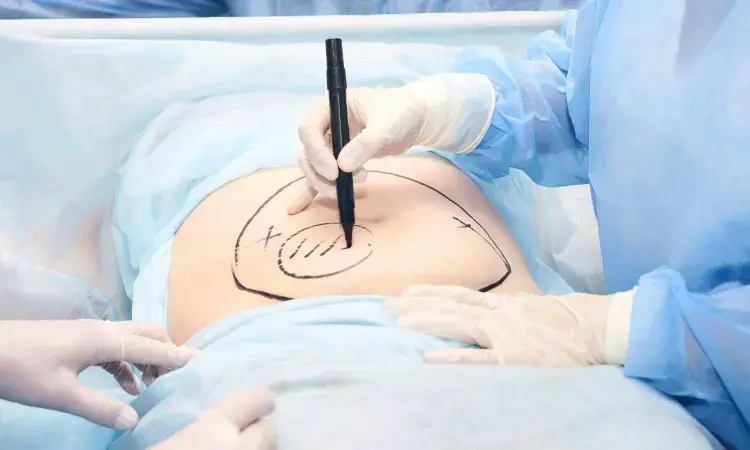


A newly developed artificial intelligence (AI) model is highly accurate in predicting blood loss in patients undergoing high-volume liposuction, reports a study in the January issue of Plastic and Reconstructive Surgery®, the official medical journal of the American Society of Plastic Surgeons (ASPS). The journal is published in the Lippincott portfolio by Wolters Kluwer.
The development of an AI model to predict blood loss in liposuction is a “groundbreaking advancement” with the potential to improve patient safety and surgical outcomes, according to the new research, led by Mauricio E. Perez Pachon, MD, of Mayo Clinic, Rochester, Minn., and Jose T. Santaella, MD, of CIMA Clinic-Loja, Ecuador. "By leveraging the power of AI-driven predictive models, surgeons can tailor their interventions to each patient's unique needs, ensuring optimal outcomes and minimizing the risk of complications such as excessive blood loss, the researchers write.
Using AI to help predict blood loss during liposuction
Liposuction is the most frequent cosmetic surgery procedure worldwide, performed in more than 2.3 million patients per year. Although liposuction is generally safe, excessive blood loss is a potentially serious complication, especially when higher volumes of fat are removed. AI-based tools have been developed to prevent blood loss in various medical specialties and surgical procedures, such as spinal, orthopedic, and trauma surgery.
Drs. Perez Pachon and Santaella and colleagues used machine learning technologies to analyze data from 721 patients undergoing large-volume liposuction, with a total volume of over 4,000 milliliters (four liters) of fat and fluid removed. All procedures were carried out at two clinics, one in Colombia and one in Ecuador, following identical liposuction protocols.
Data from a random sample of 621 patients were used to develop a model for predicting estimated blood loss, incorporating a wide range of demographic, clinical, and surgical data. The researchers then tested their model's performance in predicting the volume of blood loss in the remaining 100 patients.
With 94% accuracy, model may help make liposuction safer
The results showed "excellent agreement" between the predicted and estimated blood loss volumes, with a standard deviation (variation around the average) of 26 milliliters. The maximum difference between predicted and actual blood loss was about 188 mL, while the minimum difference was just 0.22 mL.
Overall, the AI tool was 94% accurate in predicting blood loss. "Such accuracy reinforces the model's potential as a decision-support tool in body contouring procedures, where anticipating intraoperative blood loss is crucial for patient safety and operative planning," the researchers write. "[S]urgeons can use the predicted blood loss estimates to make informed decisions about perioperative management, such as the need for blood transfusions, fluid management, and other critical care measures."
"This proactive approach can significantly reduce the incidence of adverse events, improve recovery times, and contribute to better patient education and informed consent processes," Drs. Perez Pachon and Santaella conclude.
The researchers plan additional studies to refine their AI model, including further training with data from surgeons worldwide. Dr Perez Pachon comments: "We believe that future research into AI technology has limitless potential to enhance patient safety, and we look forward to continued development in this area."
Reference:
Perez Pachon, Mauricio E. MD1,2; Santaella, Jose T. MD3,4; Oñate, Carlos MD5,6; Oñate, Daniel MD5,6; De Freitas, Jonathan MD7; Borras Osorio, Mariana MD1,6; Hoyos, Alfredo E. MD1,6. Artificial Intelligence–Driven Blood Loss Prediction in Large-Volume Liposuction: Enhancing Precision and Patient Safety. Plastic and Reconstructive Surgery 157(1):p 63e-70e, January 2026. | DOI: 10.1097/PRS.0000000000012240
