AI-Powered Wound Image Analysis May Enable Earlier Detection of Surgical Site Infections: JAMA
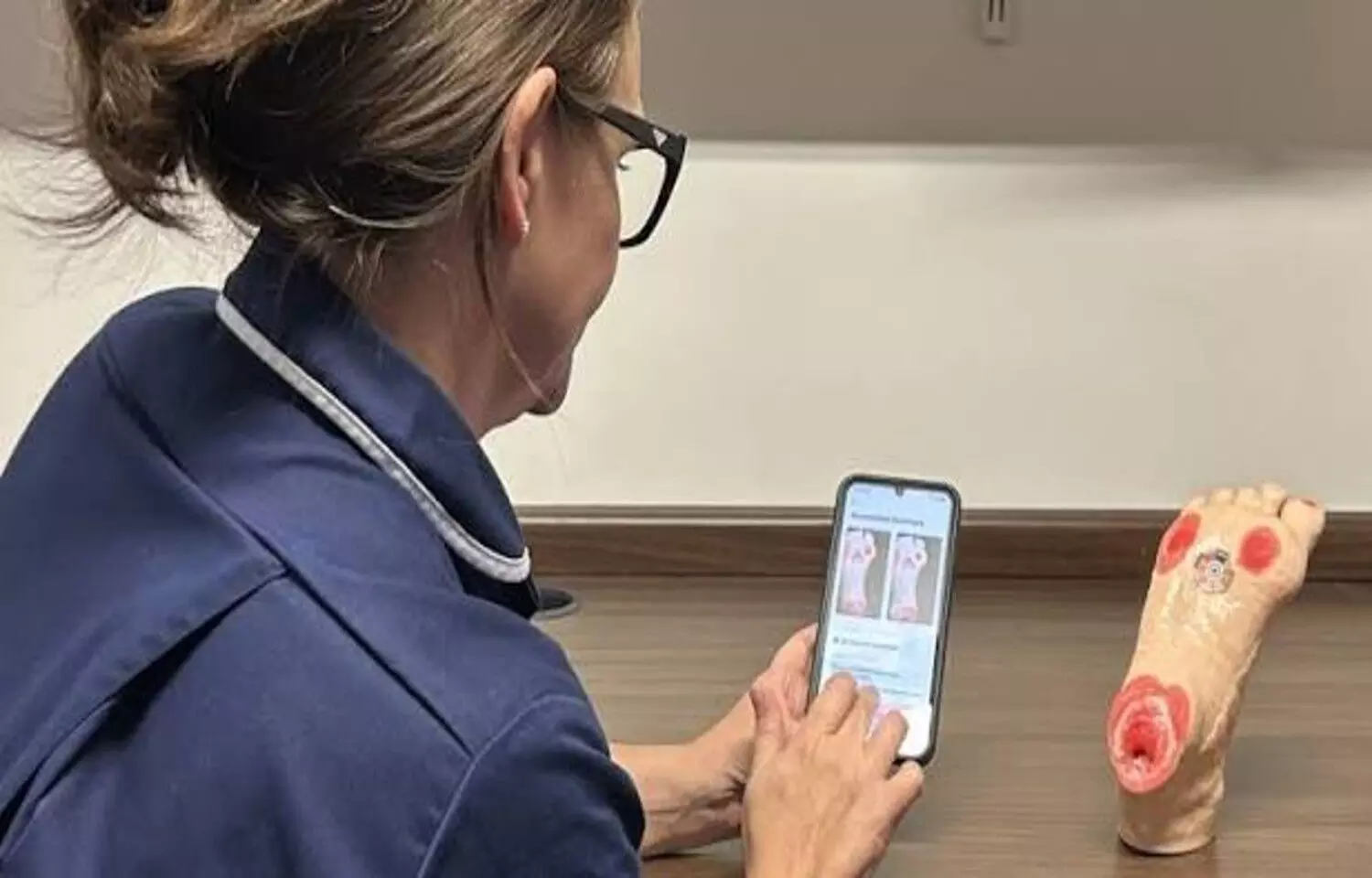


Researchers have found in a new study a validated deep learning model accurately detected surgical site infections (SSIs) from wound images. This highlights the potential of automated image analysis to support scalable telemedicine-based postoperative monitoring and earlier triage of patients at risk for infection.
Surgical site infections (SSIs) are common postoperative complications, often detected after patients leave the hospital, especially in times of modern fast-track recovery protocols. At-home monitoring through telemedicine can shorten delay to diagnosis. Manual wound image review in telemedicine is time-consuming, shows interobserver variability, and may miss early signs.
A study was done to develop and externally validate a deep learning model to detect wounds suggestive of SSIs from wound photographs. This diagnostic/prognostic study involved the development and evaluation of an artificial intelligence model. Surgical wound images from patients in existing databases from multiple specialties were used for model development and internal testing. Prospectively collected images from multiple specialties in a large academic center were used for external validation. Each image was labeled by multiple physician as either suggestive or nonsuggestive for SSI. A convolutional neural network based on InceptionV3 was developed using transfer learning. The retrospective dataset was split into training (70%), validation (15%), and internal test (15%) sets.
Model performance was evaluated by area under the receiver operating characteristic (AUC) curve, calibration curves, and clinical utility analyses, both in the internal test set and the independent external validation dataset. Gradient-weighted class activation mapping heat map visualizations were added to show focus on wound regions in an image.
The model was trained on 4978 wound images and externally validated on 407 images from 95 patients. In the internal validation set, the model showed strong discrimination with an AUC of 0.91 (95% CI, 0.88-0.93), with good calibration. In the external validation set, the model achieved an AUC of 0.82 (0.75-0.90). Decision curve analyses showed a net benefit of the model.
This study developed and validated a deep learning model for detecting SSIs from wound images, showing high potential for automated triage of cases if clinically integrated.
Reference:
Bontekoning N, Huisman H, Segura Cabrera PJ, et al. Detecting Incisional Surgical Site Infections on Wound Images Through Deep Learning. JAMA Surg. Published online August 26, 2026. doi:10.1001/jamasurg.2026.3738
Keywords:
Bontekoning N, Huisman H, Segura Cabrera PJ, JAMA Surgery, AI-Powered, Wound, Image, Analysis, Enable, Earlier, Detection, Surgical Site Infections, JAMA