Clip-Through-Mesh Stent Anchoring Shows 100 Percent Success in Post-Oesophagectomy Leaks, Suggests Study
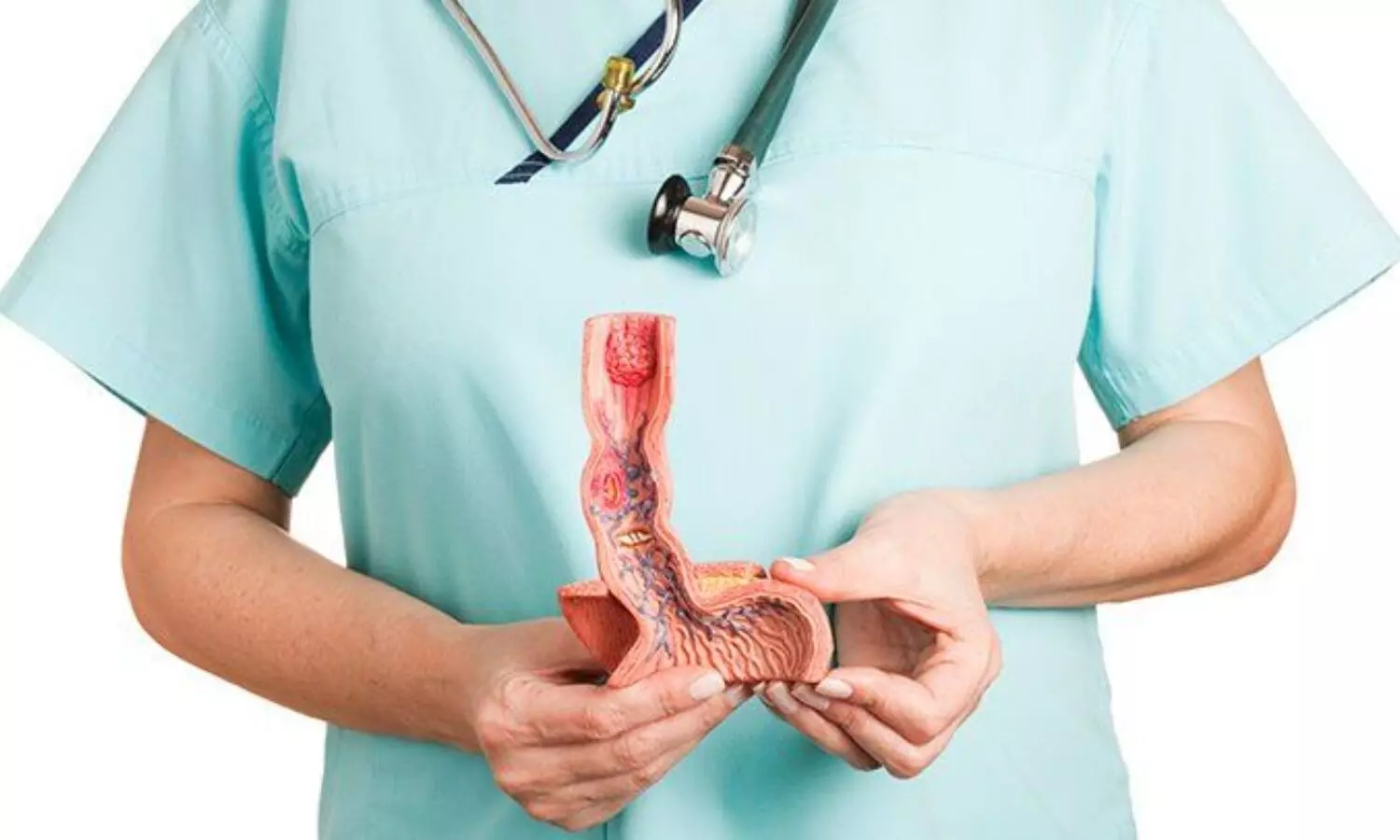


A recent retrospective study published in the Journal of Minimal Access Surgery in August 2026 highlights a novel clip-through-mesh stent anchoring technique as a safe and highly effective first-line treatment for post-oesophagectomy anastomotic leaks. Evaluated in ten patients, this endoscopic approach achieved a 100% technical success rate, an 80% clinical healing rate, and zero stent migration.
Although fully covered self-expandable metal stents offer a minimally invasive alternative to high-morbidity surgical re-exploration for post-oesophagectomy anastomotic leaks, stent migration rates of 10% to 30% and scarce real-world data from resource-limited settings create a major clinical gap. To address this issue, Dr. Shaheen Nazir and colleagues from the Department of Gastroenterology at Sher-i-Kashmir Institute of Medical Sciences in Srinagar, India, evaluated the technical success, clinical outcomes, and safety of stenting using a novel clip-through-mesh fixation technique.
Therefore, the retrospective study evaluated 10 adult patients with post-oesophagectomy leaks treated between December 2024 and December 2025 using through-the-scope clip-anchored stents, excluding minor tears, complete dehiscence, or primary endoscopic vacuum-assisted closure. Researchers assessed primary outcomes of technical success and clinical healing, alongside secondary endpoints including stent migration, dwell time, oral diet resumption, and mortality.
Key Clinical Findings of the Study Include:
- High Clinical Efficacy: The study achieved a 100% technical success rate and an 80% clinical healing rate (8/10 patients) in a median duration of 6 weeks.
- Zero Stent Migration: Investigators reported zero cases (0%) of stent displacement or major adverse events during a median dwell time of 6 weeks.
- Mortality Drivers: Authors observed that mortality (20%, 2/10 patients) occurred exclusively in individuals with defects exceeding 4 cm presenting with severe septic shock.
- Complete Diet Restoration: The cohort achieved oral diet resumption in all surviving patients (100%), with progressive diet tolerance and symptom relief.
- Managing Complex Leaks: Researchers effectively treated complex cases, including a median defect size of 3.25 cm, 50% multifocal leaks, and 90% associated collections.
The results suggest that fully covered self-expandable metal stent placement with a novel clip-through-mesh fixation technique provides a safe, reproducible, and effective primary therapy for post-oesophagectomy leaks, achieving an 80% clinical healing rate. Furthermore, patient survival depends primarily on baseline physiological stability, making early diagnosis, percutaneous collection drainage, targeted antibiotics, and enteral nutrition essential determinants of success.
Thus, the study concludes clinicians managing post-oesophagectomy leaks may consider adopting this simple clip-through-mesh stent fixation technique in routine practice alongside early imaging, prompt fluid drainage, and follow-up endoscopy at 4 to 6 weeks to optimize healing while preventing stent displacement.
While the study is limited by its retrospective design, small cohort of 10 patients, and single-center setting without a direct comparative arm, these findings highlight the need for prospective, multi-center studies to refine patient selection and standardize endoscopic management algorithms.
Reference
Nazir S, Wani UA, Bhat MY, Sodi JS, Khan MA, Guru FA, et al. Endoscopic management of post-oesophagectomy anastomotic leaks using fully covered self-expandable metal stents with a novel clip-through-mesh fixation technique: A single-center cohort study. J Min Access Surg. 2026.