
One in Five High-Risk Malignant Colorectal Polyps Show Residual Cancer: Study
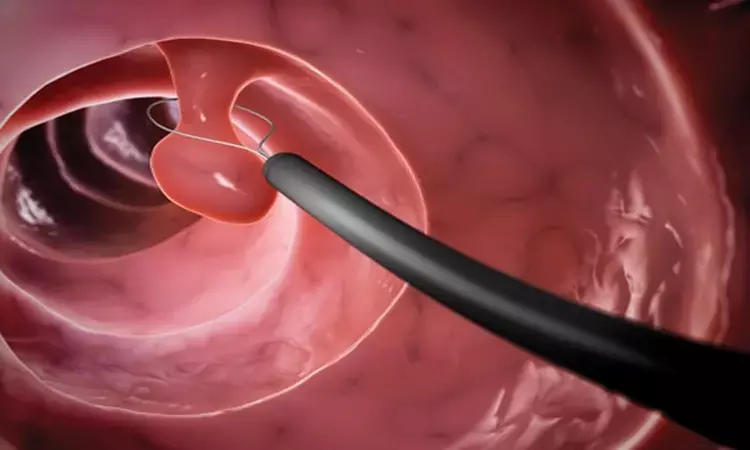


USA: A new study from Memorial Sloan Kettering Cancer Center indicates that carefully selected patients with malignant colorectal polyps carrying high-risk features may be managed safely without immediate surgery, while preserving organ function and quality of life.
The findings were published in JCO Oncology Advances by Thikhamporn Tawantanakorn, Department of Surgery, Memorial Sloan Kettering Cancer Center, New York, and colleagues.
Current US guidelines generally recommend formal colorectal resection when malignant polyps show high-risk pathological features, such as positive or unclear margins, lymphovascular or perineural invasion, poor differentiation, or tumor budding. While this approach aims to minimise the risk of residual cancer, surgery—especially for rectal lesions—can result in significant morbidity and long-term functional impairment. As a result, some patients opt for nonoperative surveillance, although evidence supporting this strategy has been limited.
To address this gap, researchers conducted a single-center cohort study including 336 patients treated between 2015 and 2022. All patients had undergone endoscopic removal of a malignant colorectal polyp in the colon or rectum and had at least one high-risk feature. Following polypectomy, 208 patients (62%) underwent immediate surgery, while 128 patients (38%) were managed nonoperatively with close surveillance. A minority of patients in the nonoperative group also received systemic chemotherapy.
Key Findings:
- Residual disease was identified in 19% of patients overall, either at the time of surgery or during follow-up surveillance.
- Among patients who underwent immediate surgery, 25% had residual cancer, including involvement of the bowel wall and locoregional lymph nodes.
- Postoperative complications occurred in 12% of surgically treated patients, with only a small proportion experiencing severe complications.
- In the nonoperative surveillance group, 9% of patients developed recurrence during follow-up, affecting the bowel wall or regional lymph nodes and detected through structured monitoring.
- All recurrences in the nonoperative group were successfully managed with salvage surgery or chemoradiotherapy, indicating that delayed intervention did not adversely affect oncologic outcomes.
- Distant metastases were uncommon, occurring in only 2% of patients across both treatment strategies.
- Among patients with rectal malignant polyps managed nonoperatively, rectal preservation was achieved in 94% of cases, and sphincter preservation exceeded 90% for tumors located within 5 cm of the anal verge.
The authors conclude that although the risk of residual disease after malignant polypectomy with high-risk features remains considerable, nonoperative management can be a reasonable option for selected patients who prioritise organ preservation. They emphasise the importance of informed patient counselling, rigorous surveillance, and access to effective salvage treatments when adopting a nonoperative approach.
Reference:
DOI: 10.1200/OA-25-00082

Next Story