
Postoperative Radiotherapy Significantly Reduces Keloid Recurrence Compared to Surgery Alone: Study
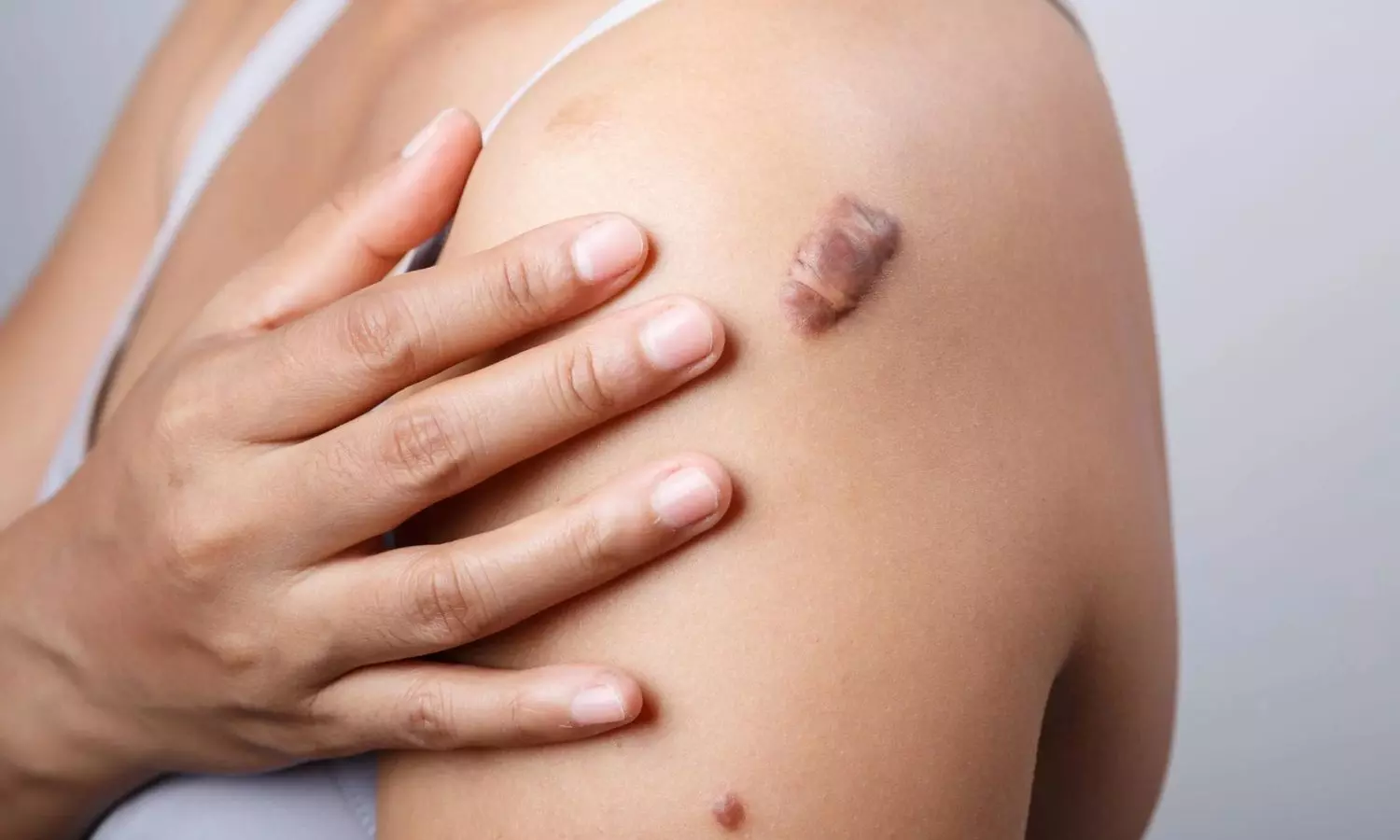


A new study published in the journal of BMC Surgery revealed postoperative radiotherapy, alone or with drug injections, greatly lowers keloid recurrence when compared to surgery alone, and is especially recommended for elderly patients.
Keloids are characterized by overgrowth of scar tissue extending beyond the original wound site, and are often a source of discomfort and cosmetic concern. With recurrence being a major challenge in treatment, this study provides valuable evidence to refine the existing approach and guide patients toward more reliable long-term solutions.
This retrospective observational study analyzed data from 121 patients who had undergone surgical removal of keloids. These patients were divided into 3 groups as surgery followed by radiotherapy (Group A), surgery followed by radiotherapy plus pharmacological injections (Group B), and surgery alone (Group C).
The Group A, which received surgery combined with radiotherapy, showed the highest efficacy at 93.88%. Group B, treated with surgery, radiotherapy, and pharmacological injections, followed with an efficacy of 87.04%. But, Group C patients treated with surgery alone, demonstrated a much lower efficacy rate of 55.56%.
While surgery remains as a cornerstone in keloid management, its effectiveness is markedly improved when paired with radiotherapy. The addition of pharmacological injections provided benefit but did not surpass the efficacy of radiotherapy alone.
The study also identified age and treatment modality as significant prognostic factors influencing recurrence. Younger patients did not show as favorable results when compared to older patients, suggesting that age-related biological differences may impact healing and recurrence rates.
This research emphasized the importance of early and proactive intervention, particularly in elderly patients, where radiotherapy is an adjunct to surgery demonstrated strong preventive value against keloid recurrence. These results reaffirm the pivotal role of radiotherapy in long-term keloid control. Sole reliance on surgery often leads to unacceptably high recurrence, while integrated approaches significantly improve patient outcomes.
Overall, these results suggest that post-surgical radiotherapy, or radiotherapy combined with injections, offers superior efficacy when compared to surgery alone. The findings may pave the way for developing more standardized treatment protocols, particularly in cases where recurrence risk is high.
Source:
Chen, S., Mu, X., Zhang, L., Liu, W., Han, Y., Li, H., Lai, W., & Huang, Z. (2025). Retrospective study comparing three approaches for keloids: surgery + radiotherapy, surgery + pharmacological injection, and surgery alone. BMC Surgery, 25(1), 386. https://doi.org/10.1186/s12893-025-03095-1

