Study Reveal Perineural Dexmedetomidine Dramatically Improves Analgesia After Laparoscopic Surgery
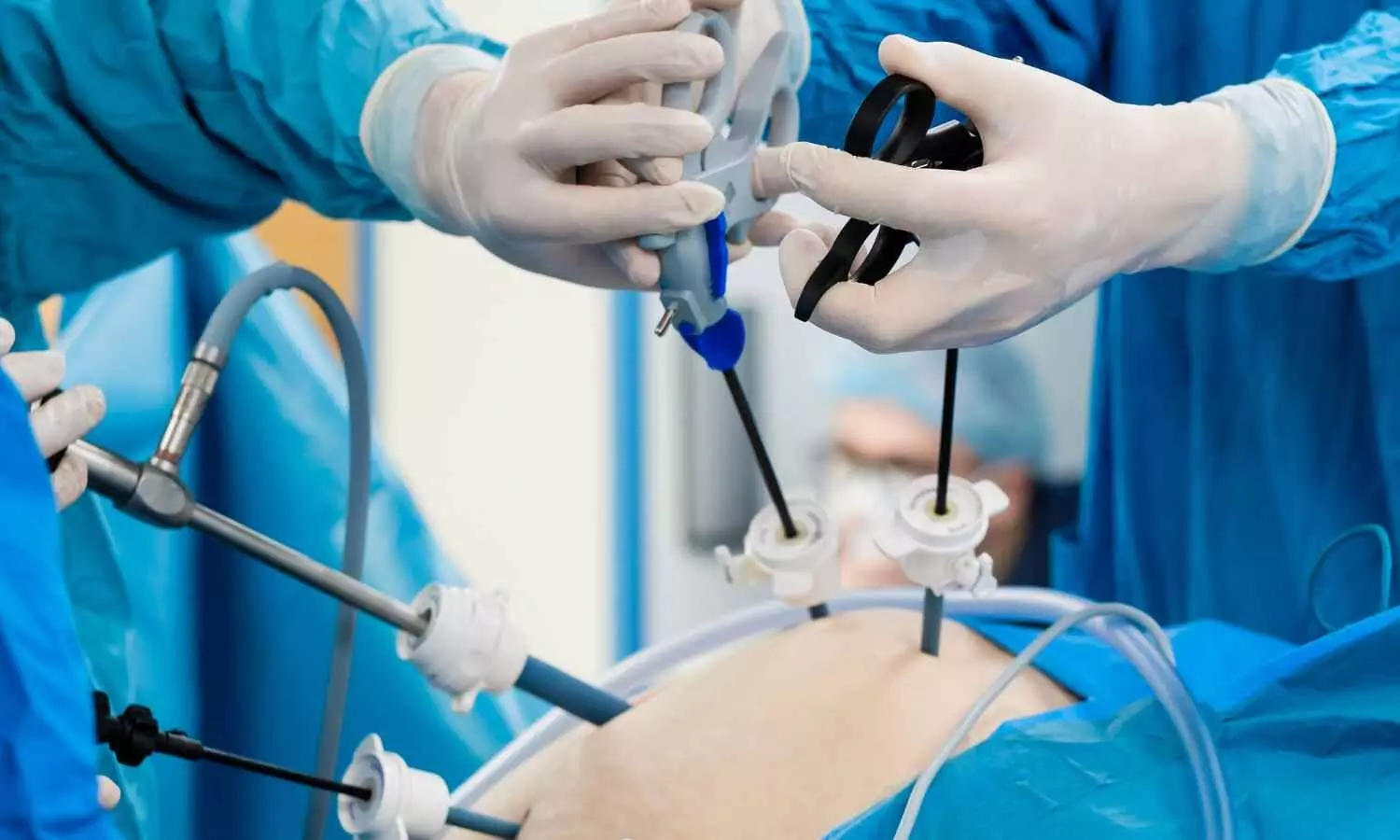


Does the route of dexmedetomidine administration make a difference when optimizing regional anesthesia for minimally invasive urologic surgery? Persistent pain is still a challenge after retroperitoneal laparoscopic procedures, despite advances in technique and perioperative care. This new randomized controlled trial in BMC Anesthesiology directly compares perineural versus intravenous dexmedetomidine as adjuncts to anterior quadratus lumborum block (QLB), aiming to determine the best strategy for postoperative analgesia.
Study Design: Head-to-Head Comparison of Administration Routes
The study enrolled 88 adult patients scheduled for retroperitoneal laparoscopic surgery, randomized into three groups:
Group R: Anterior QLB with ropivacaine alone.
Group RD: Anterior QLB with ropivacaine plus perineural dexmedetomidine (1 μg/kg).
Group RDiv: Anterior QLB with ropivacaine and intravenous dexmedetomidine (1 μg/kg).
The primary outcome was 48-hour postoperative sufentanil consumption. Secondary outcomes included pain scores (NRS), rescue analgesia use, hemodynamic effects, adverse events, and recovery quality (QoR-15).
Key Findings: Perineural Dexmedetomidine Delivers Superior Pain Relief
Opioid Consumption: Group RD (perineural Dex) had the lowest 48-hour sufentanil use—median 31.0 μg, compared to 40.1 μg (control) and 42.0 μg (IV Dex), with statistically significant differences.
Pain Scores: Group RD reported lower NRS pain scores at rest (12, 24h) and during movement (12h) versus both other groups.
Rescue Analgesia: Only 14% in Group RD required additional analgesia, versus 40% (control) and 34% (IV Dex), although this difference did not reach strict statistical significance after correction.
Recovery & Safety: All groups showed similar times to ambulation, flatus, and hospital stay. Perineural Dex slightly improved QoR-15 scores. Rates of adverse events (bradycardia, hypotension, nausea/vomiting) were low and similar across groups.
Clinical Implications: Practice-Changing Insights for Regional Anesthesia
This study demonstrates that perineural dexmedetomidine, not intravenous administration, enhances the efficacy of anterior QLB for retroperitoneal laparoscopic surgery—delivering better pain control and less opioid use, without added risk. For anesthesiologists managing postoperative pain in urologic laparoscopy, the findings advocate for the use of perineural dexmedetomidine as an adjunct to QLB.
Limitations and Future Directions
Limitations include the single-center design, relatively small sample size, and lack of stratification by type of surgery. The study was powered for opioid consumption, not rare adverse events, so larger studies are still needed to validate safety and broader recovery outcomes.
Conclusion
Perineural dexmedetomidine, when added to anterior QLB, provides superior postoperative analgesia compared to intravenous administration or block alone, reducing opioid requirements and improving pain scores after retroperitoneal laparoscopic surgery. These results support the adoption of perineural dexmedetomidine as a valuable tool in enhanced recovery pathways.
Key points
Perineural dexmedetomidine plus QLB reduces 48-hour opioid use more than IV dexmedetomidine or QLB alone.
Pain scores at key time points are significantly lower with perineural dexmedetomidine.
Rescue analgesia needs are lowest with perineural dexmedetomidine adjunct.
Safety profiles are similar across all dexmedetomidine strategies.
Intravenous dexmedetomidine does not confer the same analgesic benefit as perineural administration.
Citation:
Jiang Y, Zhang H, Shi C, Niu Y, Gao H, Meng Y, Xu Z, Zhang L, Yuan S, Ling Z, Zhao L. Perineural or intravenous administration of dexmedetomidine combined with anterior quadratus lumborum block for analgesia after retroperitoneal laparoscopic surgery: a prospective, randomized controlled trial. BMC Anesthesiology. 2026. https://doi.org/10.1186/s12871-026-04103-4