
Sublay Hernioplasty Reduces Wound Complications Despite Greater Operative Efficiency with Onlay Mesh Repair: RCT
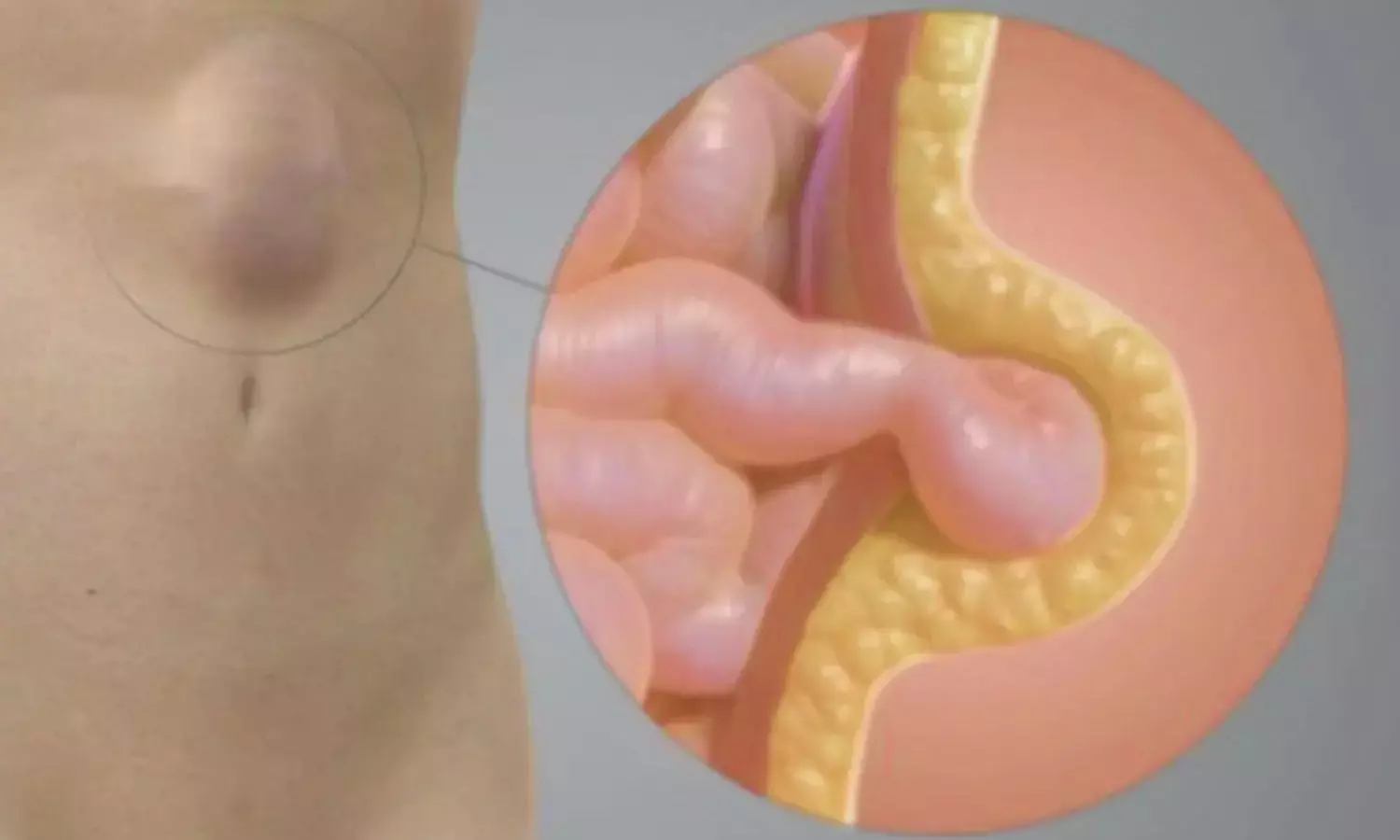


A recent randomized controlled trial published in the Indian Journal of Surgery in June 2026 highlights that while onlay mesh hernioplasty maximizes operative efficiency through shorter surgical times and reduced blood loss, the sublay approach delivers a vastly superior wound complication profile.
While mesh placement is the gold standard for incisional hernia repair, consensus on the optimal technique to minimize short-term complications remains lacking. To address this clinical gap, Hassan et al. prospectively compared the short-term clinical outcomes of elective onlay versus sublay mesh hernioplasty.
Therefore, the prospective RCT randomized 40 adult patients with incisional hernias (<8 cm) 1:1 to elective onlay or sublay mesh repair. Thirty-day clinical endpoints assessed operative time, length of hospital stay, postoperative pain, early recurrence, and surgical-site complications.
Key Clinical Findings of the Study Includes:
Operative Duration: Findings demonstrated a significantly shorter surgical time for the onlay group (1.90 ± 0.50 hours) compared to the sublay group (3.88 ± 0.79 hours; p < 0.001).
Blood Loss: Investigators noted that intraoperative blood loss was notably reduced in the onlay cohort (196.50 ± 87.86 cubic centimeters) versus the sublay cohort (309.00 ± 99.15 cubic centimeters; p = 0.001).
Hospital Stay: Analysts reported that patients receiving the onlay technique experienced a statistically shorter hospital stay (4.25 ± 1.22 days) than those in the sublay group (5.05 ± 1.05 days; p = 0.015).
Wound Complications: Observations revealed higher rates of seroma formation (35% vs. 15%) and surgical-site infection (SSI) (15% vs. 5%) in the onlay group, whereas the sublay group experienced isolated cases of intra-abdominal infection (5%; p = 0.050).
Postoperative Discomfort: Evaluations highlighted that 30% of the onlay patients experienced persistent abdominal discomfort at 30 days compared to 15% of sublay patients, with no early hernia recurrence observed in either arm.
The results suggest that while onlay mesh hernioplasty achieves superior operative efficiency—evidenced by a nearly two-hour reduction in surgical time and less blood loss—it is associated with a higher 35% incidence of seroma formation and more persistent abdominal discomfort. Conversely, the sublay technique provides a highly favorable profile for minimizing these superficial wound issues, despite a longer procedural duration.
Thus, the study concludes healthcare providers should weigh the clinical trade-offs between operative speed and postoperative recovery, potentially favoring the sublay approach when minimizing wound-related complications is the primary therapeutic goal.
While these short-term outcomes offer valuable procedural insights, the study's specific focus on a 30-day follow-up within a 40-patient cohort subtly indicates that broader, longer-term investigations may be beneficial to comprehensively map the complication profiles of both techniques over time.
Reference
Hassan, R. A., Albeir, M. A., Selim, M. M. S. E., Elshafie, A. M., & Taher, M. G. (2026). Onlay Versus Sublay Mesh Hernioplasty for Incisional Hernia: A Prospective Comparative Study (Short-Term Outcomes). Indian Journal of Surgery.
