
Telesurgery as reliable as standard robotic surgery for some urological procedures
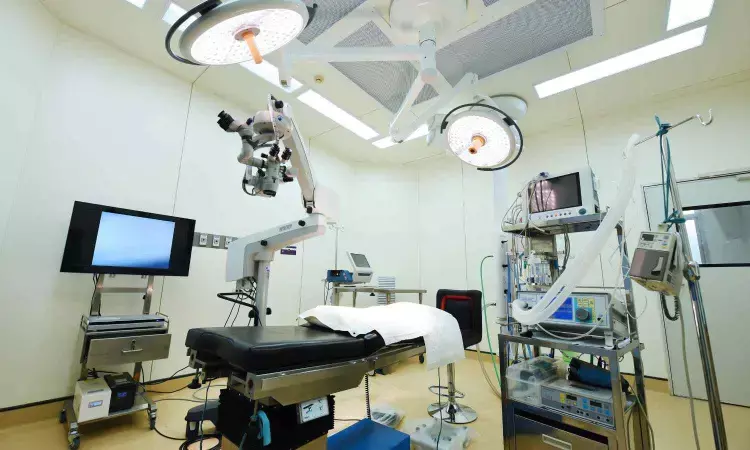


Telesurgery (operating on a patient remotely using a surgical robot via a secure telecommunication link) appears to be as reliable as standard robotic surgery (when the surgeon and patient are in the same room) for two common urological procedures, suggests a randomised controlled trial from China published by The BMJ today.
Telesurgery has evolved over more than three decades and has been explored in areas such as urology, orthopaedics, cardiovascular and military medicine, but robust evidence confirming its reliability remains scarce.
To address this, researchers in China set out to investigate whether the reliability of telesurgery is comparable (non-inferior) to standard local surgery in patients undergoing urological robotic operations.
They enrolled 72 patients diagnosed with a kidney tumour or prostate cancer at five hospitals in China from December 2023 to June 2024 who were fit to undergo keyhole surgery to remove the prostate gland (prostatectomy) or kidney tumor (partial nephrectomy).
Patients were randomly assigned to either telesurgery or standard local surgery. The median age of patients was 61 years in the telesurgery group and 65 years in the local surgery group. Both groups had similar demographic and disease related factors and underwent check-ups 4 and 6 weeks after surgery.
Each participating surgeon had completed more than 500 robot assisted keyhole procedures. Any malfunction of the surgical system was recorded before and during surgery and outcomes such as time in surgery, blood loss, complications, intensive care use, reoperation, rehospitalisation or death was also recorded.
Nine patients withdrew from the trial, leaving 32 (17 prostatectomies and 15 partial nephrectomies) who underwent telesurgery and 31 (16 prostatectomies and 15 partial nephrectomies) who underwent local surgery.
The results indicate that telesurgery was not inferior to local surgery (success probability difference 0.02) and the telesurgery system was stable with a distance from 1000 km up to 2800 km.
Other outcomes relating to the operative process, complications, early recovery, cancer outcome, and medical team workload, did not differ substantially between the two groups.
The researchers acknowledge that clinical adoption of telesurgery remains limited and say a comprehensive evaluation of its benefits must extend beyond technical feasibility to include long term clinical outcomes, health economic impacts, sociological implications, medical training requirements, and patient centered humanistic factors, none of which could be accomplished in this trial.
However, they note that results were broadly consistent after further sensitivity analyses, providing greater confidence in their conclusions.
And they conclude: “As the first randomised controlled trial in the field of telesurgery, this study establishes that its reliability is non-inferior to that of conventional local surgery. This finding provides a foundational evidence base for the design and implementation of larger scale clinical trials in the future.”
As telesurgery re-emerges, patient engagement and standardisation of evaluation are crucial, say UK researchers in a linked editorial.
They point to policies already in place for telesurgery, such as informed consent, system safety, and emergency protocols, but note that when asked recently, the public were willing to be part of trials but said “not yet” to fully autonomous surgery.
Nevertheless, they conclude: “Initiatives such as the Responsible AI UK ecosystem will ensure that public trust remains the highest priority as surgery becomes more digital and the role of telesurgery becomes more established across health systems and nations and even in space.”
Reference:
Wang Y, Xia D, Xu W, Rexiati M, Zhao W, Huang Q et al. Reliability of urological telesurgery compared with local surgery: multicentre randomised controlled trial BMJ 2026; 392 :e083588 doi:10.1136/bmj-2024-083588
