
Advanced Suction Technology Improves Safety in Bilateral Kidney Stone Procedures: Study
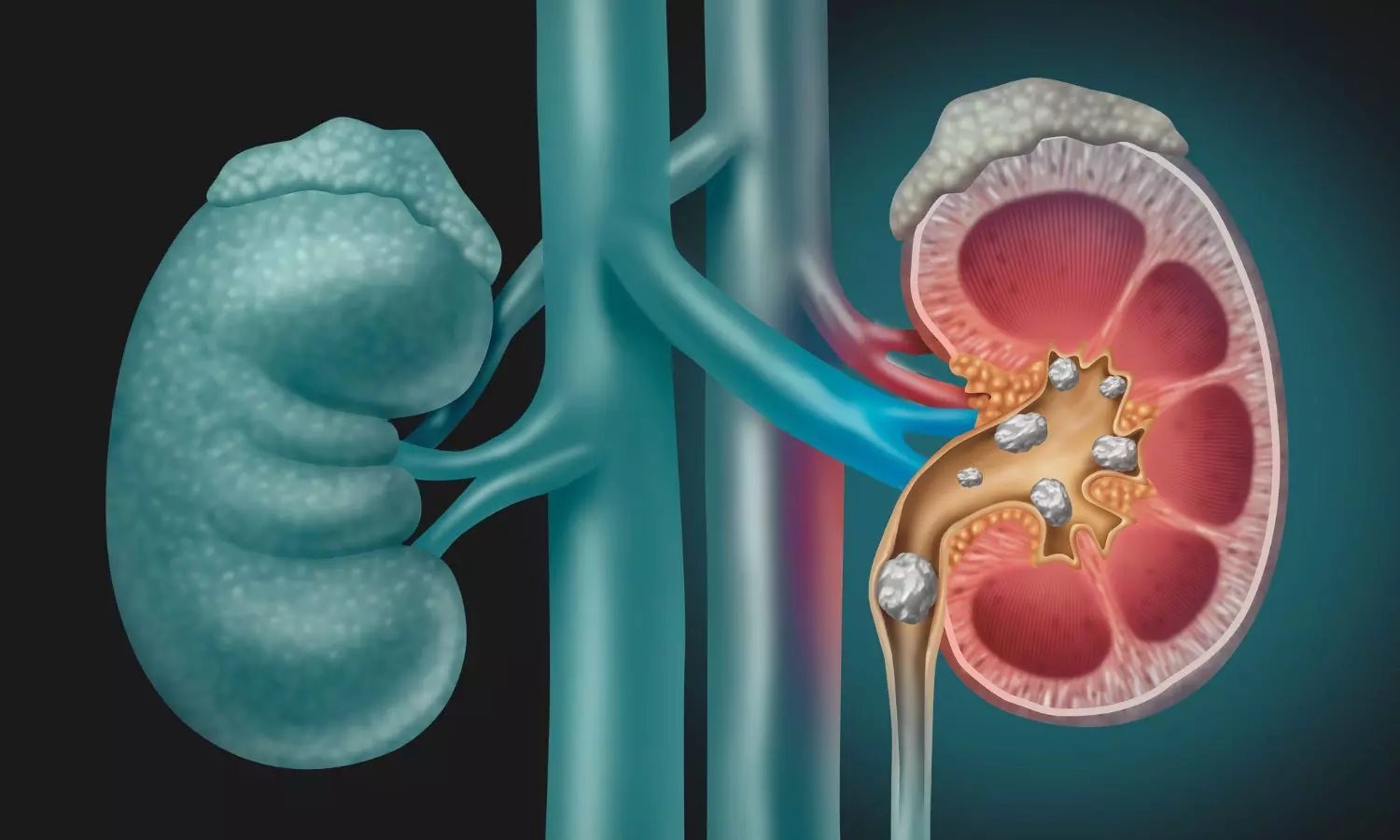


A recent prospective, multicenter global study confirms that employing advanced suction technology during simultaneous bilateral kidney stone procedures can achieve a 42.6% total stone-free rate with zero cases of sepsis, as published in the World Journal of Urology in February 2025.
Although clinicians treating bilateral kidney stone disease (KSD) face a choice between efficient single-session interventions and safer staged procedures. Since traditional bilateral approaches frequently result in high residual fragment and re-intervention rates, as noted by Castellani et al., Dr. Vineet Gauhar of the Tan Tock Seng Hospital, Singapore, and a global team investigated the use of flexible and navigable suction ureteral access sheaths (FANS) to optimize same-sitting bilateral retrograde intrarenal surgery (SSB-RIRS) outcomes.
Therefore, the prospective, multicenter global study enrolled 115 adult patients with bilateral kidney stones across 14 international centers between July 2023 and March 2024 to evaluate the efficacy of flexible ureteroscopy (FURS) combined with FANS technology. The researchers utilized a low-dose non-contrast computer tomography (NCCT) scan at 30 days post-operation to assess the primary endpoint of bilateral zero residual fragment (ZRF) status, while excluding patients with anomalous renal anatomy, those under 18 years of age, or those unable to complete the rigorous follow-up imaging protocol.
Key Clinical Findings of the Study Includes:
Superior Stone Clearance: The study achieved an overall bilateral zero residual fragment rate of 42.6% and a unilateral ZRF rate of 75.7%, with only two patients (1.7%) harboring residual fragments larger than 4 mm.
Excellent Safety Profile: Perioperative outcomes were marked by a total absence of sepsis and blood transfusions, with only a 1.7% incidence of minor Traxer-Thomas grade 1 ureteric injuries that were successfully managed with temporary stenting.
High Procedural Efficiency: Surgeons reported high utility scores for the suction technology, which functioned effectively in 98.2% of cases and maintained a median total operative time of just 70 minutes for treating both kidneys.
Time-Dependent Outcomes: Multivariate analysis demonstrated that longer total operative durations were significantly correlated with reduced odds of achieving a 100% bilateral stone-free status (odds ratio 0.978, p = 0.013).
Reduced Patient Morbidity: Postoperative pain scores remained low at a mean of 1.7 on a 10-point scale, and the majority of patients (75.7%) were successfully managed with standard bilateral ureteral stents as an exit strategy.
The results suggest that FANS technology serves as a significant clinical advancement for bilateral stone management, enabling surgeons to achieve bilateral ZRF with very low rates of complication and a minimal re-intervention rate of only 2.6%.
These findings imply that the surgical indications for managing bilateral renal stones in a single sitting can be safely expanded to include more patients when utilizing these advanced suction modalities.
Although the study is limited by the lack of a control group, future research comparing simultaneous bilateral percutaneous nephrolithotomy (PCNL) against this suction-assisted ureteroscopic approach could further optimize the management of high stone burdens.
Reference
Gauhar, V., Somani, B., Castellani, D., et al. (2025). The utility of flexible and navigable suction access sheath (FANS) in patients undergoing same session flexible ureteroscopy for bilateral renal calculi: a global prospective multicenter analysis by EAU endourology. World Journal of Urology, 43, 142.
