
Asymptomatic Kidney Stones Don't Raise Post-Surgery Risks After Radical Cystectomy: Study
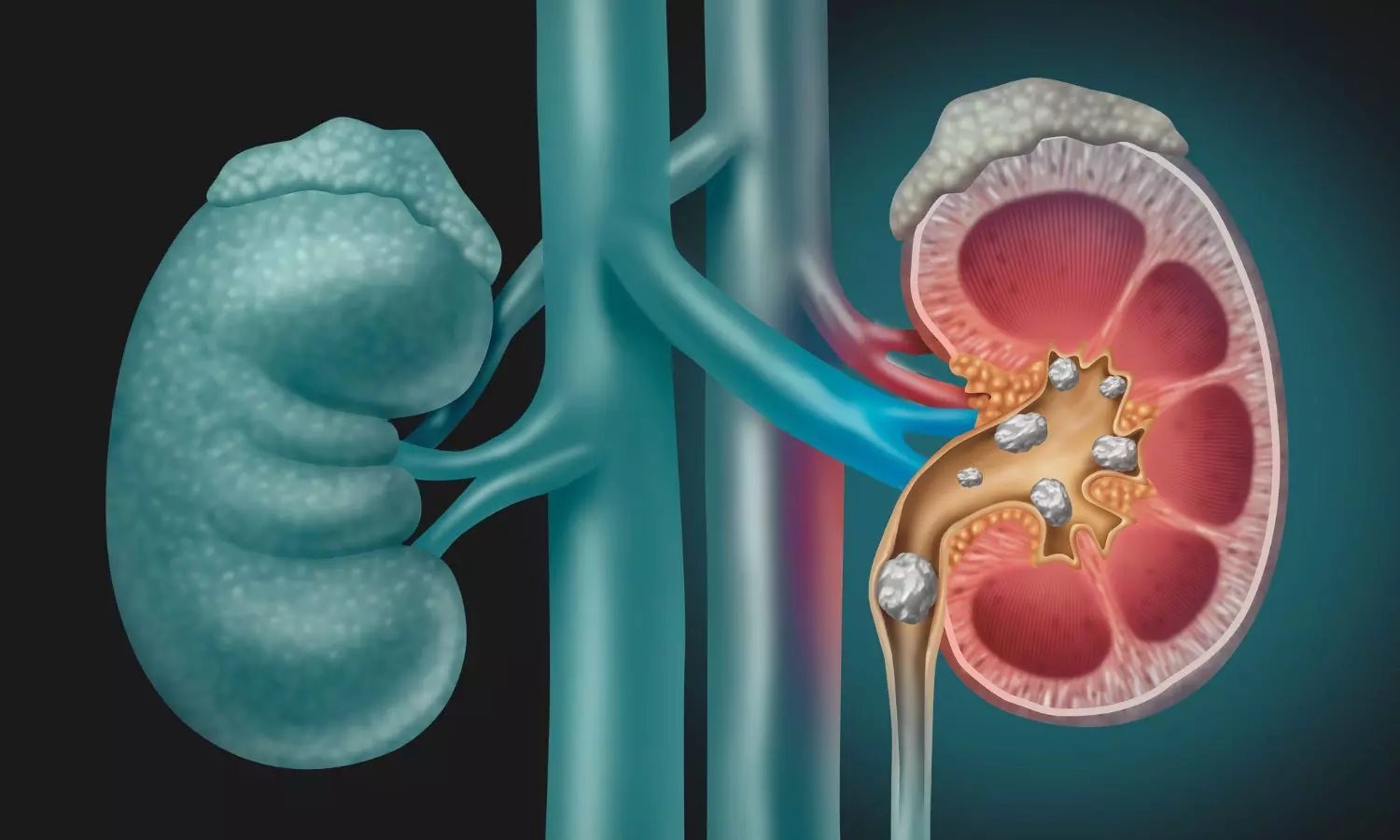


USA: A new study published in the World Journal of Urology provides reassuring evidence for clinicians managing patients with asymptomatic kidney stones who are undergoing radical cystectomy (RC) and urinary diversion (UD).
The research, led by Ziv Savin and colleagues from the Department of Urology at the Icahn School of Medicine at Mount Sinai, New York, suggests that carefully observing these stones—rather than intervening preoperatively—may be a safe and practical approach.
Patients with bladder cancer scheduled for radical cystectomy often undergo preoperative imaging that incidentally reveals renal stones. Since these stones do not produce symptoms, surgeons face a dilemma about whether to treat them before major cancer surgery or leave them alone. The present study sought to clarify the natural progression of such stones and assess their impact on postoperative outcomes.
The researchers conducted a longitudinal cohort study of patients who underwent RC and UD between 2015 and 2023 at a single academic center. Preoperative CT scans were systematically reviewed to identify individuals with asymptomatic renal stones. Patients with prior stone interventions, additional ureteric stones, or incomplete postoperative imaging follow-up were excluded. The team evaluated 90-day postoperative complications, stone-related adverse events, and spontaneous stone passage (SSP), applying Kaplan–Meier survival analysis and regression models to understand predictive factors.
The study led to the following notable findings:
- Among 606 patients who underwent radical cystectomy, 47 met the study criteria, representing 52 renal units with asymptomatic stones.
- The average stone size was 4.5 mm, with the lower pole being the most common location (48%) and the renal pelvis the least common (12%).
- Postoperative complication rates did not differ significantly between patients with and without asymptomatic renal stones.
- Overall complications occurred in 60% of patients with stones compared to 61% of those without stones.
- Major complications were also similar, occurring in 17% of patients with stones and 18% of those without.
- These findings suggest that small, asymptomatic renal stones do not increase short-term surgical morbidity.
- The one-year cumulative incidence of stone-related adverse events was 10%.
- Nearly half of the stones (47%) passed spontaneously within one year after surgery.
- Higher BMI was a significant predictor of spontaneous stone passage, with 28 kg/m² identified as the optimal cutoff.
- Larger stones were associated with a greater likelihood of stone-related adverse events.
The study concludes that observation remains a reasonable and often effective management strategy for asymptomatic renal stones in patients undergoing RC and UD. Given that most stones passed on their own and only a small proportion caused complications, routine preoperative intervention may not be necessary.
"These results offer guidance for clinicians weighing the risks and benefits of treating incidental stones before major uro-oncologic surgery, supporting a more conservative approach in appropriately selected patients," the authors wrote.
Reference:
Savin, Z., Ben-David, R., Durbhakula, V. et al. Does having an asymptomatic renal stone increase morbidity after radical cystectomy?. World J Urol 43, 336 (2025). https://doi.org/10.1007/s00345-025-05720-3

Next Story