
PET/MRI May Eliminate Need for Prostate Biopsy in Over Half of Patients: Study
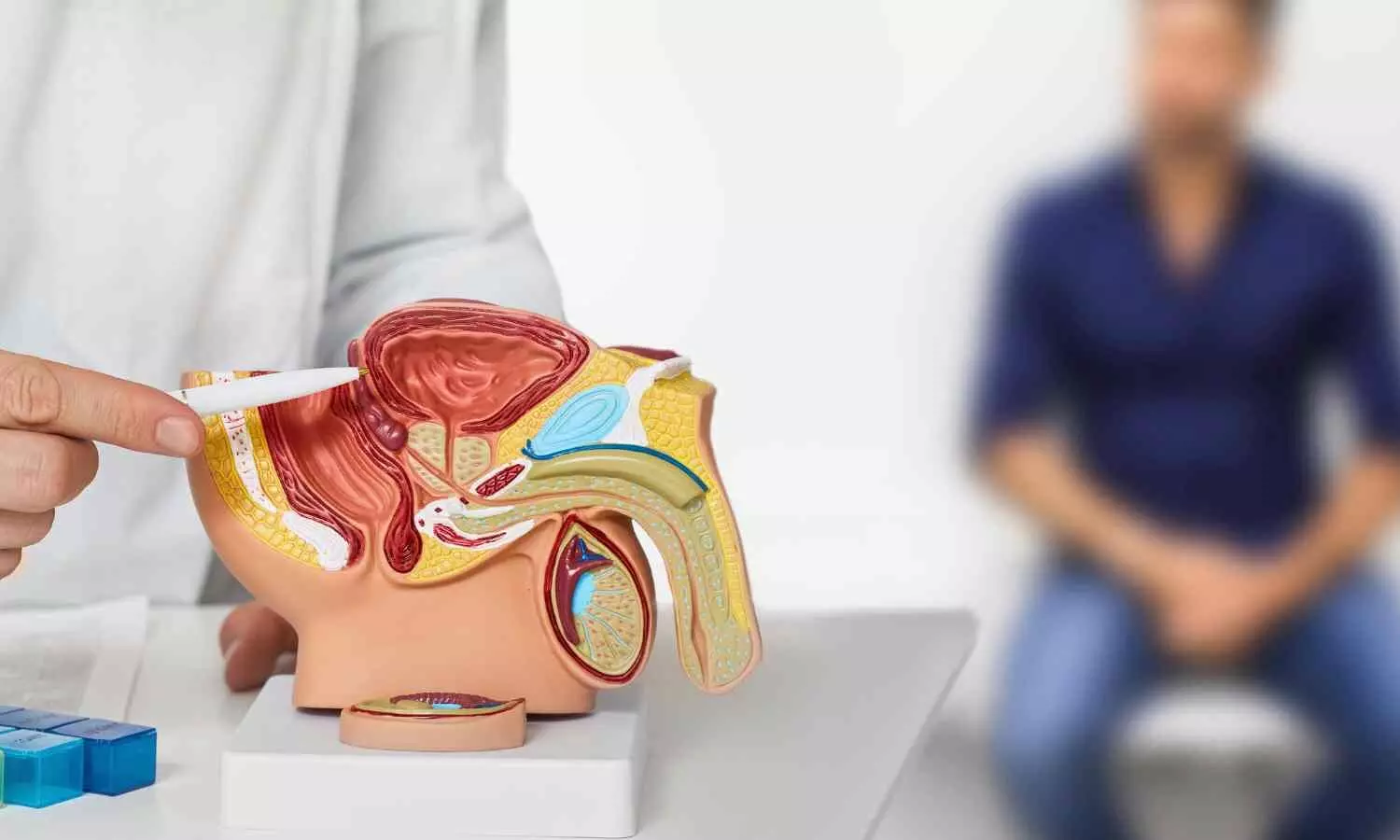


Germany: Researchers have found in a new study that a combined PET/MRI imaging approach with MRI scoring may safely reduce the need for prostate biopsies by accurately identifying clinically significant prostate cancer.
In a recent study, PET/MRI achieved 87% diagnostic accuracy, outperforming MRI alone (75%) and PET alone (81%), and could have avoided biopsies in 57% of patients compared with 25% using MRI alone. At high tracer uptake thresholds, the technique demonstrated 100% specificity with no false-positive results. By stratifying patients into high-, low-, and intermediate-risk groups, PET/MRI has the potential to minimize unnecessary invasive biopsies and related complications such as pain, bleeding, infection, and urinary tract problems.
The findings, published in the Journal of Nuclear Medicine by Türkay Hekimsoy and colleagues from the Technical University of Munich, Germany, evaluated whether combining ^18F-flotufolastat PSMA PET with multiparametric MRI (mpMRI) could improve the detection of clinically significant prostate cancer and reduce the need for biopsy.
For this purpose, the researchers conducted a retrospective analysis of 79 men with suspected clinically significant prostate cancer and elevated PSA levels (>4 ng/mL). All participants underwent ^18F-flotufolastat PSMA PET/MRI before biopsy or prostate surgery, and imaging findings, including PI-RADS scores and SUVmax, were compared with histopathological results.
The following were the key findings:
- Histopathology confirmed clinically significant prostate cancer (csPCa) in 42 patients, while 37 patients had no evidence of significant disease.
- The combined ^18F-flotufolastat PSMA PET/mpMRI approach achieved the highest diagnostic performance (AUC 87.1%), outperforming MRI alone (75.2%) and PET alone (80.7%).
- At a low SUVmax threshold, PET and MRI demonstrated comparable sensitivity for detecting clinically significant prostate cancer.
- Increasing the SUVmax threshold to >10.0 improved PET specificity to 100%, with no false-positive results in the study cohort.
- The high-specificity PET threshold enabled confident identification of patients with a very high likelihood of clinically significant prostate cancer.
- The combined PET/MRI strategy accurately identified 28% of patients as having clinically significant prostate cancer and 29% as having a very low likelihood of significant disease.
- Overall, the PET/MRI approach suggested that 57% of patients could have safely avoided prostate biopsy, compared with 25% using MRI alone.
The researchers suggested that PSMA PET/MRI can stratify patients into high-, low-, and intermediate-risk groups, potentially allowing some men to proceed directly to treatment, avoid biopsy, or undergo biopsy only when necessary.
The study was limited by its retrospective design, small sample size, and single-cohort analysis. The authors called for larger prospective studies to validate whether PET/MRI can safely replace biopsy in selected patients.
Overall, the findings suggest that combining ^18F-flotufolastat PSMA PET with mpMRI could improve the detection of clinically significant prostate cancer while reducing unnecessary biopsies and supporting more personalized patient care.
Reference:
Türkay Hekimsoy, Andreas P. Sauter, Robert Tauber, Thomas Horn, Matthias Jahnen, Fabian Horné, Julian Q. Petzold, Daniel Sasse, Isabel Rauscher, Matthias Eiber, Wolfgang A. Weber, Bernd M. Erber. Journal of Nuclear Medicine Jul 2026, jnumed.125.271916; DOI: 10.2967/jnumed.125.271916

Next Story