
AHA Updates Advanced Cardiac Life Support Guidelines With Key Changes in Resuscitation Care
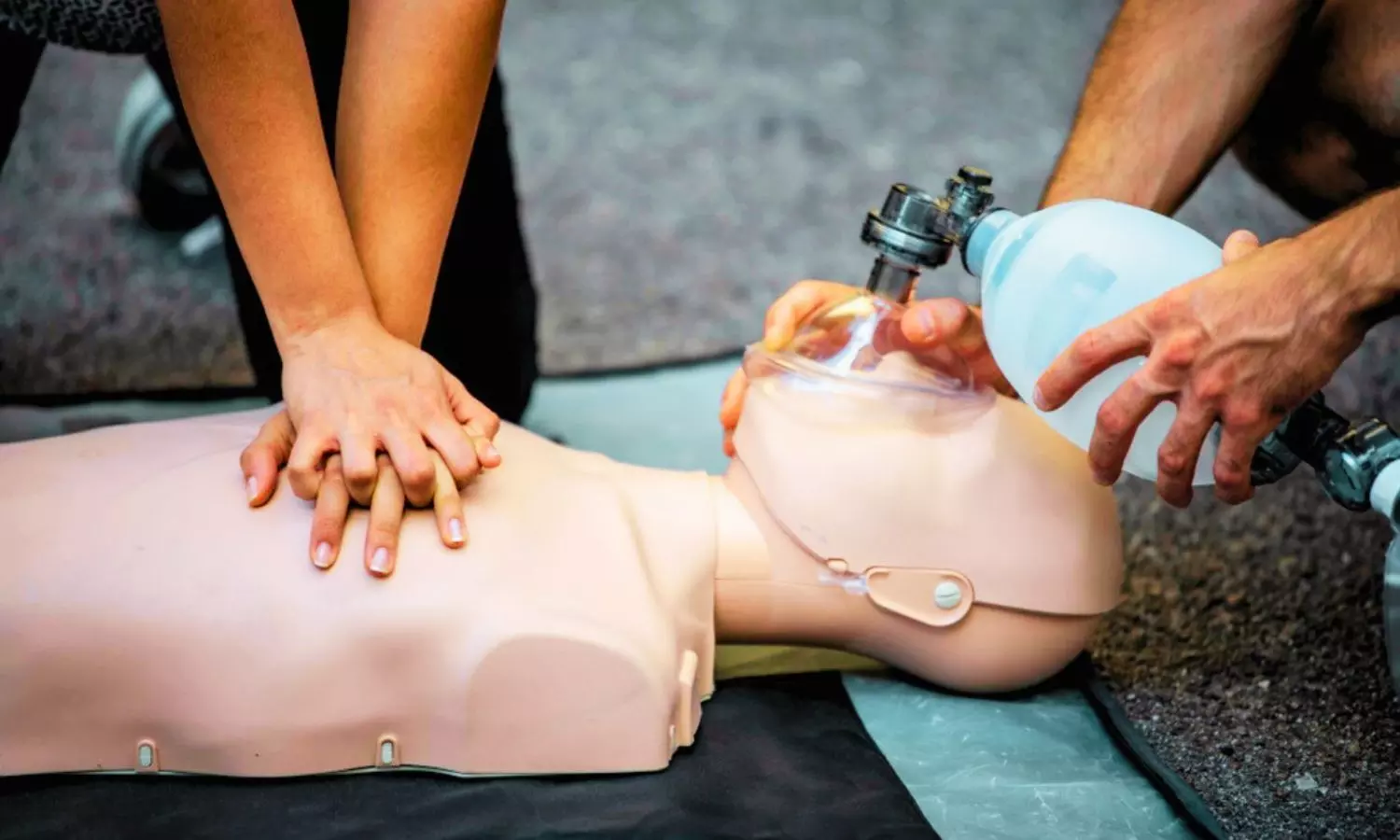


USA: The American Heart Association (AHA) 2025 Adult Advanced Life Support (ALS) guidelines update recommendations for cardiopulmonary resuscitation (CPR) and emergency cardiovascular care in adults with cardiac arrest and other life-threatening cardiovascular emergencies. While the update does not introduce major changes to the overall ACLS framework, it clarifies several important aspects of resuscitation, including CPR delivery, vascular access, defibrillation, point-of-care ultrasound (POCUS), post-resuscitation temperature management, and training.
The recommendations, published in Circulation, continue to emphasize rapid recognition of clinical instability and high-quality CPR while refining how clinicians approach specific arrest scenarios and peri-arrest rhythms.
Key Recommendations:
- Opioid overdose: CPR should be started without delay even when naloxone administration is being considered.
- Mechanical CPR: Mechanical compression devices should not be routinely used for adult out-of-hospital cardiac arrest. Manual chest compressions remain the standard approach, with mechanical devices reserved for selected circumstances, such as situations where manual CPR is difficult during transport.
- Vascular access: Intravenous access, usually through a peripheral IV, is preferred for administering ACLS medications. Intraosseous access can be used when IV access cannot be rapidly established or is unsuccessful.
- Atrial fibrillation/flutter: When synchronized cardioversion is required, the initial biphasic shock should use an energy setting of ≥200 J.
- Refractory ventricular fibrillation: Routine use of vector-change defibrillation or double sequential defibrillation is not recommended because their effectiveness remains uncertain.
- Polymorphic ventricular tachycardia: Patients with this unstable rhythm should undergo immediate defibrillation.
- POCUS: Experienced clinicians may use point-of-care ultrasound during cardiac arrest to identify potentially reversible causes, such as cardiac tamponade or pneumothorax, provided ultrasound does not interrupt or prolong CPR.
- Post-cardiac arrest care: After return of spontaneous circulation, targeted temperature management should maintain a temperature of approximately 36°C for at least 36 hours, according to the updated guidance.
- CPR education: Children as young as 12 years can be trained to perform effective CPR and use an automated external defibrillator (AED).
- Cognitive aids: Healthcare professionals may use checklists, algorithms, and smart-device applications during resuscitation. Lay rescuers should prioritize prompt CPR rather than relying on cognitive aids.
The guideline also cautions against interventions that could compromise high-quality resuscitation. In particular, POCUS should only be performed by clinicians with appropriate expertise and should never result in prolonged interruptions to chest compressions. Similarly, newer defibrillation strategies such as vector change and double sequential defibrillation remain areas requiring further evidence.
Overall, the 2025 AHA update largely preserves the established ACLS approach while refining several practical elements of adult resuscitation. The emphasis remains on rapid CPR, appropriate defibrillation, reliable vascular access, careful use of adjunctive technologies, and structured post-cardiac-arrest care. The recommendations also reinforce the importance of resuscitation training, including CPR and AED education among adolescents and the use of cognitive aids by healthcare professionals.
Reference:
Wigginton JG, et al. Part 9. Adult advanced life support: 2025 American Heart Association guidelines for cardiopulmonary resuscitation and emergency cardiovascular care. Circulation 2025 Oct 22; 152:suppl_2:S538. DOI: 10.1161/CIR.0000000000001376.
Del Rios M, et al. Part 1. Executive summary: 2025 American Heart Association guidelines for cardiopulmonary resuscitation and emergency cardiovascular care. Circulation 2025 Oct 22; 152:suppl_2:S284. DOI: 10.1161/CIR.0000000000001372.

Next Story