
Anemia and Hemoglobin Drop Linked to Higher Three-Year Mortality After TAVR: Study
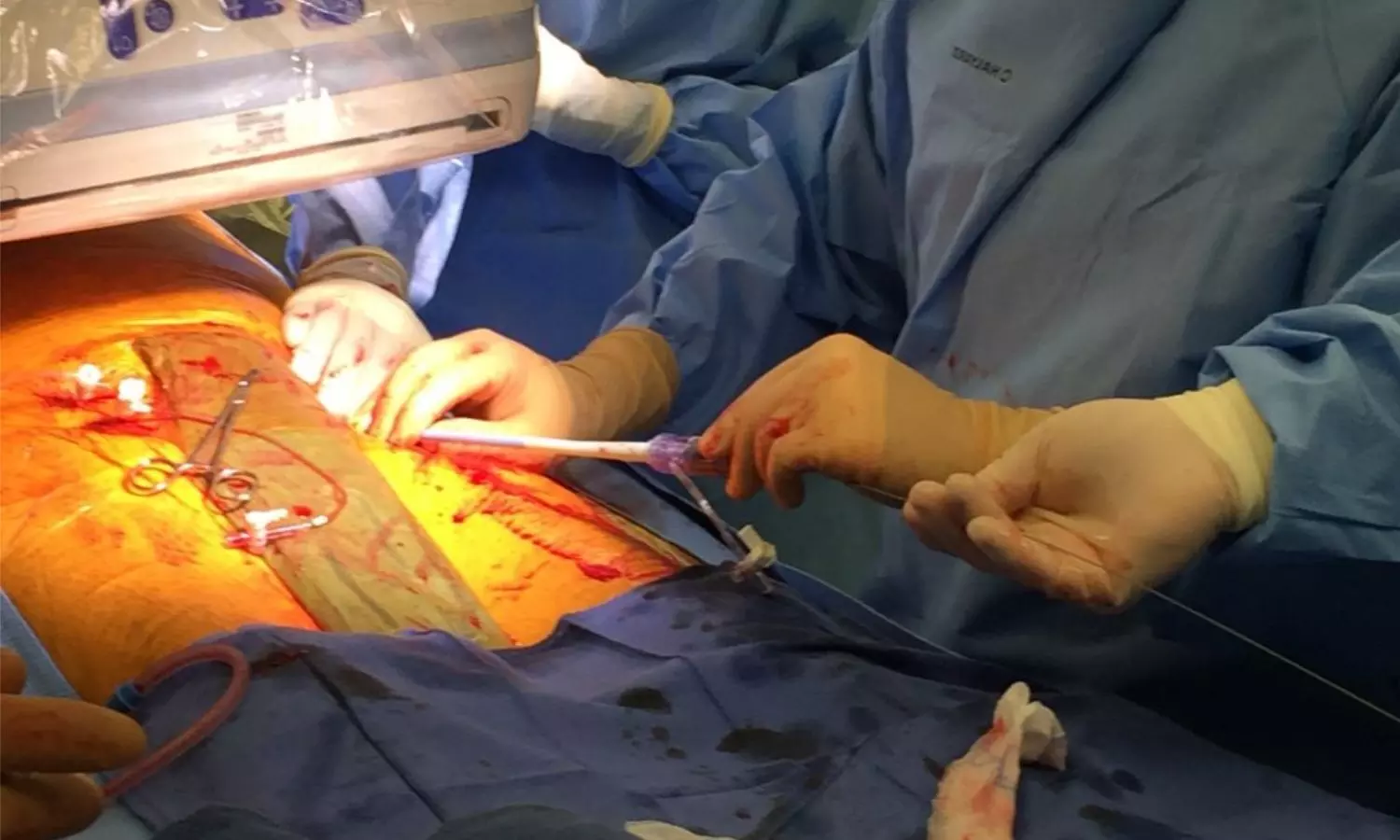


USA: Anemia and a significant fall in hemoglobin levels around the time of transcatheter aortic valve replacement (TAVR) are independently associated with increased three-year mortality, a new study has revealed. Patients with both conditions faced the highest risk, with mortality reaching 40.9%, compared with 13.9% among those without anemia or a substantial hemoglobin decline.
The study, published in Structural Heart, was conducted by Alexander Egoavil BA, Department of Cardiovascular Medicine, Heart, Vascular, and Thoracic Institute, Cleveland Clinic, Cleveland, Ohio, USA, and colleagues. The findings highlight the importance of assessing and managing anemia before TAVR and monitoring hemoglobin changes following the procedure.
TAVR is a minimally invasive treatment for severe aortic stenosis. Although anemia is common in these patients, its combined impact with periprocedural hemoglobin decline on long-term outcomes remains unclear.
To investigate this, researchers retrospectively analysed patients who underwent TAVR at Cleveland Clinic between 2016 and 2020. After exclusions, 1,666 patients were classified into four groups based on baseline anemia and hemoglobin decline. Anemia was defined as hemoglobin below 13 g/dL in men and 12 g/dL in women, while a decline of at least 2 g/dL was considered significant.
The researchers evaluated three-year mortality and heart failure (HF) hospitalisation using survival and multivariable analyses to assess the independent impact of both factors.
The analysis revealed the following findings:
- Stepwise increase in mortality: Three-year mortality rose across the four groups: 13.9% in patients without anemia and with a small hemoglobin decline, 23.4% in those without anemia but with a large decline, 31.4% in those with anemia and a small decline, and 40.9% in those with both conditions (p < 0.001).
- Highest risk with combined conditions: Patients with baseline anemia and a hemoglobin decline of at least 2 g/dL had the highest mortality risk (HR, 2.63; p < 0.001) and HF hospitalisation risk (HR, 2.39).
- Independent effect of hemoglobin decline: Each 1 g/dL reduction in hemoglobin was associated with a 16% increase in three-year mortality risk.
- Higher HF hospitalisation risk: Anemia was independently associated with increased HF hospitalisation, with risk rising across the anemia groups.
The researchers noted that the study was limited by its retrospective, single-centre design, which restricts generalisability and prevents establishing causality. Exclusion of patients with overt bleeding and incomplete hemoglobin data may also have influenced the findings. Additionally, information on fluid administration, antiplatelet and anticoagulant use, and underlying causes of anemia was unavailable.
The researchers concluded that baseline anemia and significant periprocedural hemoglobin decline independently contribute to higher three-year mortality following TAVR. Their combined presence identifies patients at particularly high risk, highlighting the importance of preprocedural anemia management and closer postprocedural monitoring to improve long-term outcomes.
Reference:
Egoavil, A., Besir, B., Ammoury, C., Babazade, S., Abuirmaileh, W., Puri, R., Reed, G., Miyasaka, R., Harb, S. C., Krishnaswamy, A., & Kapadia, S. R. (2026). Impact of Anemia and Periprocedural Hemoglobin Drop on Clinical Outcomes Following Transcatheter Aortic Valve Replacement. Structural Heart, 101158. https://doi.org/10.1016/j.shj.2026.101158

Next Story