PCI Improves Symptoms and Quality of Life in chronic total occlusion: Study
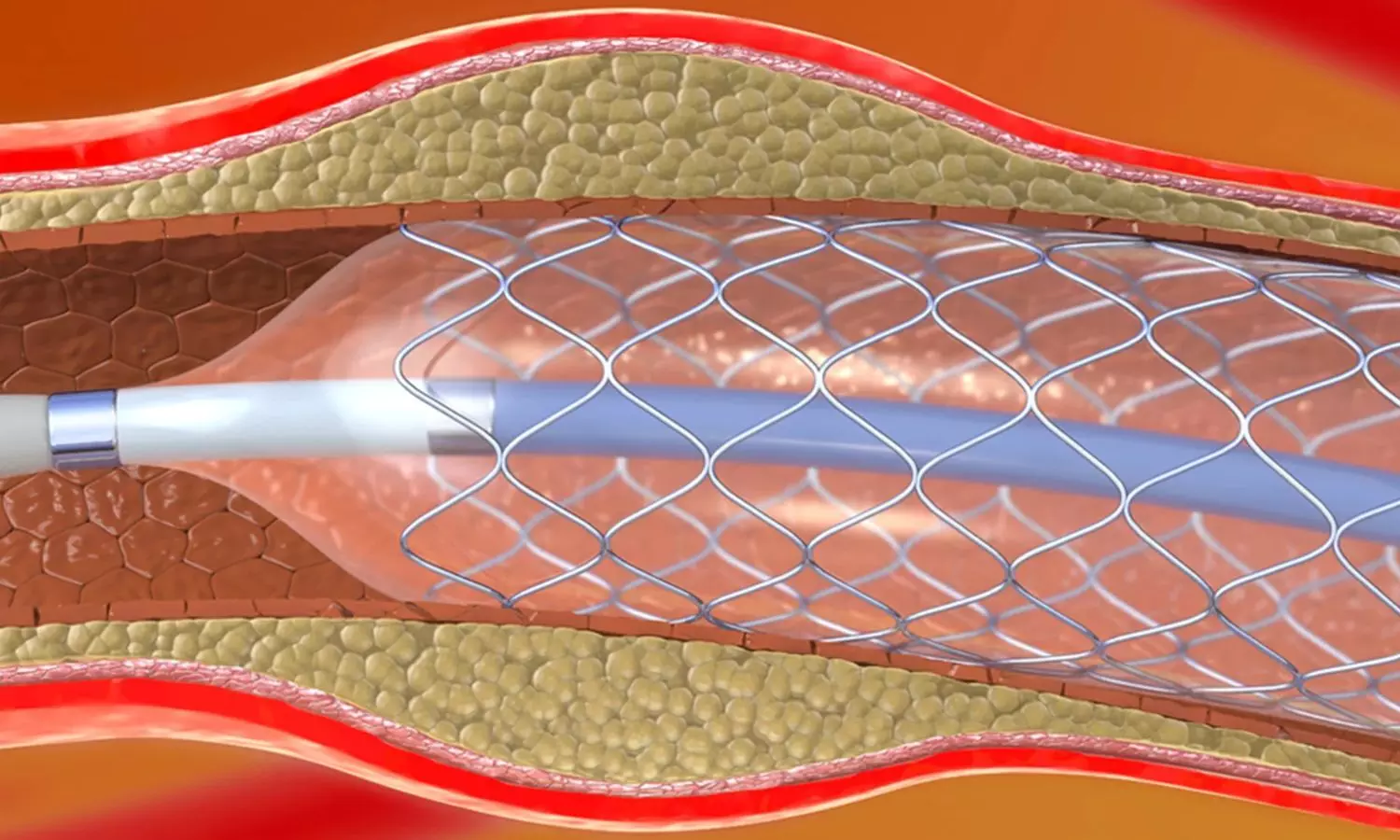


Researchers have found in a new study that coronary revascularization of chronic total occlusion (CTO) using PCI significantly improves quality of life and reduces symptoms compared to optimal medical therapy (OMT), based on a combined analysis of two randomized trials. The study was published in the JACC by Gerald S. and colleagues.
The background of this study is based on a retrospective meta-analysis of two significant RCTs, namely EUROCTO and DECISION-CTO. In their study, the researchers considered only one cohort of patients with a CTO who were not accompanied by any other coronary lesions, thereby allowing the effect of CTO revascularization to be analyzed independently. Although randomization ratios varied from 1:1 in DECISION to 2:1 in EUROCTO, the common goal was to assess the clinical status of patients based on the SAQ at the initial stage and after 12 months, as well as to track clinical events during more than three years.
Key findings:
- On analysis of the patient-reported outcomes in detail, the intervention group proved to be superior over the control group along several quality-of-life scales.
- PCI treatment was associated with better results in reducing angina frequency, compared to OMT (12.2 vs 8.6 points, P = 0.009).
- The most striking differences were recorded in terms of QoL scores with PCI patients showing a greater average increase in their quality of life than those treated with medicine (19.5 points vs 11.3; P < 0.001).
- In addition, PCI led to higher SAQ Summary Score – an overall measure of the patient's coronary artery disease status.
- PCI recipients showed an increase in this score from 8.5 points (in the control group) to 13.8 (P < 0.001). Besides these principal measures, the physical limitation was considered by the researchers, and the significant difference between groups retained its statistical validity even after Bonferroni correction (P = 0.01).
- According to the authors of this article, the most critical factor determining a considerable improvement in QoL is a low baseline score indicating the highest potential of improvement among the patients.
The choice of conducting a PCI procedure for those patients who have a single chronic total occlusion but no other complications is associated with significant benefits from the standpoint of both statistical significance and clinical results because they demonstrate greater quality of life and frequency of angina as compared to those who receive only the medical treatment. High efficacy of 92.2% along with the absence of any adverse events during 3 years indicates that the PCI is recommended for patients with symptoms of chronic total occlusion.
Reference:
Werner, G. S., Kim, J.-H., Hildick-Smith, D., Kang, D.-Y., Yuste, V. M., Ahn, J.-M., Boudou, N., Park, D.-W., Louvard, Y., Christiansen, E. H., Erglis, A., Rumoroso, J. R., di Mario, C., Escaned, J., Teruel, L., Bufe, A., Park, S.-J., & EUROCTO and DECISION-CTO Trial Investigators. (2026). Quality of life after percutaneous coronary intervention or medical therapy for Chronic Total Coronary Occlusions: EUROCTO and DECISION-CTO meta-analysis. Journal of the American College of Cardiology. https://doi.org/10.1016/j.jacc.2026.02.5099