Fixed Orthodontic Appliances Have Limited Impact on oral health and OoL among adolescents: Study
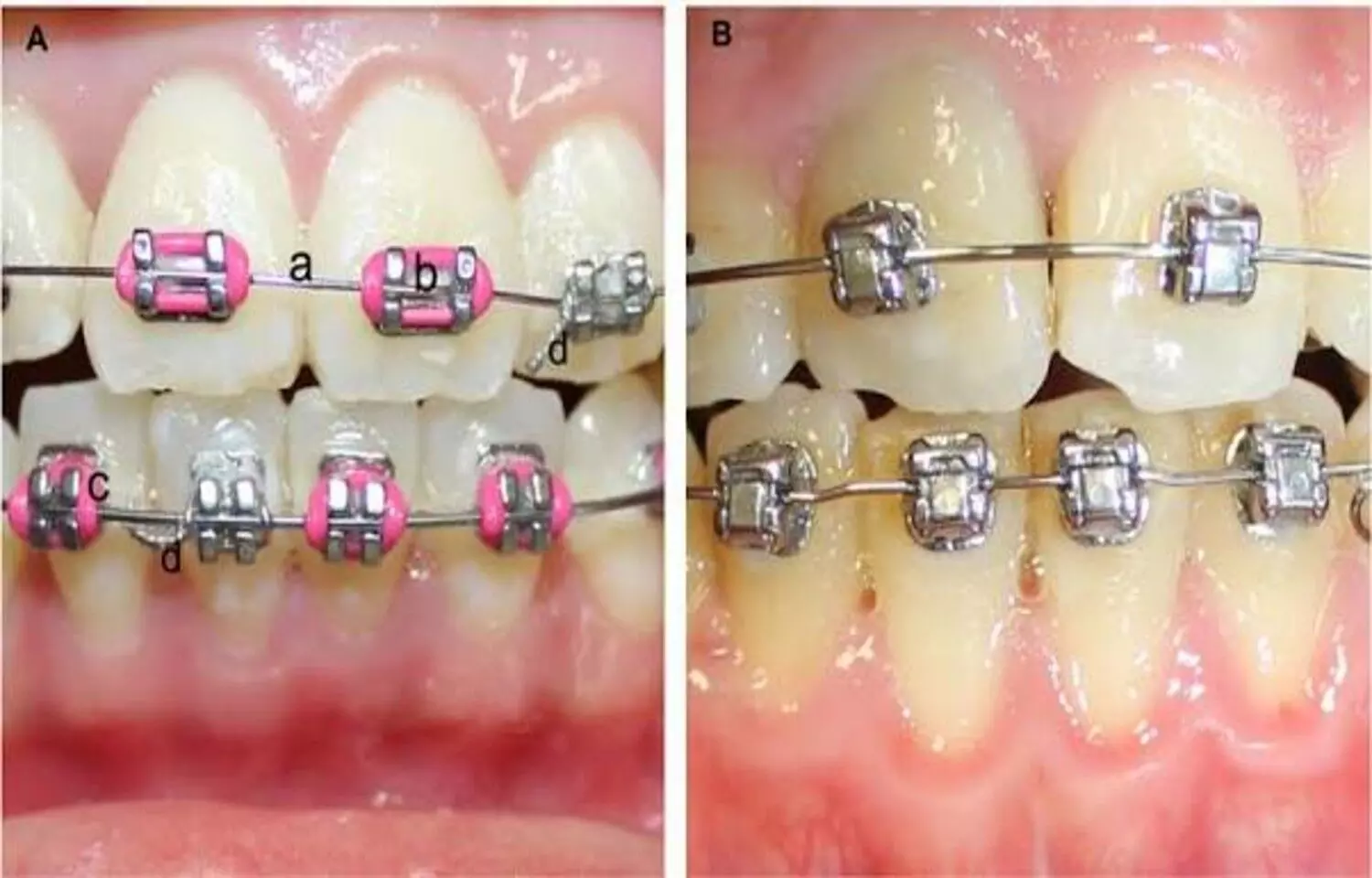


Researchers have found in a recent study has fixed orthodontic appliances have minimal effects on oral function and social-emotional well-being in adolescents. However, patients treated with labial braces combined with mini-screws or palatal/lingual appliances experience greater pain than those wearing retainers, and longer treatment duration is associated with increased pain.
Fixed orthodontic appliances are widely used for the correction of malocclusions in adolescents. Although effective in achieving optimal dental alignment and occlusion, they may influence patients’ daily life experiences. This study aimed to assess the impact of fixed orthodontic appliances on oral function, pain, discomfort, and social and emotional well-being among adolescents.
A cross-sectional observational study was conducted on 364 Egyptian adolescents aged 13–18 years (242 females, 122 males). Participants were categorized according to the type of orthodontic appliance: fixed labial appliances only (n = 235), labial appliances with mini-screws (n = 67), labial appliances with palatal/lingual components (n = 44), combined mini-screws and palatal/lingual appliances (n = 12), and fixed retainers (n = 6). All participants completed the Arabic version of the Orthodontic Treatment Impact Questionnaire (OTIQ), which evaluates oral function, pain, discomfort, and social-emotional well-being. Data were analyzed using Mann–Whitney U, Kruskal–Wallis, and Spearman correlation tests.
Most participants reported minimal impairment in oral function. Social and emotional well-being was largely unaffected, with 90.1% expressing no concern about appearance and 87.4% reporting no experience of teasing. Pain and discomfort were generally moderate, with 40.7% reporting jaw ache and 60.7% experiencing food impaction. Appliance type significantly influenced outcomes: combined labial appliances with mini-screws and palatal/lingual components were associated with the highest levels of discomfort, whereas fixed retainers showed the lowest impact. Labial appliances were more frequently associated with social concerns. No significant gender differences were observed. A significant negative correlation was found between age and social well-being (p < 0.001), while treatment duration was positively correlated with pain and discomfort (p = 0.018).
Fixed orthodontic appliances had minimal impact on oral function and social-emotional well-being in adolescents. Patients with labial appliances combined with mini-screws and palatal/lingual appliances reported more pain than those with retainers. Longer treatment duration was linked to greater pain.
Reference:
Ahmed, S.M.G., El-Zawahry, N.O. & El-Sharaby, F.A. Impact of fixed orthodontic appliances on day-to-day life experiences among adolescents: a cross-sectional observational study.. BMC Oral Health 26, 1193 (2026). https://doi.org/10.1186/s12903-026-09072-1