
Fluoride Mouthwash Provides Greater Enamel Remineralization Than Xylitol, finds study
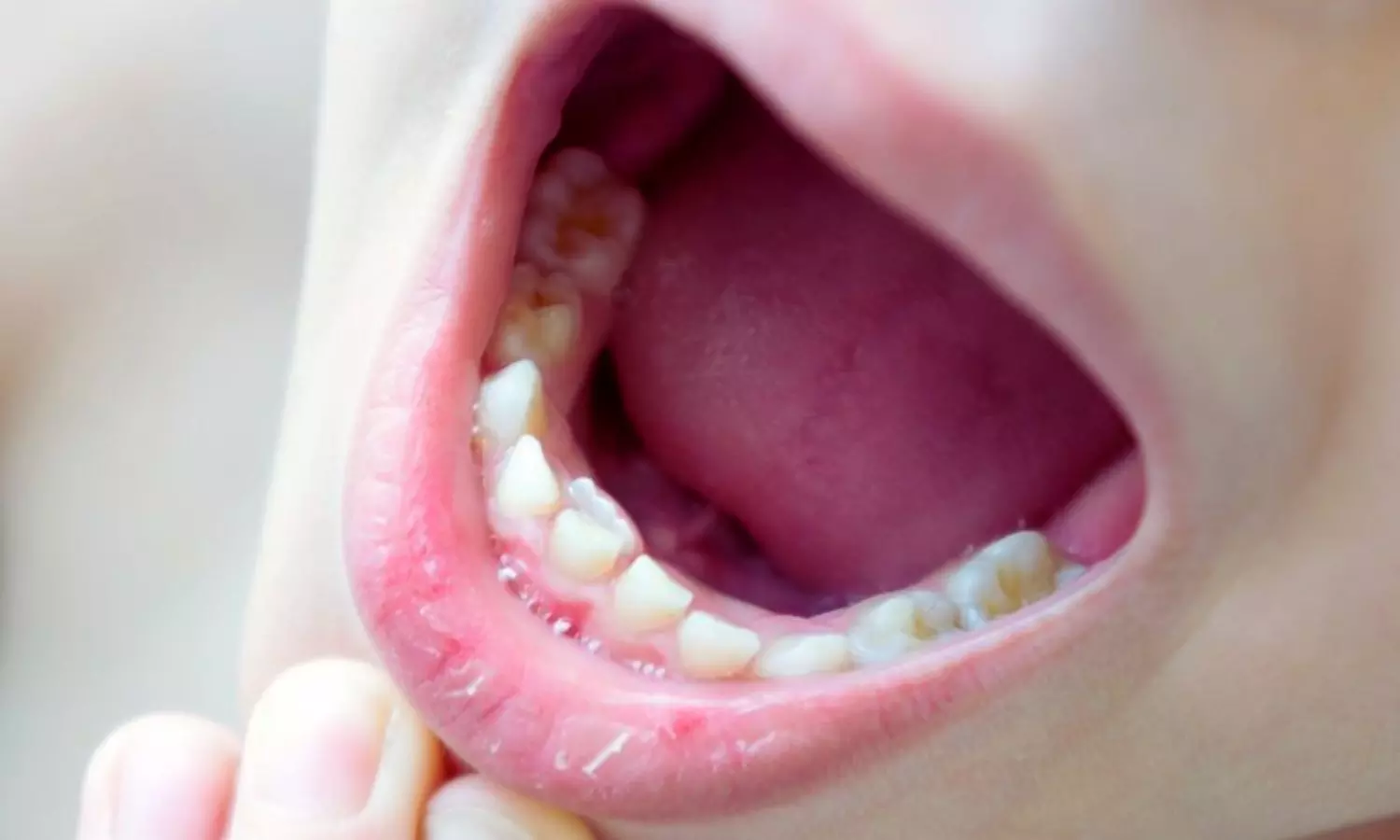


A new study published in the journal of Revista Científica Odontológica showed that mouthwashes containing fluoride and xylitol both encouraged the remineralization of demineralized enamel in permanent molars.
Effective remineralization techniques may be able to reverse early enamel lesions, which are characterized by mineral loss without cavitation. Remineralizing agent-containing mouthwashes have drawn a lot of interest as non-invasive methods for improving enamel repair and halting the advancement of caries.
To encourage the deposition of calcium and phosphate ions into demineralized enamel, a variety of formulations such as mouthwashes containing bioactive minerals and fluoride have been created. Thus, this study evaluated the remineralizing effects of two distinct mouthwashes on the enamel of permanent molars that have been chemically demineralized.
23 molars in good condition were utilized, which were split into two groups at random (fluoride mouthwash versus xylitol mouthwash). The tooth crowns were submerged in mouthwash treatments at 37 °C for 15, 30, and 45 days after being demineralized with 37% orthophosphoric acid.
The mouthwash was changed every three days. Under a polarized light microscope (EUROTECH), the degree of remineralization was assessed in 150–250 µm slices using the following scale: 0 (no change), 1 (superficial), 2 (subsurface), and 3 (deep). The Friedman test, the Mann-Whitney U test, and the Holm post hoc test were employed (p < 0.05).
At every time interval, the fluoride mouthwash demonstrated significantly higher remineralization grades than xylitol: at 15 days, 60% vs. 30% grade 1; at 30 days, 20% grade 1, 60% grade 2, and 20% grade 3 vs. 50% grade 1 and 10% grade 2; and at 40% grade 3, 40% grade 1, and 30% grade 2 (p = 0.043). Only fluoride attained its greatest impact at 45 days, while both treatments exhibited substantial progression over time (p = 0.001).
Overall, fluoride is shown to be more efficient than xylitol in restoring mineral content. The results also showed that for both formulations, a 45-day exposure duration was ideal for optimizing enamel mineral recovery. These findings imply that fluoride is still the best choice for remineralization even if both mouthwashes can help restore enamel.
Source:
Rodríguez-Chávez, D. S., Curo-Valdivia, Y. F., & Portales-Carbonel, C. X. (2026). In vitro remineralizing effect of two mouthwashes on the enamel of demineralized permanent molars. Revista Científica Odontológica, 14(2), e289. https://doi.org/10.21142/2523-2754-1402-2026-289

