
Picosecond Laser Therapy Shows Promise for Traumatic and Surgical Scars: Study
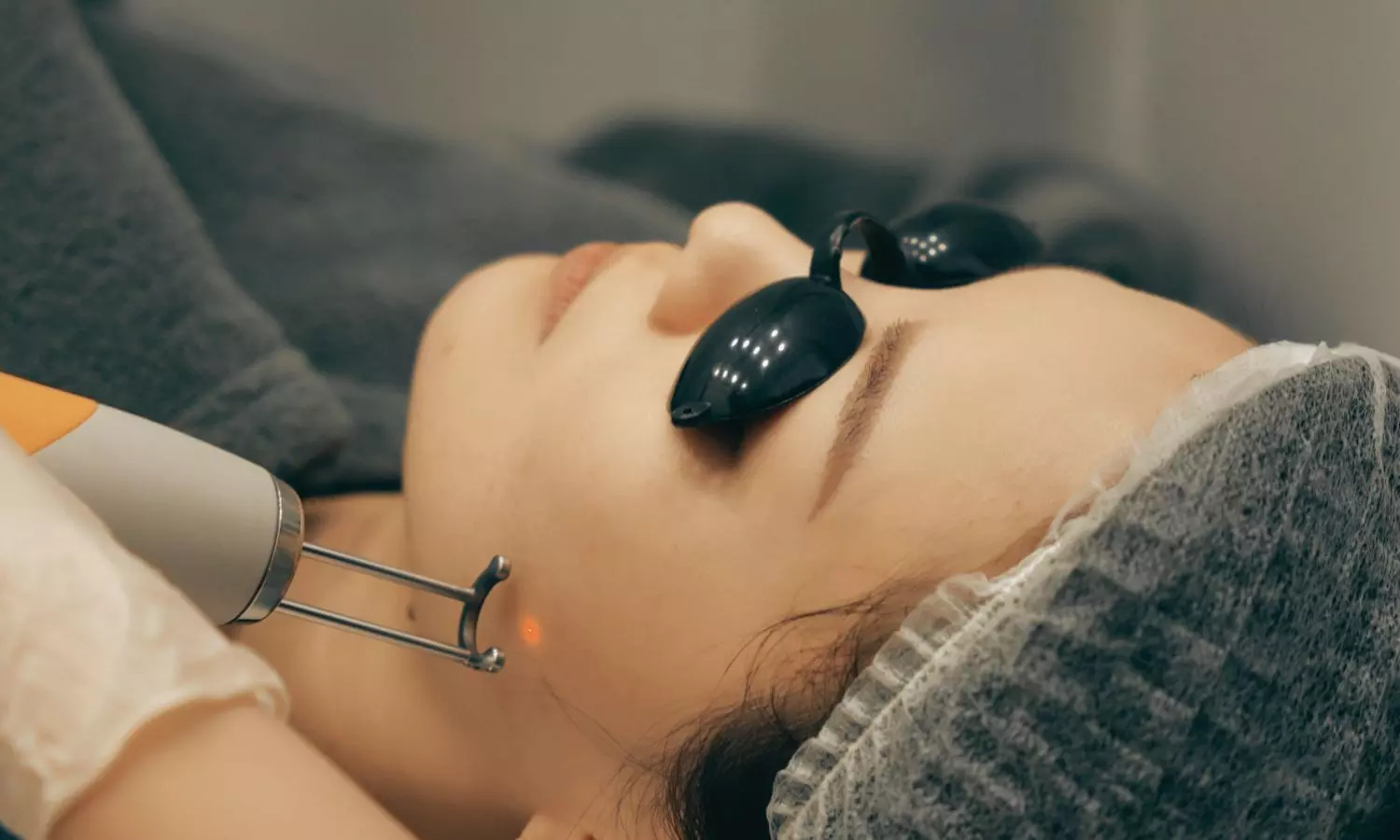


Brazil: Current evidence suggests that picosecond laser therapy is a promising, generally well-tolerated treatment option for traumatic and surgical scars. However, variations in scar characteristics, treatment protocols, and outcome assessment methods highlight the need for standardized protocols and further high-quality studies to establish its long-term efficacy and optimal use.
Scars resulting from injuries or surgical procedures can cause cosmetic concerns, functional limitations, and reduced quality of life. Picosecond lasers, which deliver ultrashort pulses of laser energy, have emerged as a potential treatment to improve scar appearance and texture. However, evidence regarding their effectiveness and safety across different scar types remains limited.
To evaluate the available evidence, Jade Oliveira, MD, from the Faculty of Medical Sciences of Minas Gerais, Belo Horizonte, Brazil, and colleagues conducted a systematic review published in Cosmetic Dermatology. The review examined the effectiveness and safety of picosecond laser therapy for traumatic and surgical scars unrelated to acne.
The researchers followed the Preferred Reporting Items for Systematic Reviews and Meta-Analyses (PRISMA) 2020 guidelines. They searched eight databases, including PubMed, Scopus, Web of Science, Embase, the Cochrane Library, MEDLINE, LILACS, and VERTINDEX, from their inception through August 2025. Database alerts were monitored until December 2025, without restrictions on publication date or language.
The review included 13 studies involving 446 patients and 475 scars, of which five were randomised controlled trials.
The findings revealed the following:
- Improved scar appearance: Most studies reported improvements in validated scar assessment scales, overall aesthetic evaluations and objective measures of scar characteristics.
- Benefits over untreated controls: Controlled trials generally found better outcomes with picosecond laser treatment than with no treatment.
- Comparison with carbon dioxide lasers: Picosecond lasers showed advantages over fractional carbon dioxide lasers for selected outcomes, although superiority was not consistent across all assessment measures.
- Favourable safety profile: Reported adverse effects were predominantly mild and temporary, with no serious or permanent complications identified in the included studies.
- Limitations in study quality: Four randomised controlled trials raised some concerns regarding risk of bias, while one was classified as having a high overall risk of bias.
The researchers cautioned that the findings should be interpreted carefully because most studies involved small patient groups and were conducted at individual centres. Differences in scar types, maturity, laser wavelengths, treatment settings, session schedules and assessment methods also limited comparisons between studies. Follow-up periods were relatively short, making it difficult to establish whether the improvements persisted over time.
Additionally, most studies were conducted in Asian populations, limiting the certainty with which the results can be generalised to people with different skin phototypes and ethnic backgrounds.
The review supports picosecond laser therapy as a potential treatment for traumatic and surgical scars, with generally favourable safety findings. However, larger, multicentre randomised controlled trials using standardised scar assessments and longer follow-up are needed to establish its long-term effectiveness, determine optimal treatment settings and identify which patients are most likely to benefit.
Reference:
Oliveira, J., Guimarães, N. S., Webber, A., Ferreira, K. S. T., Kroumpouzos, G., & De Oliveira, G. V. (2026). Picosecond Laser Therapy for Traumatic and Surgical Scars: A Systematic Review. Clinics in Dermatology. https://doi.org/10.1016/j.clindermatol.2026.10.008

Next Story