Skin Disease Severity Modestly Impacts Quality of Life in Scleroderma, suggests study
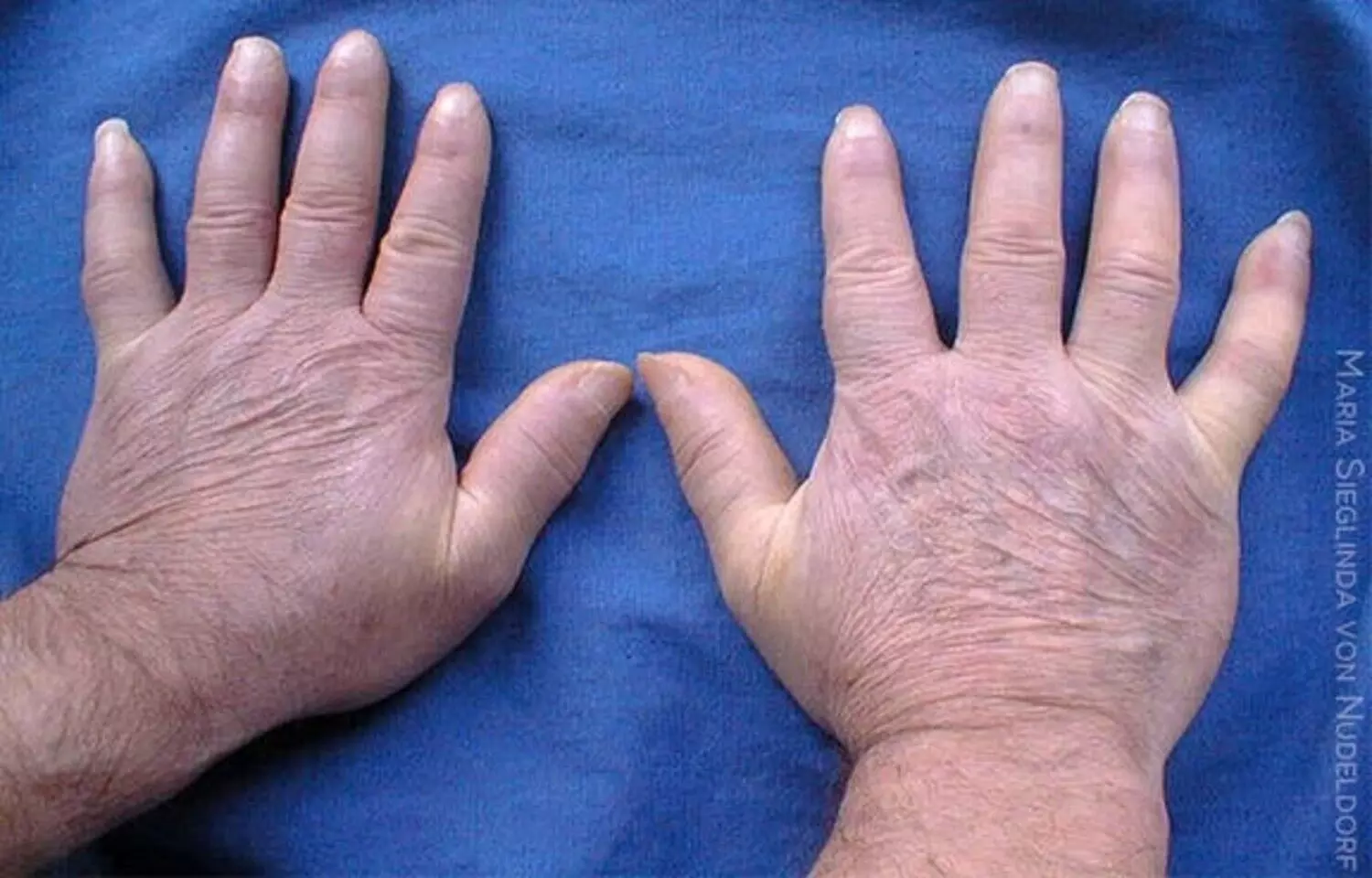


It has been found in a new study that greater skin disease severity in patients with scleroderma is associated with poorer health-related quality of life, although the relationship is modest and influenced by multiple clinical and patient-related factors. Routine use of patient-reported outcomes and a multidisciplinary approach can help address the broader factors affecting quality of life and improve care.
Systemic sclerosis is a chronic autoimmune connective tissue disease characterized by skin and internal organ involvement. While clinical management focuses largely on life-threatening organ complications such as pulmonary hypertension, interstitial lung disease, and renal crisis, the burden of skin disease is often underestimated, despite its substantial impact on physical, psychological, and social well-being. To assess the impact of skin disease severity, measured by the modified Rodnan Skin Score (mRSS), on health-related quality of life (HRQoL) in patients with systemic sclerosis using the WHOQoL-BREF questionnaire.
This cross-sectional observational study was conducted at a tertiary care center from December 2022 to December 2024, including patients who fulfilled the American College of Rheumatology/European League Against Rheumatism 2013 classification criteria for systemic sclerosis. Skin involvement was assessed using the Modified Rodnan Skin Score (mRSS), and health-related quality of life was evaluated using the WHOQOL-BREF questionnaire. Pearson correlation and appropriate univariate statistical tests (Student's t-test or Mann-Whitney U test for continuous variables, and Chi-square or Fisher's exact test for categorical variables) were used to explore associations between skin disease severity and health-related quality of life.
Fifty-two patients with scleroderma who attended the rheumatology outpatient clinic were enrolled, with a male-to-female ratio of 1:16. The mean modified Rodnan skin score in the studied patients was 13.85, with a standard deviation of 8.56. The mean health-related quality of life was 52.5, with an SD of 20.07. The mean health-related quality of life in patients with mRSS ≤ 17 was 57, while that in those with mRSS > 17 was 40.
The study highlights that increasing skin disease severity in patients with systemic sclerosis is associated with a significant decline in health-related quality of life. Patients with higher Modified Rodnan Skin Scores experienced greater physical limitations, emotional distress, and social restriction. Although systemic sclerosis management often focuses on internal organ involvement, our findings emphasize that cutaneous fibrosis substantially contributes to the disease burden. The results suggest that routine QoL assessment and early interventions addressing skin-related disability and psychosocial impact should be integral to comprehensive care for patients with scleroderma.
Skin disease severity is associated with poorer health-related quality of life in patients with scleroderma; however, this relationship appears modest and is likely influenced by multiple clinical and patient-related factors. These findings highlight the importance of incorporating patient-reported outcomes into routine clinical assessment. While cutaneous involvement contributes meaningfully to disease burden, a comprehensive, multidisciplinary approach is required to address the broader determinants of quality of life and optimize patient care.
Reference:
Hussain Parrey, Ashaq, et al. "Impact of Skin Disease Burden On Quality of Life in Patients With Scleroderma: a Cross-Sectional Observational Study." Current Rheumatology Reviews, 2026.
Keywords:
Skin Disease, Severity, Modestly, Impacts, Quality of Life, Scleroderma, suggests, study, Hussain Parrey, Ashaq