Low-Fat Vegan Diet Improves Insulin Sensitivity and Reduces Ectopic Fat in Type 2 Diabetes: Study
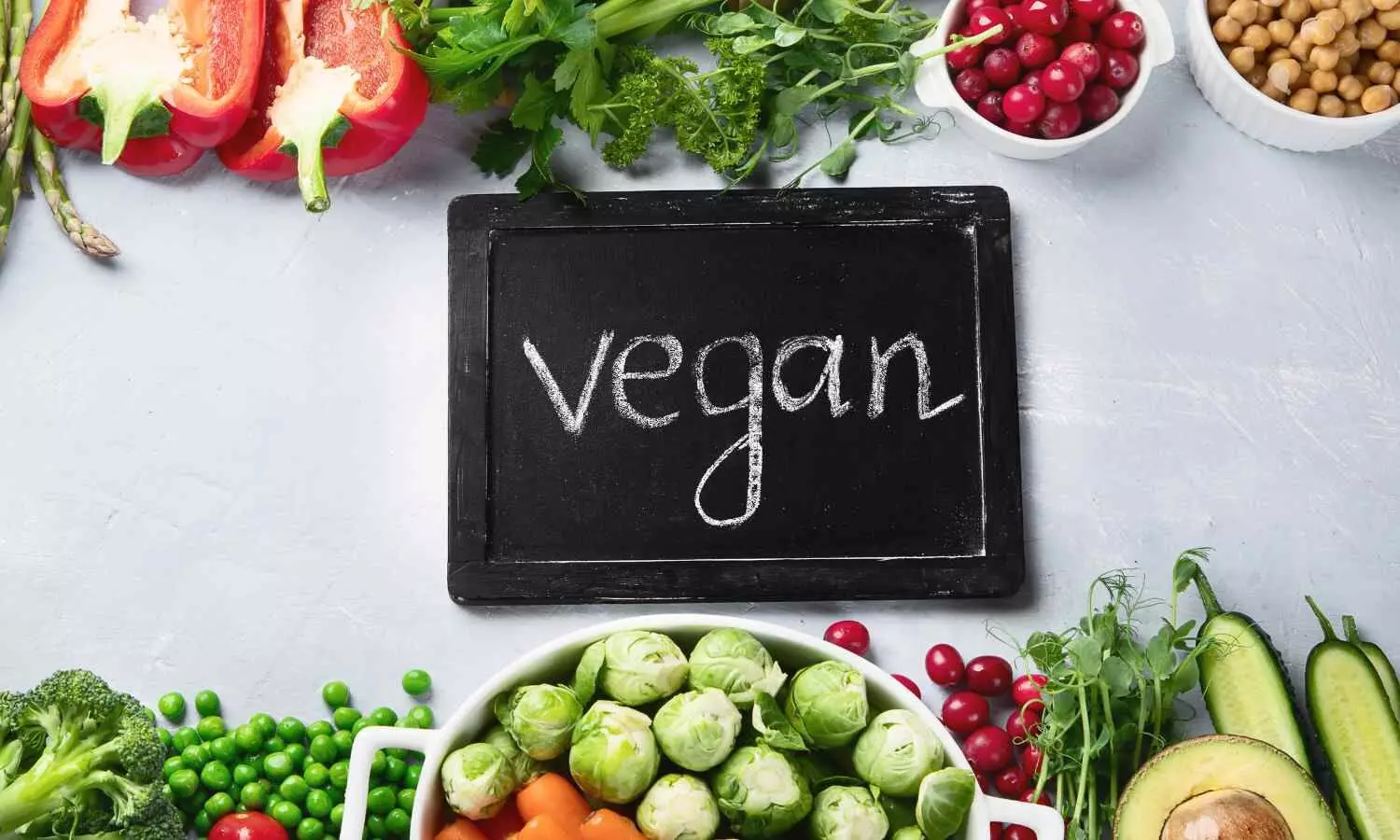


Researchers have found in new research that an ad libitum low-fat plant-based (vegan) diet was associated with reductions in ectopic fat, particularly visceral and liver fat, among participants with type 2 diabetes. The intervention also improved insulin sensitivity and beta-cell function while reducing advanced glycation end products (AGEs), suggesting potential metabolic benefits of a low-fat vegan dietary approach. The study was published in BMJ Open Diabetes Research & Care by Hana K. and colleagues.
To determine the metabolic processes caused by food changes, scientists enrolled 25 patients suffering from type 2 diabetes and asked them to consume ad libitum low-fat vegan diet for 16 weeks. The changes in body composition were assessed through the use of DXA (Dual-Energy X-Ray Absorption). Hepatocellular and intramyocellular lipids were assessed with non-invasive 1H magnetic resonance spectroscopy (1H -MRS). The formation of tissue advanced glycation end products was assessed with non-invasive skin autofluorescence.
Insulin resistance in fasting state was assessed by HOMA-IR index, insulin sensitivity in postprandial state was measured by predicted insulin sensitivity index (PREDIM), while pancreatic beta-cell function parameters (insulin secretion rates, glucose sensitivity, rate sensitivity, and potentiation factor) were calculated based on C-peptide deconvolution after standard liquid meal test.
Key findings:
- The intervention analysis in all 25 participants during 16 weeks showed significant quantitative metabolic improvements on all diagnostic parameters.
- The mean body weight loss was 6.0 kg (95% CI −7.0 to −5.1; p < 0.001), which corresponds to a relative body weight loss of 6.6% (95% CI −7.5 to −5.8).
- The fat mass reduction was 4.2 kg (95% CI −5.7 to −2.7; p < 0.001), and the visceral fat volume reduction was 290 cm³ (95% CI −467 to −114; p = 0.003).
- 1H-MRS showed a decrease of hepatocellular lipids of 33.0% (95% CI −48.7 to −17.3; p < 0.001).
- The tissue accumulation of advanced glycation end products (AGE score) reduced significantly (−0.4, 95% CI −0.6 to −0.2; p = 0.002).
- The fasting insulin resistance decreased significantly (HOMA-IR difference −2.5, 95% CI −4.1 to −0.9; p = 0.004).
- The postprandial insulin sensitivity increased (PREDIM difference +1.3 mg/min/kg, 95% CI +0.6 to +2.1; p = 0.002).
- The improvement of beta-cell function parameters, including insulin secretion at 6 and 7 mmol/L glucose, beta-cell glucose sensitivity, rate sensitivity, and potentiation factor, were significant.
In summary, prospective trial results have revealed that a 16-week low-fat vegan diet leads to a marked reduction of visceral and hepatic fat content along with restoration of pancreatic beta-cell function in type 2 diabetics. The implications drawn from the study clearly indicate that ad libitum plant-based eating is an extremely effective treatment model for lowering ectopic lipids, AGEs, and insulin resistance.
Reference:
Kahleova H, Petersen K, Shulman GI, Znayenko-Miller T, Dufour S, Brennan H, et al. Changes in ectopic lipids, insulin sensitivity, and beta cell function after a low-fat vegan diet in adults with type 2 diabetes: a 16-week single-arm clinical trial. BMJ Open Diabetes Research & Care. 2026;14:e006472. https://doi.org/10.1136/bmjdrc-2026-006472