
Study finds treating peanuts with cold plasma could make them less allergenic
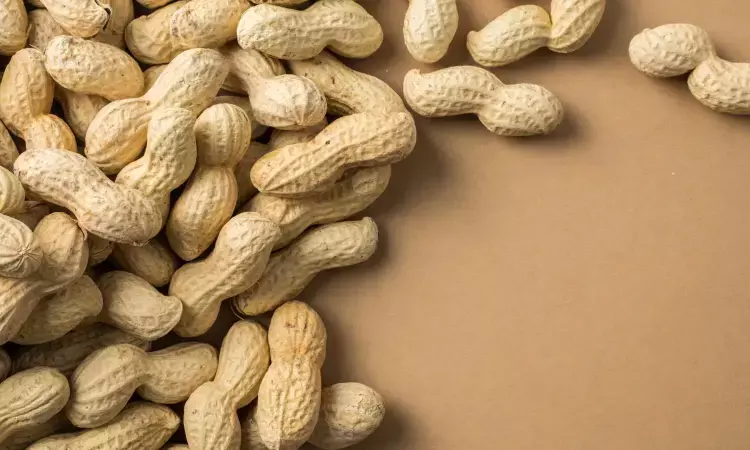


Researchers at McGill University have found that briefly treating peanuts with cold plasma, an ionically charged gas that triggers chemical changes, reduces their potential to cause allergic reactions. The researchers say this is probably because the process causes changes to the protein structure, the part of the peanut that can trigger an immune response. The technology was also shown to improve functional properties important for food manufacturing.
“It’s clear this research benefits consumers with food allergies – it means they may have more food choices in the future,” said Vijaya Raghavan, study co-author and Professor of Bioresource Engineering at McGill University. “Importantly, this approach isn’t limited to peanuts; it could also be applied to other allergens such as eggs, hazelnuts and more, potentially significantly reducing allergy risks across a wide range of foods.”
The research was led by Jin Wang, now a Professor at Southeast University in China, during his doctoral studies at McGill.
Less allergenic but still tasty
Peanuts are a significant source of plant protein worldwide, with functional properties that are widely used in many food products, but their role as a common allergen poses a major challenge. Traditional methods to reduce allergenicity have relied on heat-based treatments that can alter taste, aroma and appearance; non-thermal approaches like irradiation have had inconsistent results.
While cold plasma has been considered before, in this study, the researchers extracted the whole peanut protein and treated the samples with cold plasma, assessing their allergenic potential through multiple in vitro methods.
Among the qualities assessed was immunoreactivity, a measure of how strongly a protein binds to immune antibodies in lab tests, indicating its potential to trigger an allergic response.
“In real-life scenarios, consumers are exposed to the complex mixture of proteins present in whole peanuts, rather than isolated individual allergens,” Raghavan said. “Our study focused on whole peanut protein and achieved a nearly 70 per cent reduction in overall immunoreactivity after 25 minutes of cold plasma treatment.”
This approach is the one most likely to yield practical benefits, as it means food developers can use hypoallergenic peanut protein powder to develop new products, he explained.
The study also showed that the treatment made the protein easier to break down in the intestine.
Potential application for other foods
While other researchers have identified both hydrogen peroxide and nitrite as key chemical agents in cold plasma treatment, this study found only an increase in nitrite levels.
“This suggests that during treatment, nitrite may play a more dominant role in modifying protein structure, an aspect that is often overlooked in many applied studies,” Raghavan said.
The team plans to study these mechanisms in more detail and optimize the technology for greater efficiency.
“We hope to expand the desensitization effect beyond peanuts to a wider range of food allergens,” he said. “By developing hypoallergenic ingredients with enhanced functional properties, we hope to serve a broader consumer base while maintaining food safety and quality.”
Reference:
Yuxin Wang, Jialu Shi, Jing Qian, Jinlong Zhao, Lili Zhang, Vijaya Raghavan, Jin Wang, Effect of cold plasma processing on the immunoreactivity, structure and functional properties of peanut protein, Journal of Future Foods, https://doi.org/10.1016/j.jfutfo.2024.09.004
