
Tree Nuts as Snacks Sweet Solution to Curb Cravings and Boost Diet Quality: Study Finds
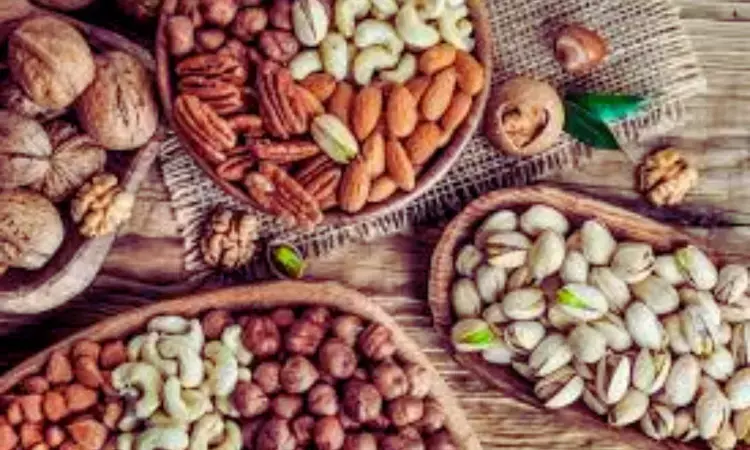


USA: Swapping common snack foods for a modest daily portion of tree nuts curbed cravings for sweets and fast foods and lifted diet quality scores in young adults with early cardiometabolic risk, without weight gain or adverse metabolic effects.
Snacking habits have changed markedly over the past few decades, with between-meal eating now contributing an additional 200–300 kilocalories per day for many young adults in the United States. These calories often come from refined, carbohydrate-rich foods such as cookies, chips, and sugary snacks, which may worsen cardiometabolic risk.
In this context, researchers explored whether replacing typical snack foods with tree nuts could reduce food cravings and improve overall diet quality among young adults already showing early warning signs of metabolic syndrome.
The randomized, single-blind trial, published in Nutrients, was led by Kate Lillegard from Vanderbilt University Medical Center and colleagues. The study enrolled young adults aged 22 to 36 years who had at least one metabolic syndrome risk factor and a body mass index between 24.5 and 34.9 kg/m². After a two-week run-in period on a standardized diet, participants were assigned for 16 weeks to consume either tree nuts or commonly eaten high-carbohydrate snacks twice daily.
The tree-nut snack consisted of a 33.5-gram mix of unsalted almonds, walnuts, pecans, macadamia nuts, hazelnuts, pistachios, and cashews. The comparison snacks included items such as pretzels, animal crackers, graham crackers, and granola-type bars, matched for energy and key nutrients. All meals and snacks were carefully planned to maintain stable body weight and consistent macronutrient intake.
The following were the key findings of the study:
- Tree-nut consumption significantly reduced cravings for sweet and fast foods, including cookies, brownies, donuts, candy, ice cream, chips, and pizza.
- No notable craving reduction was observed in the high-carbohydrate snack group.
- Preference for sweet tastes declined among tree-nut consumers, reflecting a genuine shift in food desire.
- Intake of frozen desserts and salty snacks decreased, while consumption of higher-protein foods, including seafood and plant-based proteins, increased in the tree-nut group.
- Diet quality improved by nearly 19% in the tree-nut group, driven by better fatty-acid balance, improved sodium and refined grain scores, and higher protein quality (Healthy Eating Index–2015).
- The high-carbohydrate group showed no improvement in diet quality.
- Tree-nut consumption raised total GLP-1 levels, which were linked to lower cravings for sweet foods.
- Despite reduced overall food intake, energy consumption and body weight remained stable in the tree-nut group.
- The high-carbohydrate group consumed more calories daily and gained modest weight over the study period.
While the authors noted limitations such as reliance on self-reported data and a controlled feeding design, the findings suggest that a simple dietary swap can yield meaningful benefits. Replacing refined snacks with tree nuts appears to reduce cravings, improve diet quality, and support healthier eating patterns in young adults at metabolic risk, offering a practical strategy for early dietary intervention.
Reference:
Lillegard, K., Widmer, A., Koethe, J. R., & Silver, H. J. (2024). Consuming Tree Nuts Daily as Between-Meal Snacks Reduces Food Cravings and Improves Diet Quality in American Young Adults at High Metabolic Syndrome Risk. Nutrients, 17(23), 3778. https://doi.org/10.3390/nu17233778

Next Story