Vegan Diet Reduces Dietary Energy Density, Supporting Weight Loss: JAMA
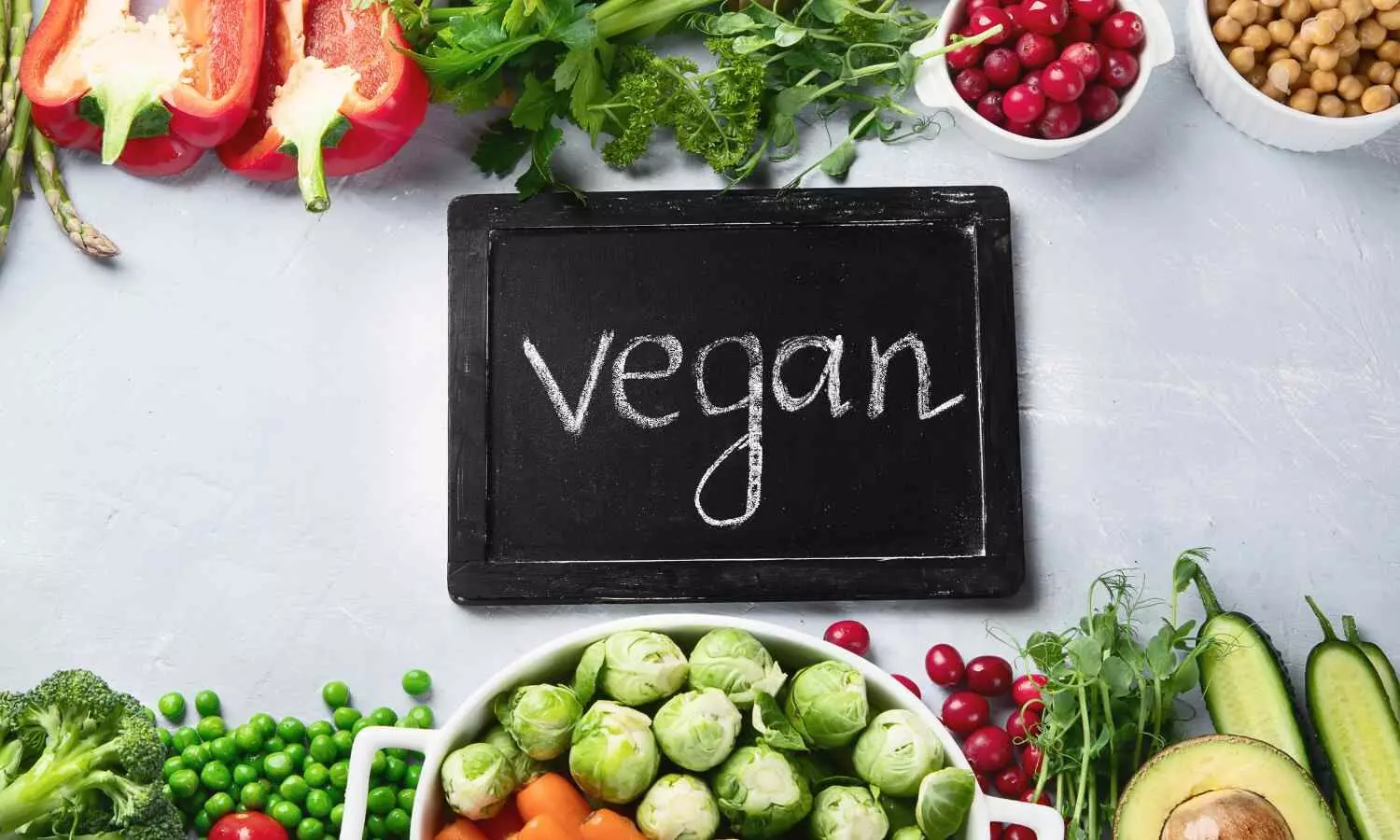


A secondary analysis of a randomized clinical trial found that adopting a vegan diet significantly reduced dietary energy density (calories per gram of food). This reduction was driven by higher consumption of low-energy-density foods such as fruits, vegetables, legumes, and whole grains, and likely contributed to lower calorie intake and weight loss without requiring calorie restriction. The findings suggest that a vegan dietary pattern can be an effective strategy for improving energy balance and supporting healthy weight management. The study was published in JAMA Network Open by Hana K. and colleagues.
In order to test the hypothesis of energy density, the authors have examined the data of 244 adults with overweight that were randomized in a 1:1 ratio into a low-fat vegan group and a control group. In the former case, individuals consumed a diet ad libitum, i.e., fruits, vegetables, grains, and legumes without being limited by calories, whereas in the latter case, the habitual diet was kept. Food intake of the subjects was recorded through 3-day food logs at baseline (week 0) and after 16 weeks.
The nutrition data was processed by the registered dietitian using the Nutrition Data System for Research. Among 244 participants, only 223 (91.0%) finished the study. Energy density for each participant was calculated as the division of the total daily energy intake (kcal/day) on the total food weight (g/day). For the association of change in energy density with body weight loss, repeated measures analysis of variance and linear regression were used.
Key findings:
- The vegan group exhibited a decline in dietary energy density of 30% (effect size, -0.28 kcal/g/d; 95% CI, -0.38 to -0.19 kcal/g/d), while the control group remained unchanged.
- The vegan group also reduced total energy intake substantially more than the control group (effect size, -357.1 kcal/d; 95% CI, -521.9 to -192.3 kcal/d).
- The total daily food weight in the two groups did not differ significantly (effect size, 106.5 g/d; 95% CI, -98.6 to 311.6 g/d).
- Change in energy density significantly correlated with weight loss (r = 0.28; 95% CI, 0.15 to 0.39), and remained significant after taking into account change in total energy intake (r = 0.21; 95% CI, 0.08 to 0.34).
- One kg of body weight loss correlated with 0.29 decrease in energy density (P < .001) which became 0.36 decrease after adjusting for energy intake (P = .002).
Conclusively, in this secondary analysis of a randomized clinical trial, there was significant reduction in the energy density of the diet consumed. This is consistent with a relationship between a low energy density diet and body mass loss. In light of the above results, it can be said that energy density reduction is a critical component in the effect of veganism on weight loss.
Reference:
Kahleova H, Znayenko-Miller T, Maracine C, Holubkov R, Barnard ND. Vegan Diets and Dietary Energy Density: A Secondary Analysis of a Randomized Clinical Trial. JAMA Netw Open. 2026;9(8):e2627483. doi:10.1001/jamanetworkopen.2026.27483