NMC may reconsider 3-year rotatory headship in medical colleges, retain merit-based HoD appointment system
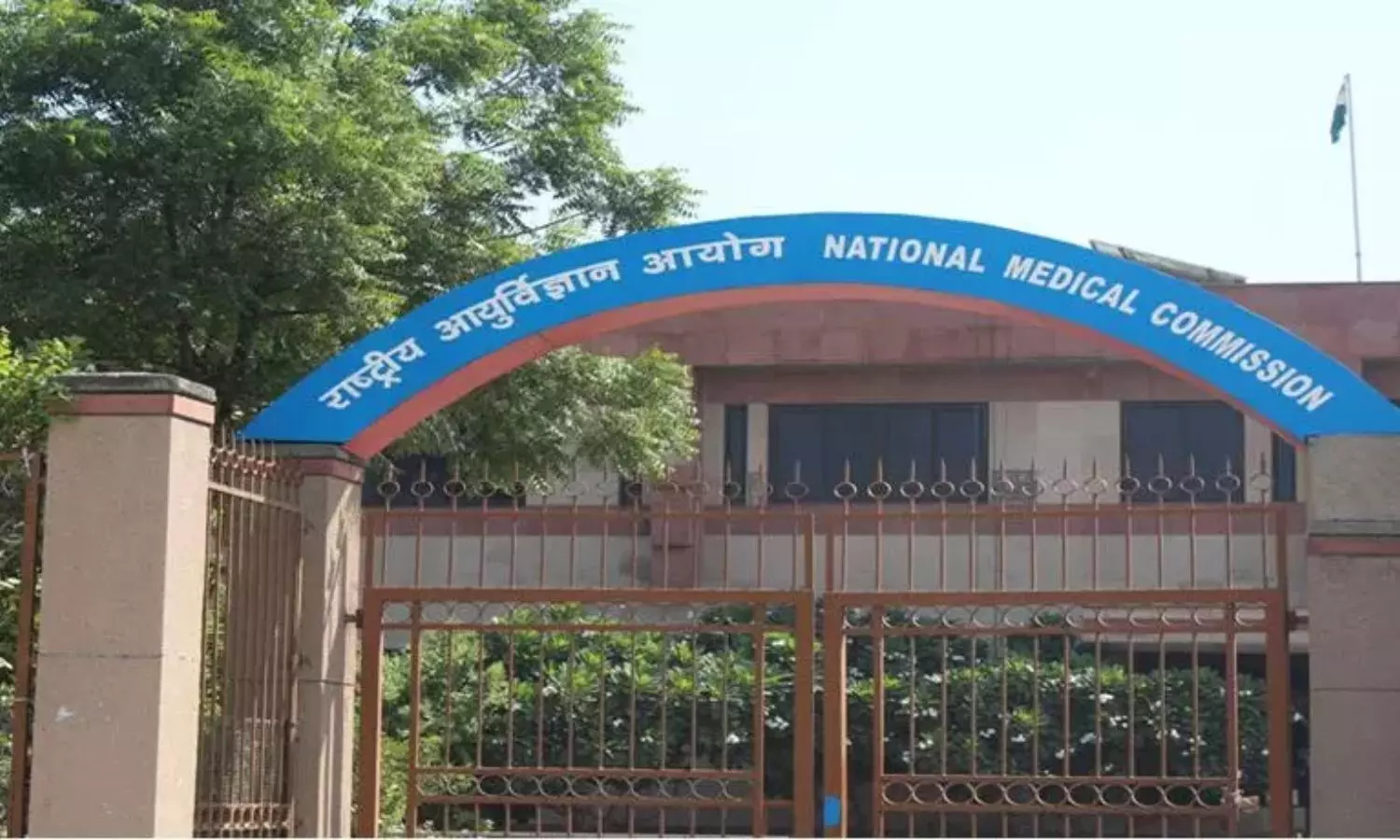
National Medical Commission


New Delhi: Instead of implementing the proposed 3-year rotatory headship in medical colleges, the National Medical Commission may reconsider the policy and retain the existing system that allows flexibility in the HoD tenure and appointment based on merit in medical colleges.
The Apex Medical Commission made this decision after receiving approximately 421 suggestions from medical colleges, academicians, and subject-matter experts on the matter.
Medical Dialogues had reported last year that, proposing changes in the Postgraduate Medical Education Regulations 2023, the NMC had issued amendments and invited feedback from the stakeholders.
NMC's draft regulations, "Post Graduate Medical Education Regulations (Amendment), 2025" were published in the official Gazette on May 30, 2025. In this draft, the Commission proposed to introduce a rotatory headship and include M.S. (Traumatology and Surgery) as a feeder broad speciality qualification for M.Ch Neurosurgery, M.Ch Plastic and Reconstructive Surgery, and M.Ch. Vascular Surgery courses.
Also Read:NMC proposes 3-year Rotatory Headship in Medical College Depts
Regulation 7.1 of the PGMER 2023 discusses the structure of a Department, its Units, its Faculties- Professors, Associate Professors, Assistant Professors, and other members of the Department, including Senior and Junior Residents. Regarding headship, the 2023 Regulations stated that "Each Department will be headed by a Professor."
To amend this, NMC in the draft regulation (Amendment), mentioned that Department headship shall be changed on a rotation basis every three years among Professors and Associate Professors who are eligible to become Professors.
The Commission had proposed to add the following to the existing Regulation 7.1 of PGMER 2023:
"The post of the Head of Department (HoD) will be rotated every three-years amongst Professors and Associate Professors who are eligible to become Professor, who holds Medical Post-graduate degree, based on seniority in the Department."
NMC received around 513 responses- including 421 recommendations related to HoD rotation revision. Among these, 249 responses (59%) were made opposing the policy, while 172 responses (41%) supported it, according to an official statement.
The statement further added that submitting their responses, the stakeholders recommended that academic leadership should be merit-based, and factors such as administrative capacity, research output, and teaching excellence should be considered.
"Academic leadership should be merit-based, considering administrative capacity, research output, and teaching excellence," added the stakeholders.
They also expressed that the fixed HoD tenure will lead to workplace imbalance and could invite dispute. "Frequent changes in leadership could destabilize academic planning and regulatory compliance. Junior Associate Professors may end up supervising senior Professors, leading to workplace disharmony," the stakeholders further mentioned.
Highlighting the ethical and hierarchical challenges, the stakeholders further opined that "Junior Associate Professors may end up supervising senior Professors, leading to workplace disharmony."
"Mandatory rotation without merit criteria may foster internal conflicts. The regulation may undermine the discretion of institutions in selecting their HoDs based on performance and context," they further said.
According to the stakeholders, mandatory rotation without merit criteria may foster internal conflicts, further adding that the regulation may undermine the discretion of institutions in selecting their HoDs based on performance and context.
Therefore, the stakeholders suggested that the appointment of HoDs should be based on a merit-cum-seniority framework and institutional discretion should be preserved.
Taking these responses and suggestions into consideration, the Postgraduate Medical Education Board (PGMEB) of NMC has recommended that the mandatory rotation of HoD tenure should be "revisited".
"It is evident from the comments and suggestions received during the consultation process that there exists strong opposition across multiple departments and institutions regarding this clause. The concerns are not merely based on sentiment but are rooted in well-founded academic, administrative, and institutional reasoning," PGMEB noted.
"Rotation of HoDs every three years may significantly disrupt ongoing academic and research projects that often span longer durations. Leadership stability is crucial for maintaining the strategic direction of postgraduate programs, facilitating collaborations, and ensuring consistent research output. Frequent changes in leadership can fragment institutional memory and hinder the execution of longterm academic goals," it further added.
NMC PG Board further opined that an HoD is not merely an administrative position but a key academic leader who possesses in-depth knowledge of departmental strengths, challenges, faculty development needs, and infrastructural requirements. "Rotation based on a rigid timeline, rather than merit or performance, may lead to suboptimal leadership transitions. It may also result in placing individuals in administrative roles without the requisite aptitude or readiness, thereby compromising departmental governance," it said.
"Modern academic institutions worldwide increasingly favor performance-based evaluations over fixed-term rotations for leadership roles. Leadership positions should be earned and retained based on demonstrated effectiveness, vision, and departmental progress, not rotated mechanically. The implementation of an evaluation framework for HoDs, rather than arbitrary time limits, would be a more scientifically sound and institutionally beneficial approach," opined the PG Board.
"Mandatory short-term rotation may adversely affect faculty morale. In departments with limited senior faculty, the rotation may necessitate appointments that are not based on academic leadership capability, potentially leading to internal discord and inefficiencies. This can also demotivate faculty who may feel constrained by imposed administrative burdens during critical phases of their academic careers," it further noted.
The PG Board further said that a comparative review of global best practices in premier academic medical institutions reveals that fixed-term HoD rotation is rare and generally avoided in favor of outcome-based leadership. Institutions like All India Institute of Medical Sciences (AIIMS) prioritize performance, peer recognition, and administrative capability in HoD selection and tenure extension decisions.
Therefore, PGMEB has suggested continuing with the existing system for better flexibility in the HoD tenure and to introduce periodic performance reviews by a competent authority to ensure credibility and accountability.
Apart from this, the PG Board has also suggested a few key points on the HoD tenure, stating, "Retain the current system that allows flexibility in HoD tenure. Introduce periodic performance review mechanisms by a competent authority. Ensure leadership transitions are guided by institutional need, academic excellence, and proven administrative capability rather than rigid tenure limits."
"This approach will ensure that departmental leadership remains robust, accountable, and aligned with the evolving demands of postgraduate medical education and research in India," added the Board.