
Greater Muscular Strength Linked to Lower Mortality in Older Women, finds study
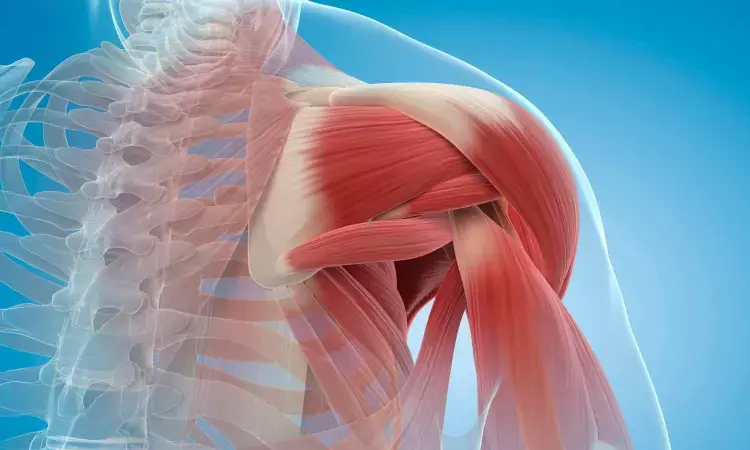


A recent study published in the Journal of the American Medical Association revealed that higher muscular strength was associated with reduced mortality risk, independent of physical activity levels, sedentary time, walking speed, and systemic inflammation in ambulatory older women.
This prospective cohort study followed 5,472 ambulatory women from March 2012 through February 19, 2023, for an average of 8.4 years. Participants had a mean age of 78.7 years and represented diverse racial and ethnic backgrounds: 33.8% were Black, 16.7% Hispanic/Latina, and 49.5% White. Over the study period, 1,964 deaths were recorded.
Muscular strength was assessed using dominant hand grip strength and the time required to complete five unassisted chair stands. Grip strength was categorized into four quartiles measured in kilograms: less than 14 kg, 14–19 kg, 19–24 kg, and greater than 24 kg. Chair stand performance was also divided into quartiles based on completion time in seconds, ranging from more than 16.7 seconds (slowest) to 11.1 seconds or less (fastest).
Women in the highest grip strength quartile (over 24 kg) had a 33% lower risk of death when compared to those in the weakest group. Even those in the third quartile (19–24 kg) experienced a statistically significant survival advantage. Similarly, faster chair stand performance was strongly linked to reduced mortality risk. Women who completed the task in 11.1 seconds or less had a 37% lower risk of death than those who took more than 16.7 seconds.
Also, the protective association remained even after researchers adjusted for age, sociodemographic characteristics, lifestyle factors, and clinical conditions. When additional adjustments were made for accelerometer-measured moderate-to-vigorous physical activity and sedentary time, the strength–mortality relationship weakened slightly but remained statistically significant. This suggests that muscular strength contributes independently to longevity, beyond simply being more physically active.
Further analyses controlled for walking speed and levels of C-reactive protein, a marker of systemic inflammation. The inverse associations persisted, which reinforced the notion that muscle strength itself may serve as a distinct marker of biological aging and physiological reserve.
Notably, the strength–survival link was consistent across subgroups defined by age, race and ethnicity, body mass index, activity levels, sedentary time, and walking performance. This uniformity suggests the findings are broadly applicable among older women. Overall, these findings support that assessing muscular strength, through simple measures like grip testing or chair stands, may offer valuable prognostic information.
Source:
LaMonte, M. J., Hyde, E. T., Nguyen, S., Castro, E., Seguin-Fowler, R. A., Eaton, C. B., Miller, C. R., Di, C., Stefanick, M. L., & LaCroix, A. Z. (2026). Muscular strength and mortality in women aged 63 to 99 years. JAMA Network Open, 9(2), e2559367. https://doi.org/10.1001/jamanetworkopen.2025.59367

