MP HC plea seeks strict implementation of uniform residency scheme across medical colleges
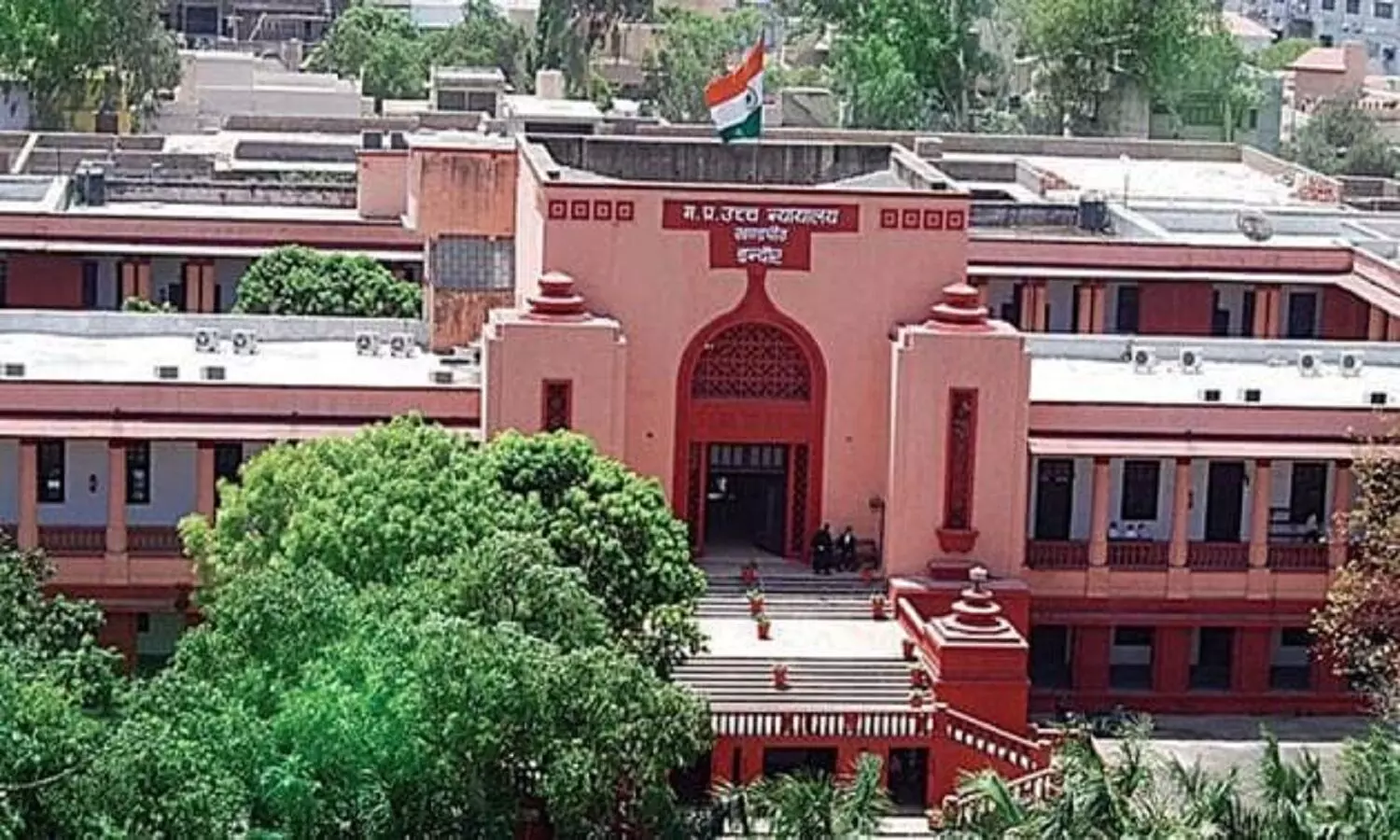 Madhya Pradesh High Court


New Delhi: Pointing out how the resident doctors across Madhya Pradesh are facing long duty hours without any provision for leave, a Public Interest Litigation (PIL) has been filed before the Indore Bench of the Madhya Pradesh High Court seeking strict implementation of the 1992 Uniform Residency Scheme in the medical institutes across the State.
The plea seeks direction to all government and private medical colleges in Madhya Pradesh to strictly and immediately implement the duty hours of Resident Doctors as per the 1992 Residency Scheme. Directions have also been sought on medical colleges to prepare, enforce, and publicly display monthly duty rosters that strictly respect the 12-hour per day / 48-hour per week cap mandated by the 1992 Notification, and to ensure that no Resident Doctor is compelled to work for more than 12 consecutive hours without a mandatory minimum rest period of 12 hours.
Further, the plea has sought a proper, institutionalized leave roster in compliance with the 1992 Notification's mandatory weekly holiday provisions, and a direction to the medical institutes to constitute a Grievance Redressal Mechanism, accessible to Resident Doctors for lodging complaints regarding duty hour violations, with an assurance of non-retaliation against complainants, and to fix individual responsibilities and accountabilities for transparent compliance with duty hour norms.
Commenting on the matter, the counsel for the petitioner, Advocate Amit Patel, said, "The 1992 Residency Scheme must be implemented in letter and spirit across all medical colleges. Humane duty hours, a 48-hour work week, and mandatory weekly off are essential to uphold the dignity, health, and constitutional rights of resident doctors."
Also Read: Doctors move Supreme Court against 'inhuman' working hours for resident doctors
Details of the Plea:
The petitioner, Rishabh Jaiswal, a medical education activist, pointed out that the Supreme Court in the case Dr. Dinesh Kumar and Others v. Motilal Nehru Medical College, Allahabad and Others had instructed all the State Governments, medical institutes, and universities to amend their rules and regulations to introduce a Uniform Central Residency Scheme by 1993, which included specific provisions for fixing working hours, rest periods, and welfare entitlements of Resident Doctors.
Following the Apex Court's order dated 31.08.1990, the Union Health Ministry issued a notification on 05.06.1992, which unequivocally mandated that the continuous active duty of Resident Doctors shall not normally exceed 12 hours at a stretch and 48 hours per week, with adequate provisions for weekly holidays and annual leave.
Referring to the Health Ministry's notification, the petitioner argued that the concerned notification has constitutional force by virtue of being issued in compliance with directions of the Apex Court of India and therefore constitutes binding law.
"...Notwithstanding the binding nature and constitutional force of the aforementioned directions and the 1992 Notification, a substantial number of Government Medical Colleges and Teaching Hospitals in the State of Madhya Pradesh have failed to adhere to the mandated norms. Resident Doctors across these institutions are routinely compelled to work 24 to 36 continuous hours without rest, structured breaks, proper food, or even basic sanitation facilities, thereby engendering systemic disparities, administrative arbitrariness, and gross infringement of the fundamental rights of Resident Doctors under Articles 14, 19, 21, and 23 of the Constitution of India," the plea stated.
In order to highlight the ground reality before the Court, the petitioner also filed a Right to Information (RTI) application before the Madhya Pradesh Medical Council, Bhopal, seeking the duty rosters of Postgraduate Resident Doctors for the months of March and April 2026. He also submitted a formal representation before the Council.
On 28.04.2026, the Council provided the duty rosters of MGM College Infore. "That, Analysis of the said duty rosters reveals a shocking and systematic violation of the 1992 Notification and the directions of the Hon'ble Supreme Court," the plea stated.
Referring to the duty roster, the plea pointed out how the Resident Doctors are required to work from 8:00 AM to 8:00 PM as regular daily duty, without fail, and even on days following night duty. In addition to the regular 12-hour duty, the resident doctors are also assigned to 8-9 night duties per month, without compensatory rest or weekly off.
"It has been specifically observed from the rosters that Resident Doctors are required to perform a night duty from 8:00 PM to 8:00 AM (12 hours), immediately followed by their regular duty from 8:00 AM to 8:00 PM the very next day (another 12 hours), resulting in a continuous 36-hour duty stretch without any break, rest, food, or sleep. This constitutes a direct and brazen violation of the 1992 Notification's mandate that continuous active duty shall not exceed 12 hours," the plea mentioned, further adding that the rosters reveal that no weekly holiday is provided to the resident doctors and the only mechanism for availing leave or a day off is a self-arrangement system, where a doctor seeking a day off must either find a replacement colleague to cover his/her duty, or must compensate by working in place of that collague on another day.
"This effectively means that a Resident Doctor can never truly avail a holiday, as it always comes at the cost of additional duty on another occasion," said the plea.
"The total working hours imposed on Resident Doctors in Madhya Pradesh routinely exceed 70 to 100 hours per week, compared to the mandated ceiling of 48 hours per week. In the most extreme cases, doctors work continuously for 36 hours without rest a condition recognized internationally as cognitively equivalent to functioning at a blood alcohol level of 0.10%, a level deemed unsafe even for driving...aforesaid violations are not isolated incidents but represent a systematic and institutionalized failure across all Government, Private Medical Colleges and Teaching Hospitals in the State of Madhya Pradesh," it further added.
The petitioner further referred to the AIIMS New Delhi circular dated 21.08.2025, where the binding guidelines concerning duty hours of Resident Doctors were issued. Reliance was also place on an Institution of National Importance Under Ministry of Health and Family Welfare Dhanwantari Nagar Puducherry, which implemented the 1992 Uniform Residency Scheme on 28.04.2026.
Further, the petitioner also referred to the directions issued by Smt. Nathiba Hargovandas Lakhmichand Municipal Medical College (Smt. NHL MMC), Ahmedabad, Gujarat, and Indira Gandhi Government Medical College (IGGMC), Nagpur, Maharashtra- specifying that duty hours of Resident Doctors shall not exceed 12 hours per day and 48 hours per week under any circumstances.
Pointing to the gravity of the situation, the plea pointed out that in response to a Right to Information (RTI) application, NMC had informed that 1,166 PG students had left their seats and 119 PG students had committed suicide from 2018 to 2023.
It was also submitted that the petitioner had filed a complaint on the CM Helpline, Madhya Pradesh, specifically reporting serious violations of the Residency Scheme 1992 at MGM Medical College, Indore and GMC Bhopal.
"it is most respectfully submitted that the fundamental right to life enshrined under Article 21 of the Constitution of India has been interpreted expansively by the Hon'ble Supreme Court to include the right to live with human dignity, the right to health, and the right to humane conditions of work. In Bandhua Mukti Morcha v. Union of India (1984) 3 SCC 161, the Hon'ble Supreme Court held that Article 21 must be interpreted to include the right to live with human dignity," stated the plea.
"...the imposition of continuous 36-hour duty shifts without rest, food, or sanitation upon Resident Doctors constitutes inhuman and degrading treatment and is in patent violation of the Fundamental Right to Life with dignity guaranteed under Article 21," it further added.
Highlighting that the absence of regulatory uniformity and oversight in Madhya Pradesh has led to arbitrary and discriminatory formulation of duty rosters, the plea further added, "...in the State of Madhya Pradesh alone, the Petitioner submits that an alarming increase in suicides among Resident Doctors has been recorded in recent years, directly attributable to the excessive and unregulated working conditions. The systematic failure of Respondent institutions to implement humane duty hours continues to drive Resident Doctors to mental health crises and, in the most tragic cases, to suicide. Doctors are compelled to abandon their seats by paying penalties of more than Rs. 30 lakhs as seat-leaving fees, simply to escape the exploitative conditions a practice that amounts to economic coercion and compelled servitude."
"Resident Doctors unable to endure these exploitative conditions are further being compelled to abandon their postgraduate seats by paying exorbitant penalties exceeding Rs. 30 lakhs, causing irreversible financial and professional injury. The injury apprehended to patients and the general public is equally grave, as a sleep-deprived and cognitively impaired doctor is statistically twice as likely to commit diagnostic and procedural errors, directly endangering the lives of patients who depend upon Government hospitals for medical care," it added.
The plea pointed out that the Union Health Ministry on 05.06.1992 fixed the maximum continuous duty hours of resident doctors at 12 hours per day and 48 hours per week, with mandatory weekly holidays. Referring to this, the plea argued that the institutes have brazenly violated these binding directions for more than three decades and the non-implementation amounts to wilful disregard of a constitutional mandate warranting judicial intervention.
"...the 1992 Notification also mandates that Resident Doctors shall be entitled to one weekly holiday by rotation. However, the duty rosters of Respondent institutions reveal that no weekly holiday is provided. Instead, Resident Doctors are forced to arrange their own replacement colleagues before they can avail any day off, which effectively means they never truly receive a holiday. This practice is arbitrary, exploitative, and directly violates the 1992 Notification," the plea stated.
It further mentioned that "the total working hours imposed upon Resident Doctors across Respondent institutions routinely exceed 70 to 100 hours per week, as against the maximum permissible limit of 48 hours per week under the 1992 Notification. Such gross excess directly endangers the health and dignity of Resident Doctors and constitutes a violation of their fundamental right to life with dignity under Article 21 of the Constitution of India...inhumane working conditions and unregulated working hours are a direct violation of the right to life and personal dignity of medical professionals guaranteed under Article 21 of the Constitution. The Hon'ble Supreme Court has consistently held that the right to life includes the right to live with human dignity and the right to humane conditions of work. Compelling Resident Doctors to work 36-hour shifts without rest, food, or sanitation constitutes inhuman and degrading treatment incompatible with this constitutional guarantee."
Speaking to Medical Dialogues, the petitioner, Mr. Jaiswal, said, "It’s time to strictly implement the 1992 Residency Scheme across all medical colleges. Resident doctors are doctors, not bonded labour. They deserve humane duty hours, a 48-hour work week, and one mandatory weekly off. Reducing burnout and protecting their physical and mental health is essential—not only for doctors but also for patient safety and the quality of healthcare."
A similar plea is pending before the Supreme Court seeking the implementation of the 1992 residency scheme. Medical Dialogues had reported that last year, the United Doctors' Front (UDF) filed a Public Interest Litigation (PIL) in the Supreme Court against the "inhumane working hours of resident doctors". The association has challenged the "exploitative and unconstitutional working conditions imposed on resident doctors across the country", read the Press Release dated 24.04.2025 issued by the association.
Earlier this year, the National Medical Commission (NMC) filed its counter affidavit before the Supreme Court, stating that it has already taken necessary steps to regulate working hours and improve the mental well-being of medical students and resident doctors.
Along with this, the commission informed the apex court that the state governments and medical institutions are responsible for the implementation of duty hours because NMC's primary role is to regulate medical education and academic standards under the National Medical Commission Act, 2019.
Also Read: Resident doctors' duty hours implementation lies with states: NMC tells Supreme Court