67 Ophthalmologists, Doctors, Scientists recognised in Stanford University 2026 list of world's top 2% scientists
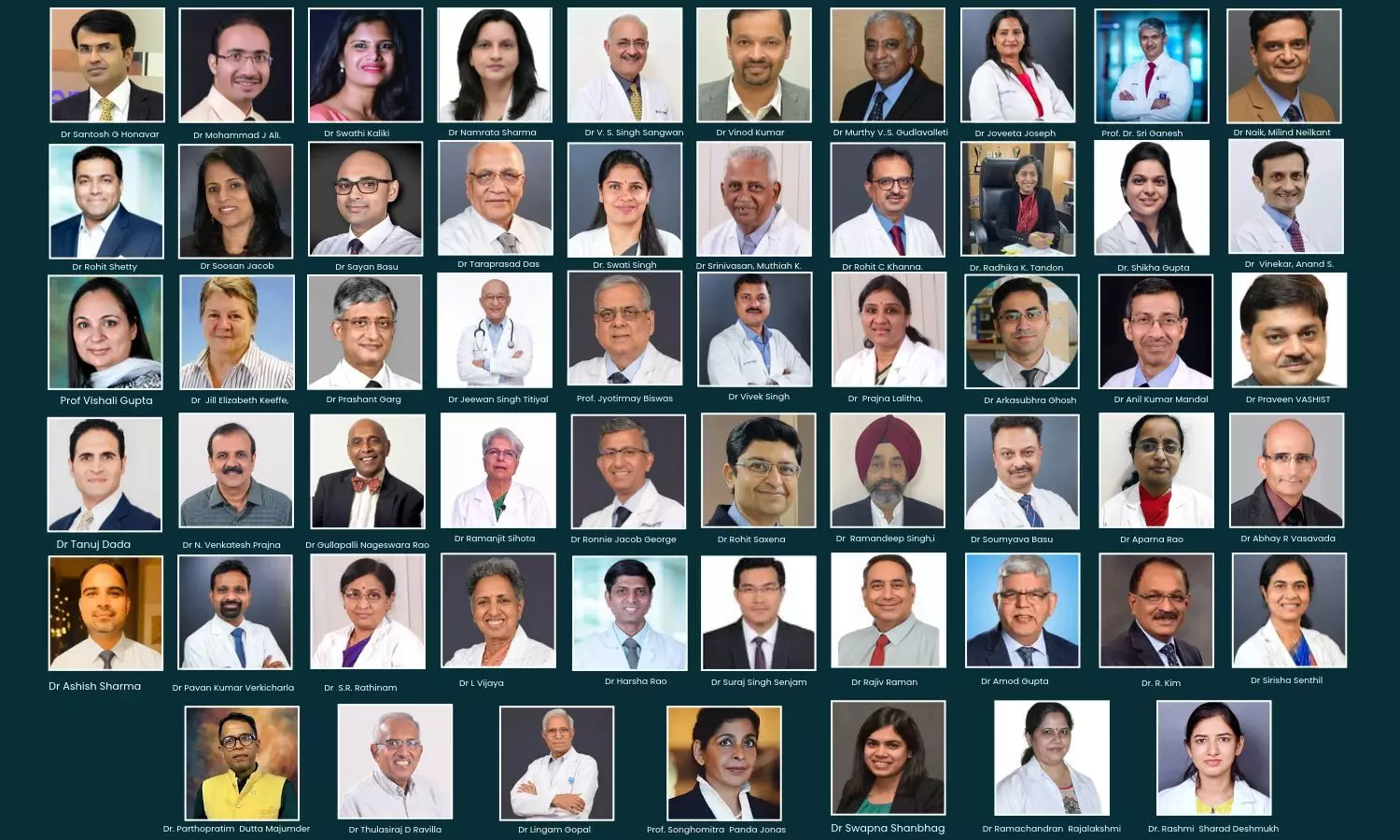


New Delhi: In 2026, a total of 67 ophthalmologists, doctors, and scientists from India's various prestigious health and medical institutes have been recognised among the world's top 2% of scientists in the prestigious database curated by Professor John P.A. Ioannidis of Stanford University, in collaboration with the Elsevier Data Repository.
Being recognised in Stanford University's top 2% list of scientists acknowledges their pioneering research, clinical achievements, and consistent impact on the field.
The database of Stanford University for the year 2026 of top-cited scientists provides standardised information on citations, h-index, co-authorship-adjusted h-index, citations to papers in different authorship positions, and a composite indicator (c-score). The selection is based on the top 100,000 scientists by c-score (with and without self-citations) or a 2% or above percentile rank in the sub-field.
Altogether, 67 Indian ophthalmologists, doctors and scientists have been featured in Stanford University's list for 2026. Their subfield of research is Ophthalmology and Optometry. Below are their details:
1. Jost Bruno Jonas- L.V. Prasad Eye Institute, India:
Jost Bruno Jonas from L.V. Prasad Eye Institute, India, has been recognised as one of the top 2% scientists across the world, as per Stanford University's list of 2026. He holds a rank of 298 in the list based on the composite score excluding self-citations. By the end of 2025, his h-index, excluding self-citations, stands at 94, with a total of 54,452 citations for 2025 (excluding self-citations).
His main field of research is Clinical Medicine; subfield 1 is Ophthalmology and Optometry, and subfield 2 is General and Internal Medicine.
2. Dr Santosh G. Honavar- Centre for Sight:
Dr Santosh G. Honavar from Centre for Sight specialises in Oculoplasty and Ocular Oncology. Dr. Honavar has completed his MBBS from the Bangalore Medical College (Best Graduate of the Bangalore University; 7 Gold Medals); Post-graduate training in Ophthalmology, followed by Senior Residency in Ophthalmic Plastic Surgery at the R P Center for Ophthalmic Sciences, AIIMS, New Delhi (Best Resident award); and Fellowship in Ocular Oncology at the Wills Eye Hospital, Thomas Jefferson University, Philadelphia, PA, USA.
He has been recognised as one of the top 2% scientists across the world, as per Stanford University's list of 2026. He holds a rank of 21203 in the list based on the composite score excluding self-citations. By the end of 2025, his h-index, excluding self-citations, stands at 13, with altogether 858 citations for 2025 (excluding self-citations).
His main field of research is Clinical Medicine; subfield 1 is Ophthalmology and Optometry and subfield 2 is Pathology.
3. Dr Mohammad J. Ali- L.V. Prasad Eye Institute, India:
Prof (Dr.) Mohammad J. Ali is a consultant ophthalmologist at L.V. Prasad Eye Institute, India. He specialises in Ophthalmic Plastic Surgery & Facial Aesthetics, Dacryology, Pediatric Plastics & Ocular Oncology.
Dr. Ali is also the Head of Govindram Seksaria Institute of Dacryology, Distinguished Alumni Chair of Ophthalmology, LVPEI, Network Director, Clinician-Scientist Development Program, and Editor-in-Chief, Seminars in Ophthalmology.
He has been recognised as one of the top 2% scientists across the world, as per Stanford University's list of 2026. He holds a rank of 22836 in the list based on the composite score excluding self-citations. By the end of 2025, his h-index, excluding self-citations, stands at 9, with altogether 683 citations for 2025 (excluding self-citations).
His main field of research is Clinical Medicine; subfield 1 is Ophthalmology and Optometry and subfield 2 is Otorhinolaryngology.
4. Songhomitra Panda-Jonas- L.V. Prasad Eye Institute, India:
Songhomitra Panda-Jonas is the Chairman at Heidelberg Institute of Clinical and Scientific Ophthalmology and Acupuncture. Currently, she is affiliated with L.V. Prasad Eye Institute, India.
She has been recognised as one of the top 2% scientists across the world, as per Stanford University's list of 2026. She holds a rank of 32741 in the list based on the composite score excluding self-citations. By the end of 2025, her h-index, excluding self-citations, stands at 52, with altogether 30508 citations for 2025 (excluding self-citations).
Her main field of research is Clinical Medicine; subfield 1 is Ophthalmology and Optometry, and subfield 2 is General and Internal Medicine.
5. Dr Swathi Kaliki- L.V. Prasad Eye Institute, India:
An internationally recognized Ocular Oncologist, Dr. Swathi Kaliki currently heads the Operation Eyesight Universal Institute for Eye Cancer and the Ophthalmic Plastic Services at the L V Prasad Eye Institute, India.
She has been recognised as one of the top 2% scientists across the world, as per Stanford University's list of 2026. She holds a rank of 50248 in the list based on the composite score excluding self-citations. By the end of 2025, her h-index, excluding self-citations, stands at 11, with altogether 913 citations for 2025 (excluding self-citations).
Her main field of research is Clinical Medicine; subfield 1 is Ophthalmology and Optometry and subfield 2 is General and Internal Medicine.
6. Dr. Namrata Sharma- Dr. Rajendra Prasad Centre for Ophthalmic Sciences:
Dr. Namrata Sharma is a Professor in Cornea, Cataract & Refractive Surgery Services at Dr. Rajendra Prasad Centre for Ophthalmic Sciences, All India Institute of Medical Sciences, New Delhi, India. Her areas of interest are diagnosis and management of ocular surface diseases including Dry Eye, Steven Johnson Syndrome, chemical injuries, corneal transplantation, ocular infections, immunologic diseases of cornea and ocular surface, and cataract and refractive surgery.
He has been recognised as one of the top 2% scientists across the world, as per Stanford University's list of 2026. He holds a rank of 51826 in the list based on the composite score excluding self-citations. By the end of 2025, his h-index, excluding self-citations, stands at 15, with altogether 1342 citations for 2025 (excluding self-citations).
His main field of research is Clinical Medicine; subfield 1 is Ophthalmology and Optometry and subfield 2 is General and Internal Medicine.
7. Dr. V. S. Singh Sangwan- Dr. Shroff’s Charity Eye Hospital
Dr. Sangwan is a renowned ophthalmic surgeon of international repute with over twenty-five years of rich experience. He has been involved with cutting-edge research in eye care, and his major contribution is in the field of translational research in Ophthalmology involving limbal stem cells.
He has been recognised as one of the top 2% scientists across the world, as per Stanford University's list of 2026. He holds a rank of 69071 in the list based on the composite score excluding self-citations. By the end of 2025, his h-index, excluding self-citations, stands at 12, with altogether 963 citations for 2025 (excluding self-citations).
His main field of research is Clinical Medicine; subfield 1 is Ophthalmology and Optometry and subfield 2 is General and Internal Medicine.
8. Dr. Vinod Kumar- Dr. Rajendra Prasad Centre for Ophthalmic Sciences
Dr. Vinod Kumar works as an Additional Professor of Vitreo-retina services at Dr. Rajendra Prasad Centre for Ophthalmic Sciences, All India Institute of Medical Sciences, New Delhi.
He has been recognised as one of the top 2% scientists across the world, as per Stanford University's list of 2026. He holds a rank of 79760 in the list based on the composite score excluding self-citations. By the end of 2025, his h-index, excluding self-citations, stands at 9, with altogether 427 citations for 2025 (excluding self-citations).
His main field of research is Clinical Medicine; subfield 1 is Ophthalmology and Optometry and subfield 2 is Materials.
9. Dr. Murthy V. S. Gudlavalleti- Public Health Foundation of India
Dr. Murthy V. S. Gudlavalleti serves as President of PRASHO Foundation, based in Hyderabad, India, and as Professor of Public Health, Eye Care, and Disability at the London School of Hygiene and Tropical Medicine.
He has been recognised as one of the top 2% of scientists worldwide, according to Stanford University's 2026 list. He holds a rank of 83315 in the list based on the composite score excluding self-citations. By the end of 2025, his h-index, excluding self-citations, stands at 20, with altogether 3694 citations for 2025 (excluding self-citations).
His main field of research is Clinical Medicine; subfield 1 is Ophthalmology and Optometry and subfield 2 is General and Internal Medicine
10. Dr Rohit Shetty- Narayana Nethralaya
Dr. Rohit Shetty is a cornea-refractive surgeon and a clinician scientist with a keen interest in keratoconus and corneal ectatic disorders. He has been practicing high volume refractive surgery for 14 years now. Dr. Rohit Shetty completed his residency in ophthalmology at the St. Johns Medical College for the Diplomate of the National Board. Dr. Shetty obtained his FRCS Glasgow, Scotland, United Kingdom in 2006 and is currently an FRCS examiner. He is the Chief Mentor for the Dual Academic Program (PhD & Clinical Fellowship) at Narayana Nethralaya Eye Institute, Bangalore and Maastricht University.
He has been recognised as one of the top 2% scientists across the world, as per Stanford University's list of 2026. He holds a rank of 85568 in the list based on the composite score excluding self-citations. By the end of 2025, his h-index, excluding self-citations, stands at 13, with altogether 1098 citations for 2025 (excluding self-citations).
His main field of research is Clinical Medicine; subfield 1 is Ophthalmology and Optometry and subfield 2 is Oncology and Carcinogenesis.
11. S. K. Sharma- L.V. Prasad Eye Institute India:
S. K. Sharma of L.V. Prasad Eye Institute India has been recognised as one of the top 2% scientists worldwide, according to Stanford University's 2026 list. Sharma holds a rank of 91653 in the list based on the composite score excluding self-citations. By the end of 2025, Sharma's h-index, excluding self-citations, stands at 11, with altogether 746 citations for 2025 (excluding self-citations).
Sharma's main field of research is Clinical Medicine; subfield 1 is Ophthalmology and Optometry and subfield 2 is Microbiology.
12. Dr. Rajiv P.G. Raman- Sankara Nethralaya
Dr. Rajiv P.G. Raman is a distinguished retinal surgeon and researcher with over 20 years of experience in cutting-edge retinal imaging and patient care. He leads the Diabetic Retinopathy project group at Sankara Nethralaya, and is recognized as a National Diabetic Retinopathy Expert. As a skilled educator, he has mentored and supervised numerous M.Phil and Ph.D. students. Dr. Raman is also a highly sought-after speaker at global conferences and workshops.
He has been recognised as one of the top 2% scientists across the world, as per Stanford University's list of 2026. He holds a rank of 92306 in the list based on the composite score excluding self-citations. By the end of 2025, his h-index, excluding self-citations, stands at 15, with altogether 2409 citations for 2025 (excluding self-citations).
His main field of research is Clinical Medicine; subfield 1 is Ophthalmology and Optometry and subfield 2 is Endocrinology and Metabolism.
13. Dr. Soosan Jacob- Dr. Agarwal's Eye Hospital
Dr. Soosan Jacob is an internationally renowned ophthalmologist and innovator in cataract and refractive surgery, currently serving as Director and Chief of Dr. Agarwal’s Refractive and Cornea Foundation (DARCF) and Senior Consultant at Dr. Agarwal’s Group of Eye Hospitals, Chennai.
She has been recognised as one of the top 2% of scientists worldwide, according to Stanford University's 2026 list. She holds a rank of 108697 in the list based on the composite score excluding self-citations. By the end of 2025, her h-index, excluding self-citations, stands at 10, with altogether 351 citations for 2025 (excluding self-citations).
Her main field of research is Clinical Medicine; subfield 1 is Ophthalmology and Optometry, and subfield 2 is Cardiovascular System and Hematology.
14. Kirandeep Kaur- Chandigarh University
Kirandeep Kaur, a faculty, at Chandigarh University has been recognised as one of the top 2% scientists across the world, as per Stanford University's list of 2026. Kaur holds a rank of 115719 in the list based on the composite score excluding self-citations. By the end of 2025, Kaur's h-index, excluding self-citations, stands at 11, with altogether 691 citations for 2025 (excluding self-citations).
Kaur's main field of research is Clinical Medicine; subfield 1 is Ophthalmology and Optometry and subfield 2 is Gastroenterology and Hepatology.
15. Dr Sayan Basu- L.V. Prasad Eye Institute, India
Dr Sayan Basu holds the Prof D Balasubramanian Chair of Eye Research and directs the Prof Brien Holden Eye Research Centre (BHERC) and the Centre for Ocular Regeneration (CORE). He is also an Adjunct Associate Professor of Ophthalmology at the University of Rochester, USA.
A clinician-scientist and key opinion leader in corneal and ocular surface disorders, Dr Basu specializes in complex, high-risk conditions, including cases with previous surgical failures or complications.
He has been recognised as one of the top 2% scientists across the world, as per Stanford University's list of 2026. He holds a rank of 116070 in the list based on the composite score excluding self-citations. By the end of 2025, his h-index, excluding self-citations, stands at 13, with altogether 978 citations for 2025 (excluding self-citations).
His main field of research is Clinical Medicine; subfield 1 is Ophthalmology and Optometry and subfield 2 is General and Internal Medicine.
16. Dr. Taraprasad Das- L.V. Prasad Eye Institute, India:
Dr Taraprasad Das is the Professor of Ophthalmology at Sun Yat-Sen University, Guangzhou, China, the Adjunct Professor of Ophthalmology at the University of Rochester Medical School, Rochester, NY, USA, and a fellow of the National Academy of Medical Sciences.
He holds several senior leadership roles across global and national platforms. He serves as Regional Chair for South-East Asia at the International Agency for Prevention of Blindness (IAPB) and as President of the Asia Pacific Vitreo-Retinal Society (APVRS).
He has been recognised as one of the top 2% scientists across the world, as per Stanford University's list of 2026. He holds a rank of 117392 in the list based on the composite score excluding self-citations. By the end of 2025, his h-index, excluding self-citations, stands at 9, with altogether 560 citations for 2025 (excluding self-citations).
His main field of research is Clinical Medicine; subfield 1 is Ophthalmology and Optometry and subfield 2 is General and Internal Medicine.
17. Dr. Swati Singh- L.V. Prasad Eye Institute, India:
Dr Swati Singh is an ophthalmologist at the L V. Prasad Eye Institute, where she manages and treats patients with dry eye disease, ocular surface diseases like Stevens-Johnson syndrome, and patients requiring eyelid surgeries. Her current focus of interest is improving tear production in patients with dry eye disease.
She has been recognised as one of the top 2% scientists across the world, as per Stanford University's list of 2026. She holds a rank of 129221 in the list based on the composite score excluding self-citations. By the end of 2025, her h-index, excluding self-citations, stands at 9, with altogether 481 citations for 2025 (excluding self-citations).
Her main field of research is Clinical Medicine; subfield 1 is Ophthalmology and Optometry and subfield 2 is Anatomy and Morphology.
18. Dr. Muthiah K. Srinivasan - Aravind Eye Care System
Dr. M. Srinivasan, one of the founding members of Aravind Eye Care System, joined the organisation as a Medical Officer in the Cornea Clinic in 1981. He headed and developed the Cornea Clinic and now is the Director – Emeritus of Aravind Eye Care System. He is the Director of Aravind Integrated Eye Bank Services. He is a lifetime member of All India Ophthalmological Society, Tamil Nadu State Ophthalmic Association; National Society for Preventive of Blindness and Eye Bank Association of India.
He has been recognised as one of the top 2% scientists across the world, as per Stanford University's list of 2026. He holds a rank of 129474 in the list based on the composite score excluding self-citations. By the end of 2025, his h-index, excluding self-citations, stands at 10, with altogether 582 citations for 2025 (excluding self-citations).
His main field of research is Clinical Medicine; subfield 1 is Ophthalmology and Optometry and subfield 2 is General and Internal Medicine.
19. Dr. Rohit C. Khanna- L.V. Prasad Eye Institute India
Dr Rohit C Khanna is the Network Director for the Public Health Unit at LVPEI’s Gullapalli Pratibha Rao International Centre for Advancement of Rural Eye Care (GPR ICARE). He is also an Adjunct Associate Professor of Ophthalmology at the University of Rochester School of Medicine and Dentistry, USA, and a Conjoint Associate Professor at the University of New South Wales, Australia. An active participant in several working groups of the International Agency for Prevention of Blindness (IAPB) and World Health Organization (WHO), Dr Khanna serves as the IAPB Regional Chair for the South-East Asia region.
He has been recognised as one of the top 2% scientists across the world, as per Stanford University's list of 2026. He holds a rank of 129554 in the list based on the composite score excluding self-citations. By the end of 2025, his h-index, excluding self-citations, stands at 13, with altogether 2485 citations for 2025 (excluding self-citations).
His main field of research is Clinical Medicine; subfield 1 is Ophthalmology and Optometry and subfield 2 is General and Internal Medicine.
20. Mitthanamalli Shanmugam Sridhar- Krishna Institute of Medical Sciences
Mitthanamalli Shanmugam Sridhar from Krishna Institute of Medical Sciences has been recognised as one of the top 2% scientists across the world, as per Stanford University's list of 2026. Sridhar holds a rank of 135955 in the list based on the composite score excluding self-citations. By the end of 2025, Sridhar's h-index, excluding self-citations, stands at 5, with altogether 200 citations for 2025 (excluding self-citations).
Sridhar's main field of research is Clinical Medicine; subfield 1 is Ophthalmology and Optometry and subfield 2 is Oncology and Carcinogenesis.
21. Philip Aloysius Thomas- Joseph Eye Hospital, India
Philip Aloysius Thomas from Joseph Eye Hospital, India has been recognised as one of the top 2% scientists across the world, as per Stanford University's list of 2026. He holds a rank of 143479 in the list based on the composite score excluding self-citations. By the end of 2025, his h-index, excluding self-citations, stands at 9, with altogether 278 citations for 2025 (excluding self-citations).
His main field of research is Clinical Medicine; subfield 1 is Ophthalmology and Optometry and subfield 2 is Microbiology.
22. Dr. Vishali S. Gupta- Postgraduate Institute of Medical Education and Research, Chandigarh
Prof. Vishali Gupta is an accomplished vitreo-retina and uvea expert of international repute working at Post Graduate Institute of Medical Education and Research Chandigarh-India. She has a keen interest in the inflammation and infections of the eye and has a lot of original work on intraocular tuberculosis, fungal infections and diabetic retinopathy.
She has been recognised as one of the top 2% scientists across the world, as per Stanford University's list of 2026. She holds a rank of 145178 in the list based on the composite score excluding self-citations. By the end of 2025, her h-index, excluding self-citations, stands at 13, with altogether 1135 citations for 2025 (excluding self-citations).
Her main field of research is Clinical Medicine; subfield 1 is Ophthalmology and Optometry and subfield 2 is Immunology.
23. Dr. Jill Elizabeth Keeffe- L.V. Prasad Eye Institute, India
Dr. Keffe is a faculty member at the L.V. Prasad Eye Institute in Hyderabad, India, where she works for the advancement of rural eye care and vision rehabilitation.
She has been recognised as one of the top 2% scientists across the world, as per Stanford University's list of 2026. She holds a rank of 151503 in the list based on the composite score excluding self-citations. By the end of 2025, her h-index, excluding self-citations, stands at 12, with altogether 1446 citations for 2025 (excluding self-citations).
Her main field of research is Clinical Medicine; subfield 1 is Ophthalmology and Optometry and subfield 2 is General and Internal Medicine.
24. Dr. Prashant K. Garg- L.V. Prasad Eye Institute, India
An internationally renowned leader in corneal infections, anti-microbial resistance and eye banking, Dr. Prashant Garg is the Executive Chair LVPEI, succeeding the founder Chairman Dr Gullapalli N Rao. He received numerous prestigious awards, both national and international, and he is on the Boards of several international organizations, societies and scientific journals.
He has been recognised as one of the top 2% scientists across the world, as per Stanford University's list of 2026. He holds a rank of 152727 in the list based on the composite score excluding self-citations. By the end of 2025, his h-index, excluding self-citations, stands at 10, with altogether 526 citations for 2025 (excluding self-citations).
His main field of research is Clinical Medicine; subfield 1 is Ophthalmology and Optometry and subfield 2 is Microbiology.
25. Dr. Jeewan Singh Titiyal- Tirupati Eye Centre
Prof. Dr. Jeewan Singh Titiyal is a highly distinguished ophthalmologist and Padma Shri awardee (2014) with over four decades of experience in Cornea, Cataract, and Refractive Surgery.
He has been recognised as one of the top 2% scientists across the world, as per Stanford University's list of 2026. He holds a rank of 161609 in the list based on the composite score excluding self-citations. By the end of 2025, his h-index, excluding self-citations, stands at 9, with altogether 562 citations for 2025 (excluding self-citations).
His main field of research is Clinical Medicine; subfield 1 is Ophthalmology and Optometry and subfield 2 is General and Internal Medicine.
26. Dr. Jyotirmay Biswas- Sankara Nethralaya
Prof. Jyotirmay Biswas is an ophthalmologist who has specialized in uveitis and ophthalmic pathology. He has done fellowship in vitreoretinal surgery from Sankara Nethralaya and a fellowship in ophthalmic pathology from University of Southern California, USA.
He has been recognised as one of the top 2% scientists across the world, as per Stanford University's list of 2026. He holds a rank of 175704 in the list based on the composite score excluding self-citations. By the end of 2025, his h-index, excluding self-citations, stands at 10, with altogether 705 citations for 2025 (excluding self-citations).
His main field of research is Clinical Medicine; subfield 1 is Ophthalmology and Optometry and subfield 2 is Oncology and Carcinogenesis.
27. Dr. Vivek K. Singh- L.V. Prasad Eye Institute, India
Dr. Vivek Singh is a distinguished expert in ocular regenerative medicine and a senior faculty member at the Centre for Ocular Regeneration. He completed his Master’s degree in Biotechnology from Maharaja Sayajirao University, Vadodara and earned his Ph.D. from the School of Biotechnology, Banaras Hindu University (BHU), Varanasi. He further advanced his research training through a four-year postdoctoral fellowship at the prestigious Cole Eye Institute, Cleveland Clinic, Ohio, USA.
He has been recognised as one of the top 2% scientists across the world, as per Stanford University's list of 2026. He holds a rank of 177871 in the list based on the composite score excluding self-citations. By the end of 2025, his h-index, excluding self-citations, stands at 11, with altogether 592 citations for 2025 (excluding self-citations).
His main field of research is Clinical Medicine; subfield 1 is Ophthalmology and Optometry and subfield 2 is Plant Biology and Botany.
28. Dr. Prajna S. Lalitha- Aravind Eye Care System
Dr. Lalitha graduated in medicine Kilpauk Medical College, Chennai, MD from Madurai Medical College and DNB from Aravind Eye Hospital, Madurai. She joined Aravind Madurai as Ocular Microbiologist in 1998. Her research focuses on the immunopathogenetic mechanisms of fungal and bacterial corneal ulcers. Her other areas of interest are to develop and apply molecular diagnostic techniques in the diagnosis of various ocular infections.
He has been recognised as one of the top 2% scientists across the world, as per Stanford University's list of 2026. He holds a rank of 178950 in the list based on the composite score excluding self-citations. By the end of 2025, his h-index, excluding self-citations, stands at 10, with altogether 633 citations for 2025 (excluding self-citations).
His main field of research is Clinical Medicine; subfield 1 is Ophthalmology and Optometry and subfield 2 is Microbiology.
29. Arkasubhra Ghosh- Narayana Netralaya Foundation
Arkasubhra Ghosh is the Chief Scientist of Molecular Signaling and Gene Therapy at Narayana Netralaya Foundation. He has been recognised as one of the top 2% scientists across the world, as per Stanford University's list of 2026. He holds a rank of 179331 in the list based on the composite score excluding self-citations. By the end of 2025, his h-index, excluding self-citations, stands at 14, with altogether 873 citations for 2025 (excluding self-citations).
His main field of research is Clinical Medicine; subfield 1 is Ophthalmology and Optometry and subfield 2 is Biotechnology.
30. Tanuj Dada- Dr. Rajendra Prasad Centre for Ophthalmic Sciences
Tanuj Dada works at the Department of Ophthalmology, Dr. Rajendra Prasad Centre for Ophthalmic Sciences, AIIMS, New Delhi, India.
He has been recognised as one of the top 2% scientists across the world, as per Stanford University's list of 2026. He holds a rank of 179764 in the list based on the composite score excluding self-citations. By the end of 2025, his h-index, excluding self-citations, stands at 8, with altogether 559 citations for 2025 (excluding self-citations).
His main field of research is Clinical Medicine; subfield 1 is Ophthalmology and Optometry and subfield 2 is General and Internal Medicine.
31. Dr. Namperumalsamy Venkatesh Prajna- Aravind Eye Care System
Dr. N. Venkatesh Prajna graduated in medicine from Madurai Medical College in 1989, DO and DNB from Aravind Eye Hospital, Madurai in 1992 & 1993. He is the chief of the Department of Medical Education and the chief of the Cornea Department of Aravind Eye Hospitals. He is also the secretary of the Govel Trust, which runs the organization.
He has been recognised as one of the top 2% scientists across the world, as per Stanford University's list of 2026. He holds a rank of 191117 in the list based on the composite score excluding self-citations. By the end of 2025, his h-index, excluding self-citations, stands at 11, with altogether 658 citations for 2025 (excluding self-citations).
His main field of research is Clinical Medicine; subfield 1 is Ophthalmology and Optometry and subfield 2 is Microbiology.
32. Ramachandran Rajalakshmi- Madras Diabetes Research Foundation
Ramachandran Rajalakshmi is the Head, Medical Retina and Ocular Research at Madras Diabetes Research Foundation. He has been recognised as one of the top 2% scientists across the world, as per Stanford University's list of 2026. He holds a rank of 193526 in the list based on the composite score excluding self-citations. By the end of 2025, his h-index, excluding self-citations, stands at 9, with altogether 375 citations for 2025 (excluding self-citations).
His main field of research is Clinical Medicine; subfield 1 is Ophthalmology and Optometry and subfield 2 is Endocrinology and Metabolism.
33. Dr. Gullapalli Nageswara Rao- L.V. Prasad Eye Institute, India
Dr. Gullapalli N Rao is the founder-chair of L V Prasad Eye Institute. He received his basic medical education in Guntur, Andhra Pradesh, and completed his postgraduate residency training at Dr. Rajendra Prasad Centre for Ophthalmic Sciences, All India Institute of Medical Sciences, New Delhi. In the US, he trained at Tufts University School of Medicine in Boston, and later at the School of Medicine, University of Rochester, where he continued on the faculty until 1986.
He has been recognised as one of the top 2% scientists across the world, as per Stanford University's list of 2026. He holds a rank of 199710 in the list based on the composite score excluding self-citations. By the end of 2025, his h-index, excluding self-citations, stands at 7, with altogether 394 citations for 2025 (excluding self-citations).
His main field of research is Clinical Medicine; subfield 1 is Ophthalmology and Optometry and subfield 2 is General and Internal Medicine.
34. Dr. Ramanjit Sihota- Shroff Eye Centre
Dr. Ramanjit Sihota is Senior Glaucoma Consultant at Shroff Eye Centre. He has been recognised as one of the top 2% scientists across the world, as per Stanford University's list of 2026. He holds a rank of 200835 in the list based on the composite score excluding self-citations. By the end of 2025, his h-index, excluding self-citations, stands at 7, with altogether 314 citations for 2025 (excluding self-citations).
His main field of research is Clinical Medicine; subfield 1 is Ophthalmology and Optometry and subfield 2 is Developmental Biology.
35. Dr. Ronnie Jacob George- Sankara Nethralaya
Dr. Ronnie George is a highly qualified and recognized ophthalmologist with extensive expertise in the field of glaucoma. With a distinguished career, he has been actively involved in both clinical practice and research. Dr. George has made significant contributions to the field through his extensive publication record in peer-reviewed national and international journals.
He has been recognised as one of the top 2% scientists across the world, as per Stanford University's list of 2026. He holds a rank of 203514 in the list based on the composite score excluding self-citations. By the end of 2025, his h-index, excluding self-citations, stands at 13, with altogether 3743 citations for 2025 (excluding self-citations).
His main field of research is Clinical Medicine; subfield 1 is Ophthalmology and Optometry and subfield 2 is Tropical Medicine.
36. Dr Rohit P.N. Saxena- Dr. Rajendra Prasad Centre for Ophthalmic Sciences
Dr Rohit Saxena is an ophthalmology clinician and researcher with 26 years of teaching experience and serving more than 20 years as faculty at AIIMS (since 2003). Dr. Saxena is recognized globally for contributions to pediatric ophthalmology, strabismus, neuro-ophthalmology, and childhood myopia research.
He has been recognised as one of the top 2% scientists across the world, as per Stanford University's list of 2026. He holds a rank of 207274 in the list based on the composite score excluding self-citations. By the end of 2025, his h-index, excluding self-citations, stands at 11, with altogether 584 citations for 2025 (excluding self-citations).
His main field of research is Clinical Medicine; subfield 1 is Ophthalmology and Optometry, and subfield 2 is Pediatrics.
37. Dr. Ramandeep Singh- Postgraduate Institute of Medical Education and Research, Chandigarh
Dr. Ramandeep Singh is a Professor at Postgraduate Institute of Medical Education and Research, Chandigarh. He has been recognised as one of the top 2% scientists across the world, as per Stanford University's list of 2026. He holds a rank of 210830 in the list based on the composite score excluding self-citations. By the end of 2025, his h-index, excluding self-citations, stands at 10, with altogether 817 citations for 2025 (excluding self-citations).
His main field of research is Clinical Medicine; subfield 1 is Ophthalmology and Optometry and subfield 2 is Microbiology.
38. Dr. Ashish G. Sharma- Lotus Eye Hospital and Institute
Dr. Ashish G. Sharma is a consultant in retina and retinal research at Lotus Eye Hospital and Institute.
He has been recognised as one of the top 2% scientists across the world, as per Stanford University's list of 2026. He holds a rank of 211597 in the list based on the composite score excluding self-citations. By the end of 2025, his h-index, excluding self-citations, stands at 9, with altogether 452 citations for 2025 (excluding self-citations).
His main field of research is Clinical Medicine; subfield 1 is Ophthalmology and Optometry and subfield 2 is Urology and Nephrology.
39. Dr. Pavan Kumar Verkicharla- V Prasad Eye Institute
Dr Pavan Verkicharla is the Scientist researching on both basic and translational aspects of myopia at the myopia research lab in L V Prasad Eye Institute, India. He heads 'The Myopia Centre’ at the LVPEI where they actively provide various anti-myopia strategies.
He is a committee member and an ambassador for International Myopia Institute and serves as a reviewer for various optometry/ophthalmology scientific journals. Dr Pavan Verkicharla is a recipient of the prestigious "Bernard Gilmartin Award" from college of optometrists, UK and the "INSPIRE Faculty Award" from the DST-Government of India. He holds grants from both private organizations and the government of India for researching various aspects of myopia through a holistic approach.
He has been recognised as one of the top 2% scientists across the world, as per Stanford University's list of 2026. He holds a rank of 211864 in the list based on the composite score excluding self-citations. By the end of 2025, his h-index, excluding self-citations, stands at 13, with altogether 475 citations for 2025 (excluding self-citations).
His main field of research is Clinical Medicine; subfield 1 is Ophthalmology and Optometry, and subfield 2 is Optics.
40. Dr. Sivakumar R.Rathinam - Aravind Eye Hospital
Dr. S.R. Rathinam is the Chief of Uveitis Service & Principal of PG Institute of Ophthalmology. She graduated in medicine from Madurai University, DO, DNB and MNAMS (Ophthalmology) from Aravind Eye Hospital, Madurai, PhD from Dr. M.G.R. University, and FAMS from the National Academy of Medical Sciences, New Delhi.
She has been recognised as one of the top 2% scientists across the world, as per Stanford University's list of 2026. She holds a rank of 224938 in the list based on the composite score excluding self-citations. By the end of 2025, her h-index, excluding self-citations, stands at 8, with altogether 269 citations for 2025 (excluding self-citations).
Her main field of research is Clinical Medicine; subfield 1 is Ophthalmology and Optometry and subfield 2 is Microbiology.
41. Dr. Lingam Vijaya - Medical Research Foundation, Chennai
Dr. L Vijaya is a highly accomplished ophthalmologist with extensive experience and expertise in the field of glaucoma and cataract. She headed the glaucoma department at Sankara Nethralaya for more than twenty years and trained many glaucoma specialists within the country and elsewhere in the world.
She has been recognised as one of the top 2% scientists across the world, as per Stanford University's list of 2026. She holds a rank of 228896 in the list based on the composite score excluding self-citations. By the end of 2025, his h-index, excluding self-citations, stands at 11, with altogether 2043 citations for 2025 (excluding self-citations).
Her main field of research is Clinical Medicine; subfield 1 is Ophthalmology and Optometry and subfield 2 is Developmental Biology.
42. Dr Harsha L. Rao- Narayana Nethralaya
Dr Harsha Rao, is currently working as a senior consultant in the Department of Glaucoma at Narayana Nethralaya, Bengaluru. He is also on the faculty at the University Eye Clinic Maastricht, University Medical Center, Maastricht, the Netherlands.
He had also held the positions of Adjunct Assistant Professor of Ophthalmology at the School of Medicine and Dentistry, University of Rochester Medical Center, Rochester, New York between October 2010 and April 2015, and the School of Medicine, Case Western Reserve University, Cleveland, Ohio between July 2011 and April 2015. He was a member of the Associate Advisory Board of World Glaucoma Association from 2011 to 2019. He completed his PhD from Maastricht University, Netherlands in 2018.
He has been recognised as one of the top 2% scientists across the world, as per Stanford University's list of 2026. He holds a rank of 229812 in the list based on the composite score excluding self-citations. By the end of 2025, his h-index, excluding self-citations, stands at 9, with altogether 509 citations for 2025 (excluding self-citations).
His main field of research is Clinical Medicine; subfield 1 is Ophthalmology and Optometry and subfield 2 is Cardiovascular System and Hematology.
43. Dr. Suraj Singh Senjam- Dr. Rajendra Prasad Centre for Ophthalmic Sciences
Dr. Suraj is a Professor working in Community Ophthalmology at Dr. Rajendra Prasad Centre for Ophthalmic Sciences, All India Institute of Medical Sciences, New Delhi. He has done his post-graduation in Community Medicine from PGIMER, Chandigarh, and completed a master’s degree in Public Health for Eye Care from the London School of Hygiene & Tropical Medicine (LSHTM), London. He has extensively worked in assistive technology in collaboration with national and international organizations, including WHO.
He has been recognised as one of the top 2% of scientists worldwide, according to Stanford University's 2026 list. He holds a rank of 230165 in the list based on the composite score excluding self-citations. By the end of 2025, his h-index, excluding self-citations, stands at 6, with altogether 191 citations for 2025 (excluding self-citations).
His main field of research is Clinical Medicine; subfield 1 is Ophthalmology and Optometry and subfield 2 is General and Internal Medicine.
44. Vaitheeswaran Kulothungan- Indian Council of Medical Research
Vaitheeswaran Kulothungan is a medical and epidemiological research professional, associated as a scientist with the Indian Council of Medical Research.
He has been recognised as one of the top 2% scientists across the world, as per Stanford University's list of 2026. He holds a rank of 238785 in the list based on the composite score excluding self-citations. By the end of 2025, his h-index, excluding self-citations, stands at 10, with altogether 1704 citations for 2025 (excluding self-citations).
His main field of research is Clinical Medicine; subfield 1 is Ophthalmology and Optometry and subfield 2 is General and Internal Medicine.
45. Murugesan Vanathi- Sathyabama Institute of Science and Technology
Murugesan Vanathi from Sathyabama Institute of Science and Technology has been recognised as one of the top 2% scientists across the world, as per Stanford University's list of 2026. She holds a rank of 249891 in the list based on the composite score excluding self-citations. By the end of 2025, her h-index, excluding self-citations, stands at 8, with altogether 358 citations for 2025 (excluding self-citations).
Her main field of research is Clinical Medicine; subfield 1 is Ophthalmology and Optometry and subfield 2 is Microbiology.
46. Amod K. Gupta- Postgraduate Institute of Medical Education and Research, Chandigarh
Prof (Dr.) Amod K. Gupta is a Professor Emeritus at Postgraduate Institute of Medical Education and Research, Chandigarh. He has been recognised as one of the top 2% scientists across the world, as per Stanford University's list of 2026. He holds a rank of 251926 in the list based on the composite score excluding self-citations. By the end of 2025, his h-index, excluding self-citations, stands at 9, with altogether 538 citations for 2025 (excluding self-citations).
His main field of research is Clinical Medicine; subfield 1 is Ophthalmology and Optometry and subfield 2 is General and Internal Medicine.
47. Dr. Parthopratim Dutta Majumder- Medical Research Foundation, Chennai
Dr. Parthopratim Dutta Majumder from Medical Research Foundation, Chennai is a clinician and cataract surgeon. He has been recognised as one of the top 2% scientists across the world, as per Stanford University's list of 2026. He holds a rank of 255424 in the list based on the composite score excluding self-citations. By the end of 2025, his h-index, excluding self-citations, stands at 8, with altogether 260 citations for 2025 (excluding self-citations).
His main field of research is Clinical Medicine; subfield 1 is Ophthalmology and Optometry and subfield 2 is Immunology.
48. Dr. Rashmi Sharad Deshmukh- L.V. Prasad Eye Institute, India:
Dr. Rashmi Sharad Deshmukh is a consultant ophthalmologist at L.V. Prasad Eye Institute, India.
She has been recognised as one of the top 2% scientists across the world, as per Stanford University's list of 2026. She holds a rank of 263345 in the list based on the composite score excluding self-citations. By the end of 2025, her h-index, excluding self-citations, stands at 9, with altogether 369 citations for 2025 (excluding self-citations).
Her main field of research is Clinical Medicine; subfield 1 is Ophthalmology and Optometry and subfield 2 is Immunology.
49. Dr. Kim Ramasamy- Aravind Eye Hospital
Dr. Kim Ramasamy is the Chief Medical Officer and Senior Medical Consultant, Retina & Vitreous Services and Director of Information Technology & Systems at Aravind Eye Hospital, Madurai.
He has been recognised as one of the top 2% scientists across the world, as per Stanford University's list of 2026. He holds a rank of 272786 in the list based on the composite score excluding self-citations. By the end of 2025, his h-index, excluding self-citations, stands at 10, with altogether 1379 citations for 2025 (excluding self-citations).
His main field of research is Clinical Medicine; subfield 1 is Ophthalmology and Optometry and subfield 2 is General and Internal Medicine.
50. Radhika K. Tandon- Dr. Rajendra Prasad Centre for Ophthalmic Sciences
Dr. Radhika K. Tandon is the Chief, Professor of Ophthalmology, at Dr. Rajendra Prasad Centre for Ophthalmic Sciences. She has been recognised as one of the top 2% of scientists worldwide, according to Stanford University's 2026 list. She holds a rank of 286119 in the list based on the composite score excluding self-citations. By the end of 2025, her h-index, excluding self-citations, stands at 10, with altogether 626 citations for 2025 (excluding self-citations).
Her main field of research is Clinical Medicine; subfield 1 is Ophthalmology and Optometry and subfield 2 is Microbiology.
51. Dr. Thirumurthy Velpandian- Dr. Rajendra Prasad Centre for Ophthalmic Sciences
Dr. Thirumurthy Velpandian is a Professor at Dr. Rajendra Prasad Centre for Ophthalmic Sciences. He has been recognised as one of the top 2% scientists across the world, as per Stanford University's list of 2026. He holds a rank of 287743 in the list based on the composite score excluding self-citations. By the end of 2025, his h-index, excluding self-citations, stands at 8, with altogether 420 citations for 2025 (excluding self-citations).
His main field of research is Clinical Medicine; subfield 1 is Ophthalmology and Optometry and subfield 2 is Pharmacology and Pharmacy.
52. Dr. Swapna S. Shanbhag- L.V. Prasad Eye Institute, India:
Dr. Swapna S. Shanbhag is an Ophthalmologist, specialising in corneal disorders, ocular surface diseases, and treating cataracts and refractive errors. She currently works at Maxvision Super Speciality Eye Hospital.
She has been recognised as one of the top 2% scientists across the world, as per Stanford University's list of 2026. She holds a rank of 296956 in the list based on the composite score excluding self-citations. By the end of 2025, her h-index, excluding self-citations, stands at 9, with altogether 419 citations for 2025 (excluding self-citations).
Her main field of research is Clinical Medicine; subfield 1 is Ophthalmology and Optometry and subfield 2 is General and Internal Medicine.
53. Dr. Shikha Gupta- Dr. Rajendra Prasad Centre for Ophthalmic Sciences:
Dr. Shikha Gupta, M.D., has worked as an Additional Professor at Dr. Rajendra Prasad Centre for Ophthalmic Sciences, All India Institute of Medical Sciences (AIIMS), New Delhi since 2016. Dr. Gupta graduated (MBBS), completed post-graduation in Ophthalmology, and subsequent super-speciality training from AIIMS, New Delhi.
She has been recognised as one of the top 2% scientists across the world, as per Stanford University's list of 2026. She holds a rank of 316665 in the list based on the composite score excluding self-citations. By the end of 2025, her h-index, excluding self-citations, stands at 8, with altogether 427 citations for 2025 (excluding self-citations).
Her main field of research is Clinical Medicine; subfield 1 is Ophthalmology and Optometry and subfield 2 is Environmental Sciences.
54. Dr. Sri Ganesh- Nethradhama Superspeciality Eye Hospital
Prof. (Dr.) Sri Ganesh, a prominent figure in Ophthalmology, holds the esteemed position of Chairman and Managing Director at Nethradhama Hospitals Pvt Ltd in Bangalore, India.
He has been recognised as one of the top 2% scientists across the world, as per Stanford University's list of 2026. He holds a rank of 320339 in the list based on the composite score excluding self-citations. By the end of 2025, his h-index, excluding self-citations, stands at 6, with altogether 205 citations for 2025 (excluding self-citations).
His main field of research is Clinical Medicine; subfield 1 is Ophthalmology and Optometry and subfield 2 is
55. Thulasiraj D. Ravilla- Aravind Eye Care System
Thulasiraj D. Ravilla currently is the Director – Operations for Aravind Eye Care System as well as the Executive Director Emeritus of Lions Aravind Institute of Community Ophthalmology (LAICO). Since 1985, Thulsiraj have been involved actively in the several research activities of the hospital both as researcher and research administrator.
He has been recognised as one of the top 2% scientists across the world, as per Stanford University's list of 2026. He holds a rank of 324520 in the list based on the composite score excluding self-citations. By the end of 2025, his h-index, excluding self-citations, stands at 10, with altogether 852 citations for 2025 (excluding self-citations).
His main field of research is Clinical Medicine; subfield 1 is Ophthalmology and Optometry and subfield 2 is General and Internal Medicine.
56. Dr. Ajay K. Sharma- Armed Forces Medical College
Dr. Ajay K. Sharma from Armed Forces Medical College has been recognised as one of the top 2% scientists across the world, as per Stanford University's list of 2026. He holds a rank of 326998 in the list based on the composite score excluding self-citations. By the end of 2025, his h-index, excluding self-citations, stands at 10, with altogether 497 citations for 2025 (excluding self-citations).
His main field of research is Clinical Medicine; subfield 1 is Ophthalmology and Optometry and subfield 2 is Medicinal and Biomolecular Chemistry.
57. Dr. Lingam Gopal- Sankara Nethralaya
Dr Lingam Gopal is a trained Specialist in vitreo retinal diseases (surgical and medical) as well as neuro- ophthalmology. He is a postgraduate from PGIMER, Chandigarh and did a vitreoretinal fellowship under Dr Badrinath of Sankara Nethralaya. He also trained as epidemiologist from university of London. He is a fellow of the National academy of Medical sciences, New Delhi and a fellow of the Royal college of surgeons, Edinburgh.
He has been recognised as one of the top 2% scientists across the world, as per Stanford University's list of 2026. He holds a rank of 339447 in the list based on the composite score excluding self-citations. By the end of 2025, his h-index, excluding self-citations, stands at 9, with altogether 342 citations for 2025 (excluding self-citations).
His main field of research is Clinical Medicine; subfield 1 is Ophthalmology and Optometry and subfield 2 is Oncology and Carcinogenesis.
58. Dr. Praveen Vashist- Dr. Rajendra Prasad Centre for Ophthalmic Sciences
Dr. Praveen Vashist is the Professor and Head of Community Ophthalmology at Dr. Rajendra Prasad Centre for Ophthalmic Sciences, AIIMS, New Delhi.
He has been recognised as one of the top 2% scientists across the world, as per Stanford University's list of 2026. He holds a rank of 343921 in the list based on the composite score excluding self-citations. By the end of 2025, his h-index, excluding self-citations, stands at 10, with altogether 358 citations for 2025 (excluding self-citations).
His main field of research is Clinical Medicine; subfield 1 is Ophthalmology and Optometry and subfield 2 is General and Internal Medicine.
59. Tarun Sharma- I.S.F. College of Pharmacy
Tarun Sharma from I.S.F. College of Pharmacy has been recognised as one of the top 2% scientists across the world, as per Stanford University's list of 2026. He holds a rank of 343924 in the list based on the composite score excluding self-citations. By the end of 2025, his h-index, excluding self-citations, stands at 10, with altogether 978 citations for 2025 (excluding self-citations).
His main field of research is Clinical Medicine; subfield 1 is Ophthalmology and Optometry and subfield 2 is Endocrinology and Metabolism.
60. Dr. Abhay Raghukant Vasavada- Iladevi Cataract & IOL Research Centre
Dr. Abhay Raghukant Vasavada is the founder-director of Raghudeep Eye Hospital -REH and Iladevi Cataract & IOL Research Centre -ICIRC. He has been instrumental in establishing Phacoemulsification as a standard of care, in the entire world.
He has been recognised as one of the top 2% scientists across the world, as per Stanford University's list of 2026. He holds a rank of 345438 in the list based on the composite score excluding self-citations. By the end of 2025, his h-index, excluding self-citations, stands at 7, with altogether 373 citations for 2025 (excluding self-citations).
His main field of research is Clinical Medicine; subfield 1 is Ophthalmology and Optometry and subfield 2 is General and Internal Medicine.
61. Dr. Sirisha D.Senthil - L.V. Prasad Eye Institute India
Dr Sirisha Senthil is an eminent ophthalmologist with over 22 years of experience in the field of glaucoma. After completing an MS in Ophthalmology from Aravind Eye Hospital, Madurai, she received a Fellowship of the Royal Colleges of Surgeons (FRCS) in Ophthalmology from Edinburgh.
She joined LVPEI in 2007 as faculty and quickly rose to the position of Head of the VST Centre for Glaucoma Care, a role she has held from 2012 till 2026. She is currently the Network Associate Director for the Kalathur Venugopal Reddy Glaucoma Institute at the L V Prasad Eye Institute.
She has been recognised as one of the top 2% of scientists worldwide, according to Stanford University's 2026 list. She holds a rank of 345894 in the list based on the composite score excluding self-citations. By the end of 2025, her h-index, excluding self-citations, stands at 7, with altogether 370 citations for 2025 (excluding self-citations).
Her main field of research is Clinical Medicine; subfield 1 is Ophthalmology and Optometry and subfield 2 is General and Internal Medicine.
62. Dr. Anand S. Vinekar- All India Institute of Medical Sciences, New Delhi
Dr. Anand S. Vinekar is the Head of Department and Program Director, KIDROP at Narayana Nethralaya Eye Hospital.
He has been recognised as one of the top 2% scientists across the world, as per Stanford University's list of 2026. He holds a rank of 367607 in the list based on the composite score excluding self-citations. By the end of 2025, his h-index, excluding self-citations, stands at 8, with altogether 455 citations for 2025 (excluding self-citations).
His main field of research is Clinical Medicine; subfield 1 is Ophthalmology and Optometry and subfield 2 is Pediatrics.
63. Dr. Milind Neilkant Naik- L.V. Prasad Eye Institute, India
Dr Milind Naik is an expert in cosmetic and reconstructive surgery of the eyelids and the face, and the Adjunct Professor of Ophthalmology at the University of Rochester, New York.
He acquired his Ophthalmology training in 2001 from Christian Medical College, Vellore, followed by training in oculoplasty at LVPEI. He then pursued further training in orbitofacial cosmetic surgery at the University of California, Los Angeles.
He has been recognised as one of the top 2% scientists across the world, as per Stanford University's list of 2026. He holds a rank of 376976 in the list based on the composite score excluding self-citations. By the end of 2025, his h-index, excluding self-citations, stands at 7 with altogether 290 citations for 2025 (excluding self-citations).
His main field of research is Clinical Medicine; subfield 1 is Ophthalmology and Optometry and subfield 2 is Otorhinolaryngology.
64. Dr. Anil Kumar Mandal- Centre for Sight
Dr Anil Kumar Mandal is a senior ophthalmologist with 40+ years of experience specialising in glaucoma and paediatric eye care at Centre for Sight.
He has been recognised as one of the top 2% scientists across the world, as per Stanford University's list of 2026. He holds a rank of 404707 in the list based on the composite score excluding self-citations. By the end of 2025, his h-index, excluding self-citations, stands at 6, with altogether 175 citations for 2025 (excluding self-citations).
His main field of research is Clinical Medicine; subfield 1 is Ophthalmology and Optometry and subfield 2 is Genetics and Heredity.
65. Dr. Soumyava Basu- L.V. Prasad Eye Institute India
Dr Soumyava Basu is a uveitis and retina consultant at L V Prasad Eye Institute and heads the uveitis services of the LVPEI network.
Dr Basu’s research interests lie in understanding the interactions between infection and autoimmunity in the immune-pathogenesis of ocular tuberculosis. He has received multiple competitive research grants, including the DBT Wellcome Trust Intermediate Fellowship in Clinical and Public Health Research (2019-24).
He has been recognised as one of the top 2% scientists across the world, as per Stanford University's list of 2026. He holds a rank of 435806 in the list based on the composite score excluding self-citations. By the end of 2025, his h-index, excluding self-citations, stands at 7, with altogether 249 citations for 2025 (excluding self-citations).
His main field of research is Clinical Medicine; subfield 1 is Ophthalmology and Optometry and subfield 2 is Microbiology.
66. Dr. Aparna Rao- L.V. Prasad Eye Institute India
Dr. Aparna Rao joined ICARE Eye Hospital & PG Institute as Senior Consultant – Glaucoma Services on 14th July 2025. Dr. Rao completed her Diploma in Ophthalmology from Guru Nanak Eye Institute, Delhi (2003) and her DNB in Ophthalmology from ICARE Eye Hospital & PG Institute, Noida (2006). She further pursued a Research Associate Fellowship in Adult Glaucoma at AIIMS Delhi (2010) under an ICMR-funded grant, and went on to earn her Ph.D. from KSBT, Bhubaneswar (2018).
From 2011 to 2025, she was part of the faculty at L V Prasad Eye Institute, Bhubaneswar, where she played a pivotal role in advancing glaucoma services and mentoring young clinicians.
She has been recognised as one of the top 2% scientists across the world, as per Stanford University's list of 2026. She holds a rank of 462101 in the list based on the composite score excluding self-citations. By the end of 2025, her h-index, excluding self-citations, stands at 5, with altogether 144 citations for 2025 (excluding self-citations).
Her main field of research is Clinical Medicine; subfield 1 is Ophthalmology and Optometry and subfield 2 is General and Internal Medicine.
67. Dr. Joveeta Joseph- L.V. Prasad Eye Institute India
Dr Joveeta Joseph is the Dr Savitri Sharma Chair of Ocular Microbiology and Head of Microbiology Services across the LV Prasad Eye Institute (LVPEI) Network. She completed her Master’s degree in Microbiology from Osmania University, Hyderabad, and subsequently her PhD in Medical Microbiology from BITS Pilani, where she worked on the characterization of microsporidial keratitis in India at LVPEI (2007).
She has been recognised as one of the top 2% scientists across the world, as per Stanford University's list of 2026. She holds a rank of 471952 in the list based on the composite score excluding self-citations. By the end of 2025, her h-index, excluding self-citations, stands at 8, with altogether 329 citations for 2025 (excluding self-citations).
Her main field of research is Clinical Medicine; subfield 1 is Ophthalmology and Optometry and subfield 2 is Microbiology.