Fixed Medical Allowance cannot override Right to Health, HC upholds Rs 29 lakh reimbursement for retired employee's family
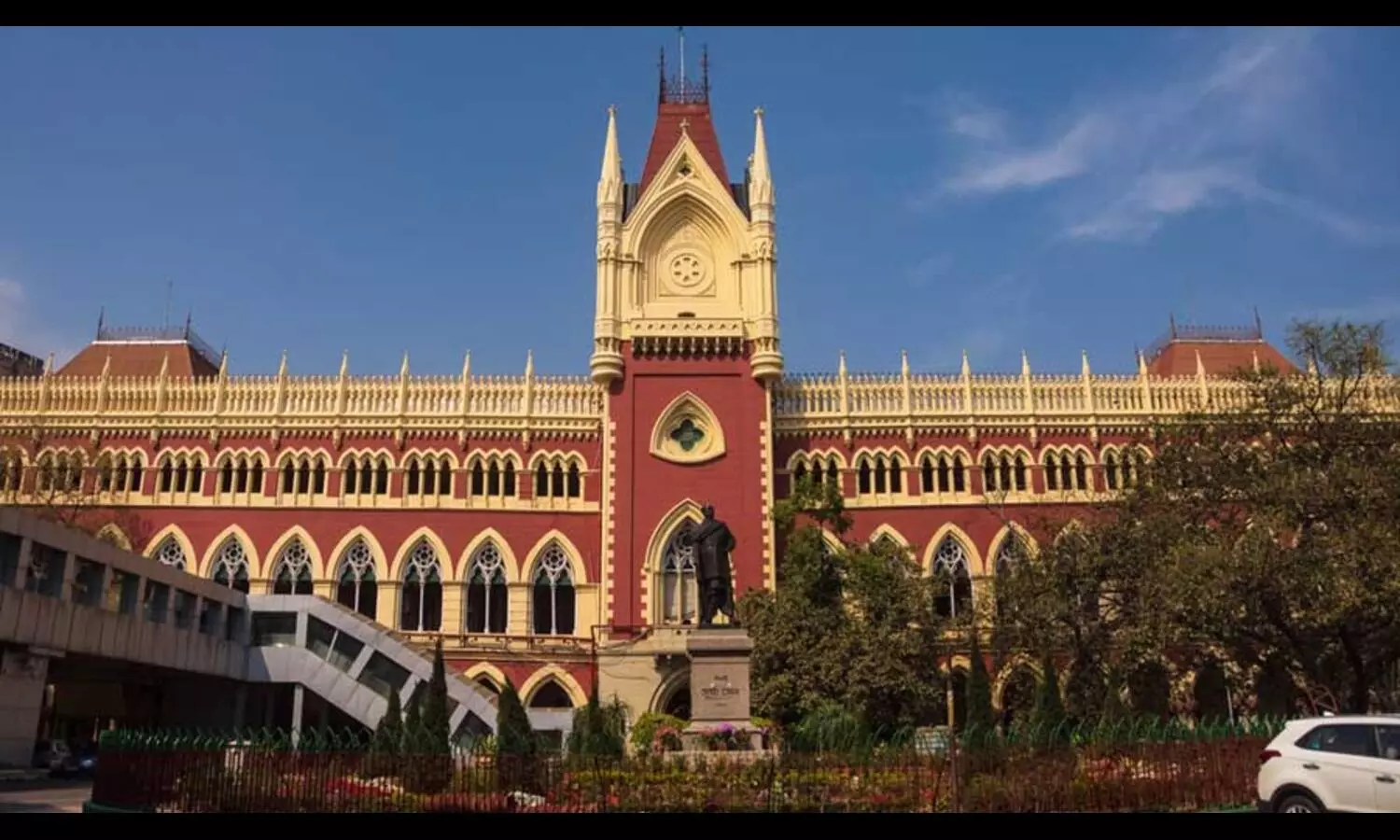
Calcutta High Court


Kolkata: The Calcutta High Court has upheld the reimbursement of over Rs 29 lakh to the legal heirs of a retired government employee who underwent life-saving cancer treatment, making it clear that the state cannot take “whimsical decisions” and that opting for Fixed Medical Allowance (FMA) cannot override the fundamental right to health under Article 21.
A bench of Justices Debangsu Basak and Ajay Kumar Gupta was hearing the state’s challenge to a 2019 order of the Central Administrative Tribunal (CAT), which had ruled in favour of the legal heirs of K.R. Samson, a retired government employee who passed away during the pendency of the proceedings.

According to a report by The Indian Express, the High Court in its February 27 order observed, “Fixed Medical Allowance is intended to meet routine and minor medical expenses, and therefore, cannot be construed as a waiver of the right to reimbursement, particularly in cases involving life-threatening diseases. To hold otherwise would amount to placing an unreasonable restriction on the right to health of retired employees and pensioners”.
The retired employee had served as a graduate-trained teacher and superannuated on July 31, 2018. In October 2019, he developed severe head pain and was admitted to G.B. Pant Hospital. As his condition did not improve, he was referred to Apollo Hospital, Chennai, for advanced treatment. Upon discharge, he was advised further specialised care at Apollo Proton Cancer Centre, Chennai.
On January 10, 2020, he underwent surgery for left temporoparietal glioblastoma and was discharged on March 11, 2020. The total expenditure incurred for his treatment amounted to Rs 29.06 lakh. On June 8 and June 15, 2020, his wife, who was a government employee at the time, submitted two separate applications seeking reimbursement of the medical expenses. However, through a memo dated October 12, 2020, she was informed that the claim was not admissible under the Central Service (Medical Attendance) Rules, 1944, and a Ministry of Health and Family Welfare letter dated September 29, 2020. During the pendency of the matter, the retired employee passed away. The claim was repeatedly rejected, prompting her to approach the CAT, which ruled in her favour.
When the matter reached the court, the judges emphasised, “The fundamental human right to life includes the right to live a life in a meaningful and purposeful manner with dignity.”

The court further observed that in a welfare state, the government is obligated to provide free medical assistance to its employees, especially when treatment is obtained in government-run institutions, and that authorities should not reject reimbursement “on the guise of the memo.”
The court examined the 2016 office memorandum, which stated that authorities “may take their own decision”. However, the bench clarified that this does not permit arbitrary or whimsical decisions and must be exercised with sound and reasonable discretion.
It was also noted that the tribunal had recorded a clear finding that the treatment was genuine, necessary and supported by documentary evidence. There was no allegation of fabrication or exaggeration of medical bills. The rejection was based solely on the applicability of the 2016 memorandum and the fact that the retired employee had opted for FMA.
The bench held that such rejection was legally unsustainable in light of Article 21. It also pointed out that while the 2016 memorandum required departments to inform employees at the time of retirement about available medical options, no such information was provided in this case. The responsibility to inform lies with the authority, not the retiring employee.`
Appearing for the state, advocate Rakesh Kumar argued that there was no statutory provision permitting reimbursement to a retired employee who had not opted for medical reimbursement under the 2016 memorandum. He submitted that the retired employee neither enrolled under CGHS nor availed pensioner medical facilities and had opted for FMA on October 1, 2020, as he resided in a non-CGHS area. Since he did not register with CGHS, the state contended that reimbursement was not permissible.
On the other hand, advocate Gopala Binnu Kumar, representing the employee’s side, argued that the right to medical facilities during service cannot be extinguished merely upon retirement. He emphasised that denial of reimbursement solely due to non-registration under CGHS was impermissible and that the real test was the factum of treatment and the genuineness of the medical expenditure. He also highlighted that the retired employee had not been informed about the implications of the 2016 memorandum or the available post-retirement options.