PGI Chandigarh to launch 'Margdarshan' App to ease patient navigation
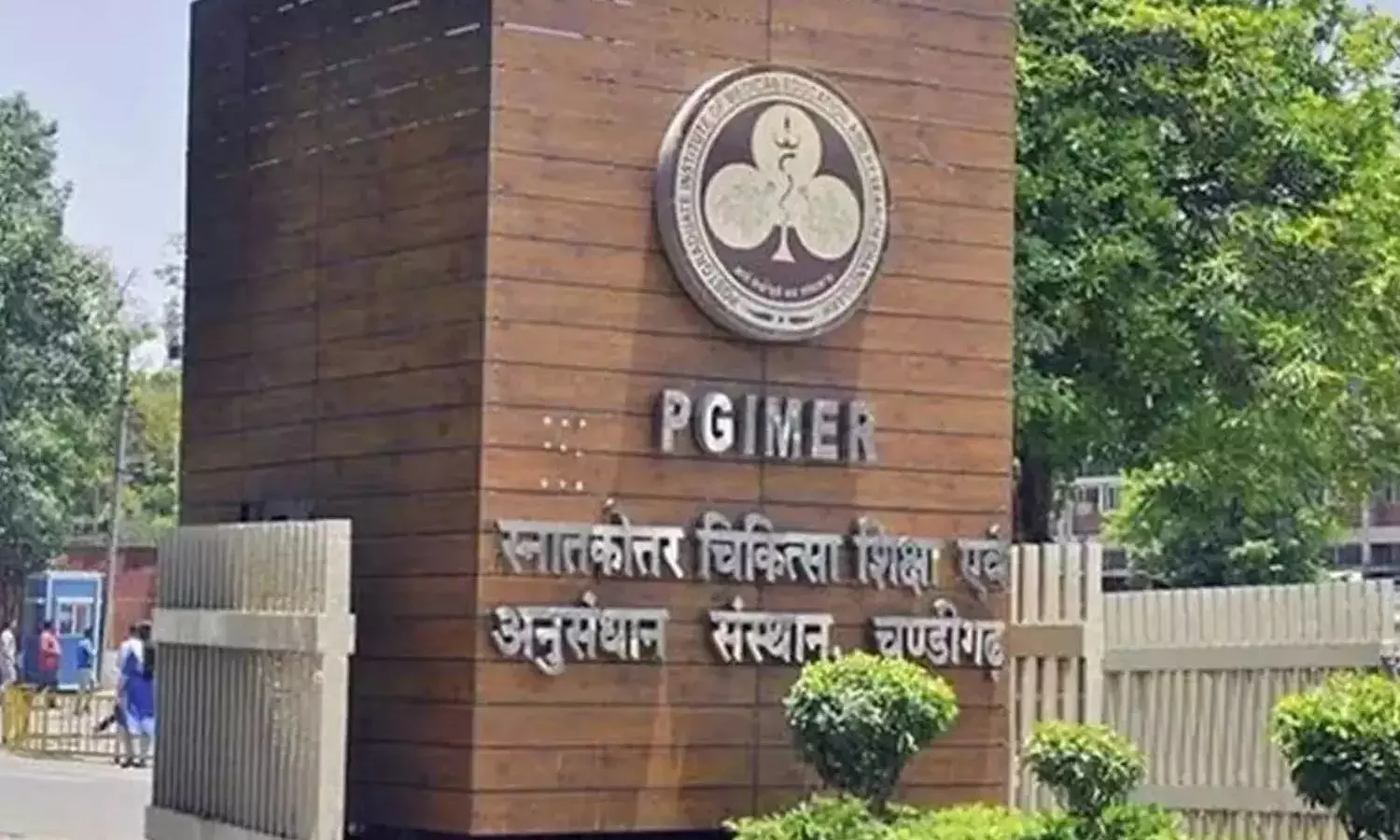


Chandigarh: To help navigate the busy corridors of the Post Graduate Institute of Medical Education and Research (PGIMER), Chandigarh, a new high-precision navigation app called 'PGI Margdarshan' is in its final testing phase, with preparations underway for a full-scale launch.
The app, jointly developed by Dr Anurag Ramawat and a team from the Department of ENT, is designed to provide "last-mile" navigation, or wayfinding assistance, in areas where traditional GPS systems often fail to function.
The project was initiated amidst the chaos and confusion that prevailed during the COVID-19 pandemic. The idea emerged when patients were facing significant difficulties in finding their way, and there was no one around to ask for directions.
With 10,000 people visiting the campus daily, security guards and hospital staff face immense pressure to provide directions. The objective of PGI Guidance is to alleviate this 'wayfinding fatigue' and to relieve the anxiety experienced by patients as they rush to reach critical, time-sensitive appointments.
Unlike standard mapping services, this app utilises augmented reality and 3D imagery to provide location accuracy within just two feet. Patients simply "check in" to their location by scanning QR codes positioned near building entrances and elevators. After selecting their destination from a dropdown menu, the app displays 3D images of the actual surroundings, overlaid with arrows that precisely indicate where the user needs to turn.
This mapping system has been designed entirely around patient-centric zones, including the OPD, bank, market, and research blocks. For security reasons, faculty offices and private research laboratories have been excluded from the mapping and are off-limits to visitors. To ensure the system's longevity, the currently utilised laminated QR codes will soon be replaced with durable, tamper-proof PVC codes. QR codes have been installed throughout the campus at all locations featuring elevators and stairwells, as these are the primary access points utilised by all visitors and patients.
According to the TOI news report, a full-scale launch is expected by next month, which could set a new standard for hospital infrastructure across India. This innovation has received a grant of ₹42 lakh from the Indian Council of Medical Research. Dr Ramawat stated that the team has already secured trademarks and copyrights for this app, a significant achievement for the institute in the field of indigenous medical-tech innovation.
SCAN TO START- Patients begin by scanning QR codes strategically placed at building entrances, staircases, and near lifts across the campus.
PRECISE LOCATION- Once scanned, the app recognises the user's exact location with a high precision of up to two feet, overcoming the limitations of standard indoor GPS.
DESTINATION SELECTION- Users select their required department or facility (such as OPDs, the bank, or research blocks) from a simple dropdown menu.