
Postmenopausal Hirsutism and Virilization Associated with Rare Ovarian Steroid Cell Tumor: Recent Case Report
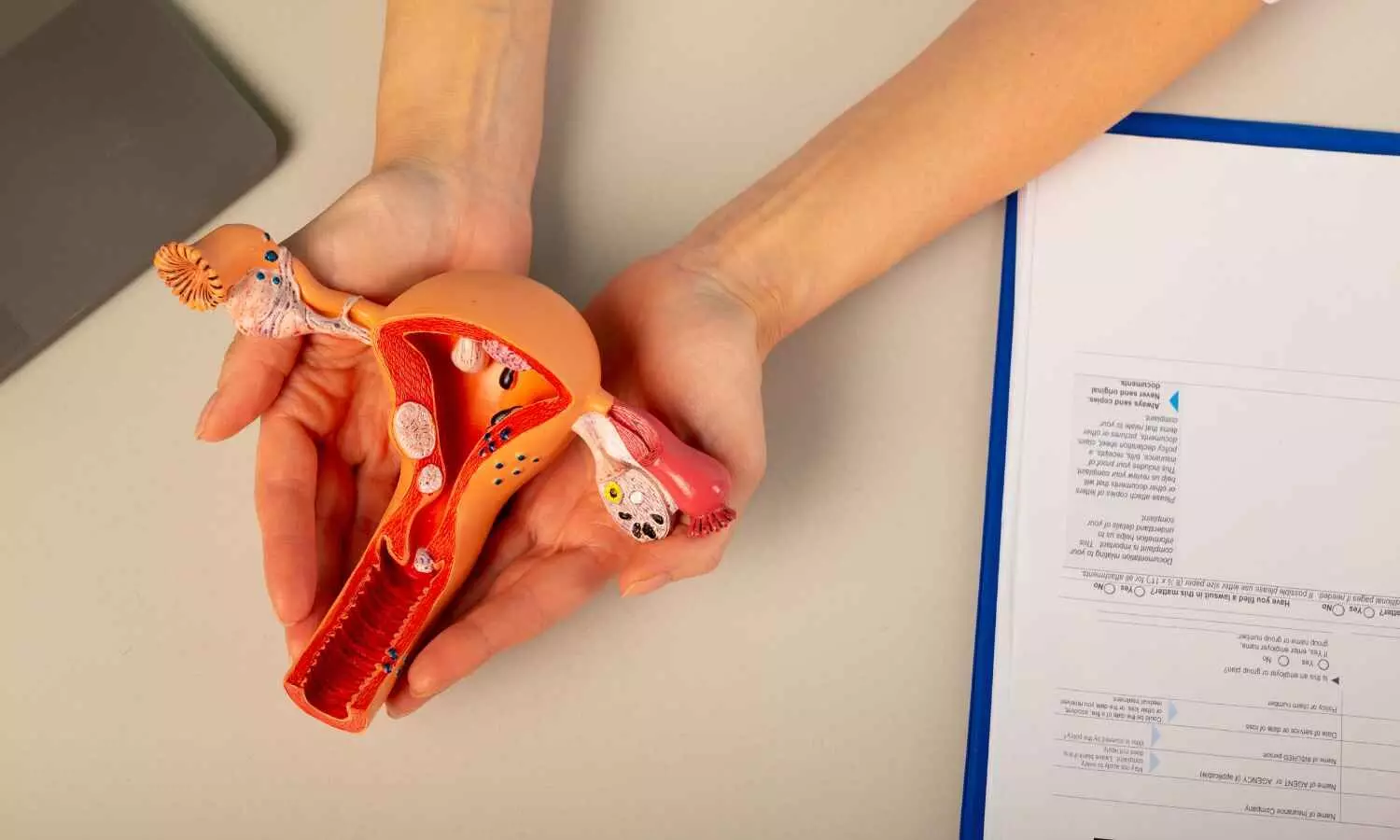


A recent rare case of an ovarian steroid cell tumor not otherwise specified has been reported in a postmenopausal patient presenting with severe signs of virilization.
These findings of the case report were published in August 2026 in The Journal of Obstetrics and Gynecology of India by Tanu Priya Dogra and colleagues.
A 58-year-old postmenopausal female presented with a three-year history of progressive virilising symptoms, including severe facial hair growth and a deepening voice. Endocrine evaluation revealed markedly elevated androgen levels (serum testosterone: 410 ng/dl; free testosterone: 18.90 pg/ml), while a pelvic MRI identified a 2 × 1.5 × 1.9 cm solid left ovarian mass. The patient successfully underwent an abdominal hysterectomy, bilateral salpingo-oophorectomy, and infracolic omentectomy to excise the tumor.
Subsequent histopathological analysis of the specimen confirmed a definitive diagnosis of a rare ovarian steroid cell tumor, not otherwise specified (NOS). This case underlines that although such neoplasms are infrequently documented in large-scale literature, they remain a critical diagnostic consideration in postmenopausal virilization, where clinical accuracy is achieved through coordinated biochemical, radiological, and histopathological evaluation.
While ovarian steroid cell tumors, not otherwise specified, are rare, they are not entirely exceptional, meaning clinicians should consider them in cases of postmenopausal androgen excess. Reaching an accurate diagnosis to manage patient care effectively requires combining biochemical and radiological evaluations with histopathological and immunohistochemical confirmation.
Reference
Dogra, T. P., Verma, A., Rana, D., & Kaushal, V. (2026). Case Report on Postmenopausal Hirsutism: Rare Ovarian Steroid Cell Tumour not Otherwise Specified. The Journal of Obstetrics and Gynecology of India. Published: 04 August 2026.
