Papular Variant Dominates Lichen Planus Clinical Spectrum, Suggests Study
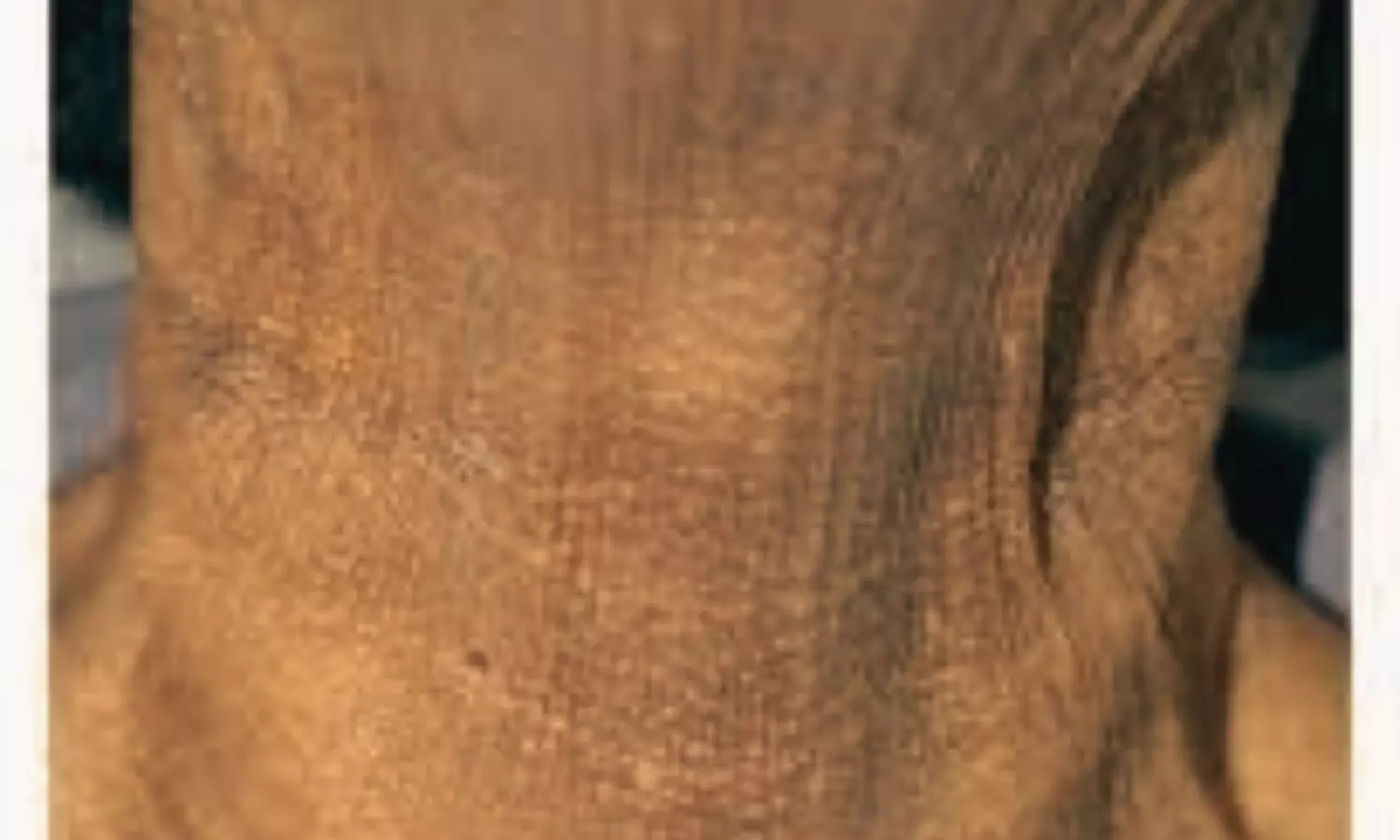


A recent cross-sectional study published in the Indian Journal of Pathology and Oncology in September 2026 highlights the striking clinical diversity of lichen planus, led by the classic papular variant in 52% of cases and a prominent 70% isomorphic response rate. The analysis confirms strong clinicopathological agreement, defined by cutaneous hyperkeratosis (84.1%) and universal oral parakeratosis (100%).
Lichen planus (LP) represents a chronic inflammatory papulosquamous disorder characterized by the classic '5 Ps' (papular, planar, purple, polygonal, and pruritic), yet regional evidence bridging combined cutaneous and mucosal clinicopathological correlation in tertiary care settings remains sparse. Addressing this critical clinical gap, Nikhat Shaheen Syed and Aravinda Mathangi from the Department of Dermatology, Venereology and Leprology, together with Subhan Basha Bukkapatnam from the Department of Pediatrics at Kakatiya Medical College, Hanamkonda, Telangana, India, conducted a study to delineate the epidemiological patterns, clinical manifestations, and histopathological hallmarks of LP while quantifying clinicopathological concordance.
Therefore, the 18-month cross-sectional study evaluated 100 patients with lichen planus at a South Indian tertiary hospital using 88 skin and 32 oral biopsies. Statistical analysis primarily assessed clinicopathological concordance while evaluating secondary systemic comorbidities.
Key Clinical Findings of the Study Includes:
- Demographic Predilection: The study observed female predominance (58%) over males (42%), with 56% of patients aged 21–40 years and the highest occupational frequency among farmers (32%) and housewives (24%).
- Morphological Spectrum: Research identified classic papular lesions as the predominant variant (52%), followed by oral (12%), hypertrophic (8%), and pigmented (7%) types, with pruritus documented in 96% of cases.
- Anatomical Mapping: Data demonstrated lower limb (76%) and upper limb (74%) predilection, with mucosal lesions occurring in 32% (mostly reticular buccal mucosal involvement) and nail dystrophy in 12%.
- Histopathological Concordance: Analysis confirmed high diagnostic agreement, showing cutaneous hyperkeratosis (84.1%) and band-like lymphocytic infiltrates (84.1%), contrasting with universal parakeratosis (100%) in oral biopsies.
- Isomorphic Response: Observations revealed a positive Koebner phenomenon in 70% of participants, alongside systemic associations including dental caries (16%), anemia (8%), diabetes (5%), and hypertension (4%).
The results suggest that lichen planus functions as a polymorphic inflammatory disease primarily affecting young adults, where classic papular presentations (52%) frequently coexist with mucosal (32%) and nail (12%) involvement. Furthermore, accurate diagnostic verification relies on identifying core histological markers, notably liquefactive basal cell degeneration present in 82.9% of skin biopsies and 68.8% of oral lesions.
Thus, the study concludes clinicians should maintain routine screening for oral, nail, and scalp extension, promote trauma avoidance to reduce isomorphic exacerbations, and establish long-term clinical surveillance for chronic erosive or hypertrophic lesions given their potential for malignant transformation.
Although the single-center setting, moderate sample size, and lack of long-term post-treatment follow-up represent study limitations, prospective multi-center studies with extended monitoring could further elucidate long-term disease trajectories and treatment outcomes across diverse clinical variants.
Reference
Syed NS, Mathangi A, Bukkapatnam SB. Clinical and histopathological profile of lichen planus: A cross-sectional study. Indian Journal of Pathology and Oncology. 2026;13(3):237-242.