
Anti-VEGF Rapidly Reverses Indirect Solar Retinopathy, Suggests Case Report
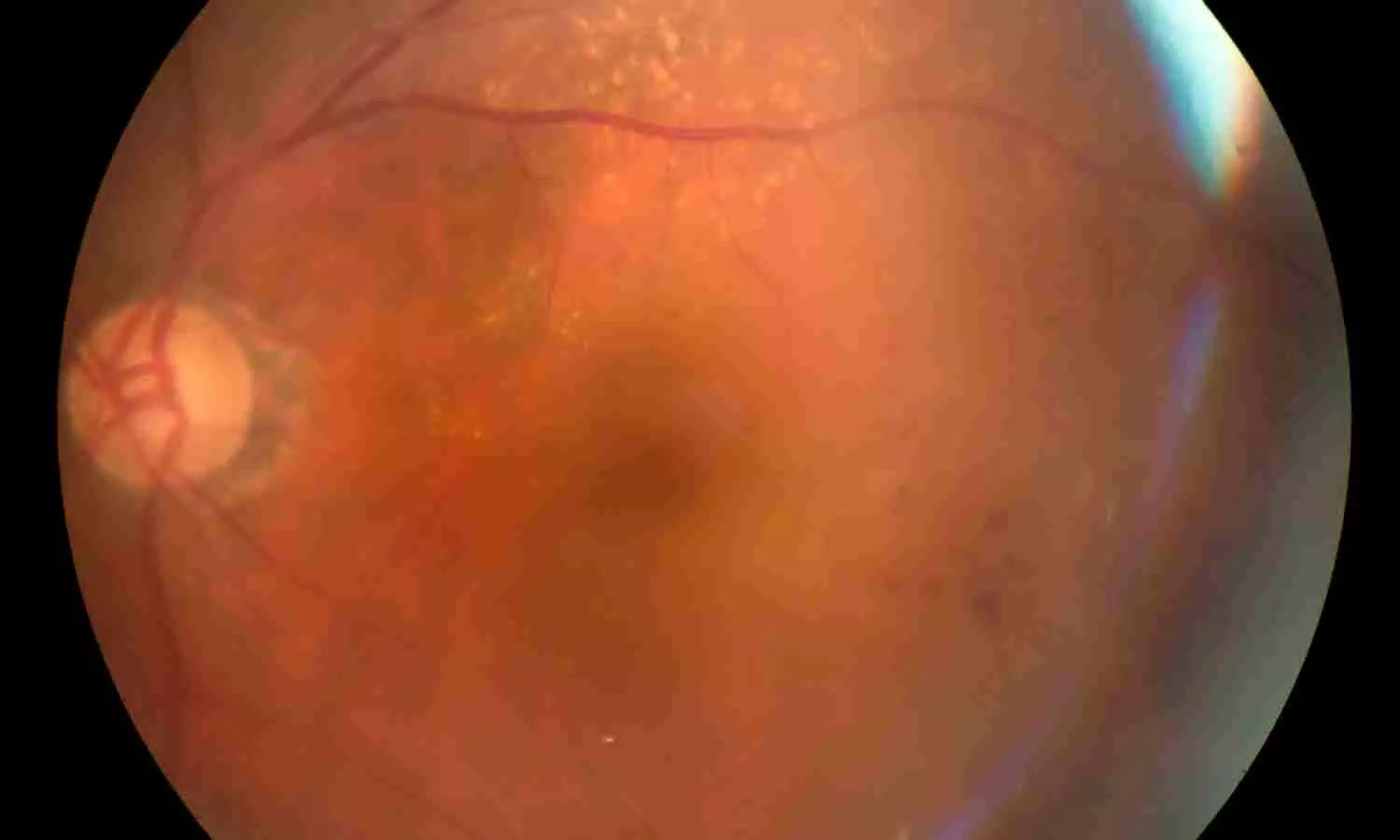


A recent case report highlights a remarkably rapid anatomical recovery in a rare case of indirect solar retinopathy. Strikingly, a single 0.05 mL intravitreal aflibercept injection achieved complete clearance of the subretinal fluid in just two weeks.
These findings of the case report are published in the Delhi Journal of Ophthalmology in June, 2026, by Ruchika V. Jain and colleagues.
The compelling case holds substantial value for everyday clinical practice because it highlights an unconventional, easily missed etiology for acute maculopathy that practitioners might encounter during routine occupational health assessments. By detailing the specific presentation, the report alerts clinicians to look beyond direct sun-gazing when diagnosing phototoxic injuries. Furthermore, it establishes a powerful, evidence-based precedent for utilizing modern biologic agents to achieve swift anatomic recovery in patients experiencing light-induced ocular trauma.
A 47-year-old male engineer presented with acute, painless blurred vision in his right eye, which prompted extensive optical coherence tomography (OCT) imaging that quickly revealed subretinal fluid, a disrupted inner segment-outer segment (IS-OS) junction, and a choroidal neovascular membrane. Following the diagnosis of indirect solar retinopathy, the attending physicians administered a single aflibercept injection into the affected eye, which successfully facilitated a complete resolution of the subretinal fluid by the two-week follow-up appointment.
Mechanistically, the severe retinal damage transpired through an intense phototoxic reaction when ambient sunlight deflected off the highly reflective aluminum surface of a populated circuit board (PCB) during a routine engineering task. This indirectly reflected radiation subsequently intensified to a dangerous degree as it passed through the twenty-power magnifying loupe the patient wore, unnaturally focusing harmful light wavelengths directly onto his vulnerable macular tissue.
Practitioners must critically recognize that high-powered visual magnifiers combined with reflective industrial materials pose a severe occupational risk, necessitating improved safety protocols and protective eyewear for vulnerable workers. Moreover, this remarkable case significantly advances patient care by proving that the prompt identification of such injuries and the immediate administration of targeted anti-VEGF therapy can effectively halt the pathological cascade and restore delicate retinal architecture.
Reference
Jain RV, Nene AS, Shah S, Shenoy P, Badole P, Pirdankar OH. Multimodal imaging in solar retinopathy. Delhi J Ophthalmol 2026;36:153-4.
