
Topical Insulin Eye Drops Successfully Resolves Treatment-Resistant Corneal Wounds, Suggests Study
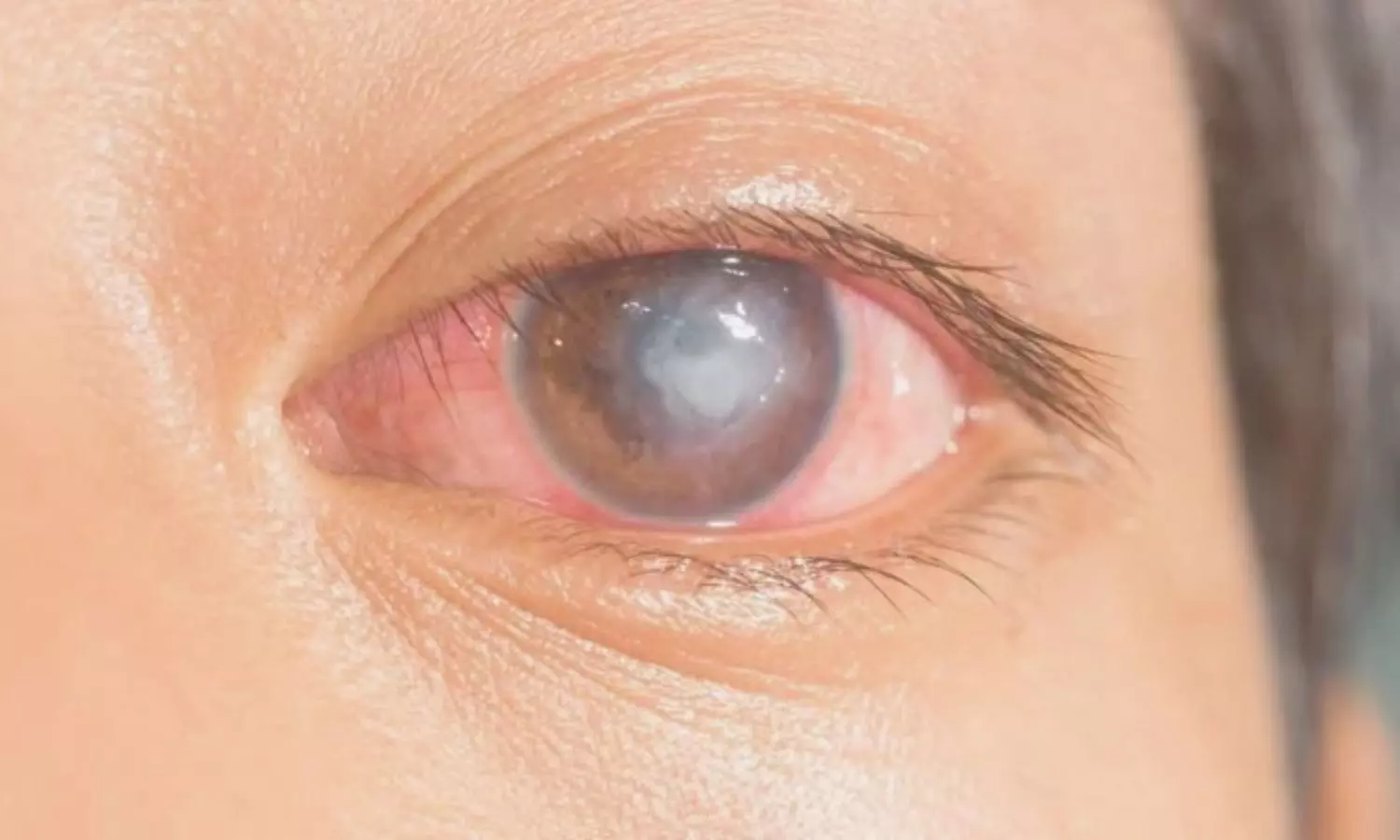


A recent prospective interventional study demonstrated that topical insulin eye drops can successfully resolve nearly 86% of treatment-resistant corneal wounds within just six weeks without a single case of recurrence, as detailed in a recent study published in the Indian Journal of Ophthalmology in October 2025.
Persistent Epithelial Defects (PEDs) are corneal wounds failing to heal within two weeks of standard therapy, often due to trauma or nerve damage. Addressing the clinical need for treatments beyond basic lubricants, Dr. Parul Jain and colleagues at Guru Nanak Eye Centre investigated topical insulin. This therapy mimics naturally occurring growth factors in the tear film to effectively stimulate cell migration and repair in treatment-resistant cases.
Therefore, in the prospective interventional study, 22 patients with refractory persistent epithelial defects (neurotrophic, chemical injury, or post-transplant) received topical insulin (1 IU/ml) four times daily. The protocol excluded active infections and lid abnormalities to isolate the therapeutic effect, focusing on complete re-epithelialization and logMAR visual acuity improvements over a six-month follow-up.
Key Clinical Findings of the Study Includes::
Rapid Re-epithelialization Efficacy: The investigation, credited to this pilot study, observed that 77.2% of eyes achieved complete epithelial closure within the first month of therapy.
Significant Visual Improvement: Patients experienced a marked enhancement in vision, with mean BCVA shifting from 1.1 ± 0.2 to 0.8 ± 0.3 logMAR units (P < 0.001).
Durable Recovery Outcomes: Throughout the extensive follow-up period, the study recorded zero instances of defect recurrence among the eyes that achieved successful healing.
Efficient Healing Timelines: On average, these previously refractory defects required only 21.5 ± 8.8 days of topical insulin application to reach full epithelial recovery.
Proven Ocular and Systemic Safety: Results confirmed the treatment had no impact on systemic blood glucose levels in either diabetic or non-diabetic patients and caused no adverse ocular side effects.
The results suggest that topical insulin is a highly efficacious, cost-effective, and noninvasive tool for managing stubborn corneal defects, achieving an 86% total success rate within 42 days.
The accessible intervention offers clinicians a practical and readily available alternative to more expensive or invasive biological therapies for patients facing vision-threatening epithelial failure.
While these initial findings are highly promising, the study was limited by a relatively short follow-up and the absence of a control group, indicating that future large-scale comparative trials would be beneficial to further solidify its role as a potential first-line therapy.
Reference
Jain P, Hariani A, Gupta I, Reddy G. Management of refractory persistent epithelial defect treatment with topical insulin: An Indian pilot study. Indian J Ophthalmol 2025;73:1513-9.
