Above-Knee Amputation Outperforms Knee Fusion in Post-Operative Pain Relief, Suggests Study
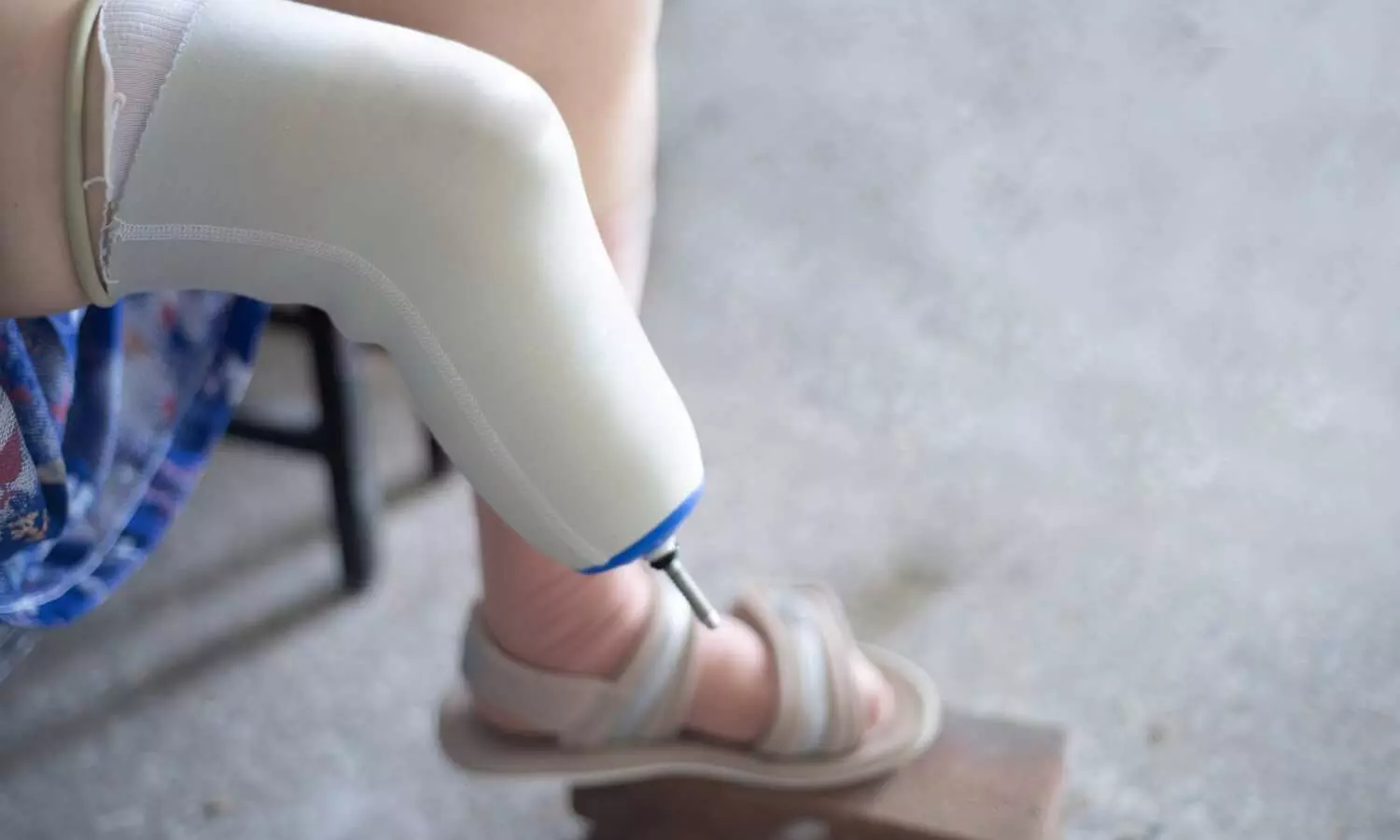


A recent comparative study published in the Indian Journal of Orthopaedics in September 2026 reveals that above-knee amputation provides superior pain relief and better general health perception than knee arthrodesis in 22 patients with complex lower limb pathology. Crucially, both surgical options achieved equivalent overall functional recovery.
Managing severe, recalcitrant lower extremity pathology presents a persistent clinical dilemma regarding whether joint-preserving limb fusion or ablative surgical resection yields superior long-term functional recovery, as previous clinical research has produced conflicting health-related quality-of-life evidence across diverse patient cohorts. To address this critical clinical knowledge gap, Prashant Chaudhary, Debadatta Panda, Ritik Kanodia, and Mohit Dhingra conducted a comparative clinical investigation evaluating post-operative functional performance and multidimensional health-related quality-of-life trajectories between patients undergoing AKA and those undergoing knee arthrodesis.
Therefore, the comparative study evaluated 22 adults with severe lower extremity pathology who underwent knee arthrodesis (n = 12) or above-knee amputation (n = 10) with at least six months of follow-up. Functional outcomes and quality of life were measured using Musculoskeletal Tumor Society (MSTS) scores and SF-36 surveys, respectively.
Key Clinical Findings of the Study Includes:
- Functional Recovery Equivalency: Study comparative data demonstrated equivalent overall post-operative functional performance scores between knee joint arthrodesis (n = 12) and AKA (n = 10) on primary MSTS testing.
- Analgesic Superiority: Results revealed that AKA provided significantly greater post-operative pain relief compared with knee joint fusion across standardized SF-36 evaluation domains.
- Enhanced Health Perception: Findings showed that patients undergoing AKA reported superior general health perception ratings compared to individuals managed with joint preservation via knee arthrodesis.
- Comparable Psychosocial Outcomes: Comparative analysis indicated no statistically significant differences between surgical cohorts regarding emotional well-being, mental health status, or social functioning domains.
The results suggest that AKA achieves functional outcomes comparable to knee arthrodesis across 22 patients while offering superior pain mitigation and improved general health perception. Consequently, retaining the native physical limb through surgical joint fusion does not automatically guarantee better overall health-related quality of life compared to major limb resection.
Thus, the study concludes clinicians should individualize surgical treatment decisions by carefully balancing specific disease characteristics, individual patient expectations, and post-operative rehabilitation potential rather than assuming limb preservation is universally superior.
Although constrained by a relatively small sample size of 22 patients and a retrospective comparative design, these findings highlight the necessity for larger prospective multi-center studies to further refine long-term surgical selection and rehabilitation paradigms.
Reference
Chaudhary P, Panda D, Kanodia R, Dhingra M. Functional and Quality-of-Life Outcomes Following Lower Limb Amputation Versus Arthrodesis: A Comparative Study. Indian Journal of Orthopaedics. Published online September 7, 2026.