Cemented Total Hip Arthroplasty Shows Favorable Short-Term Outcomes: Study
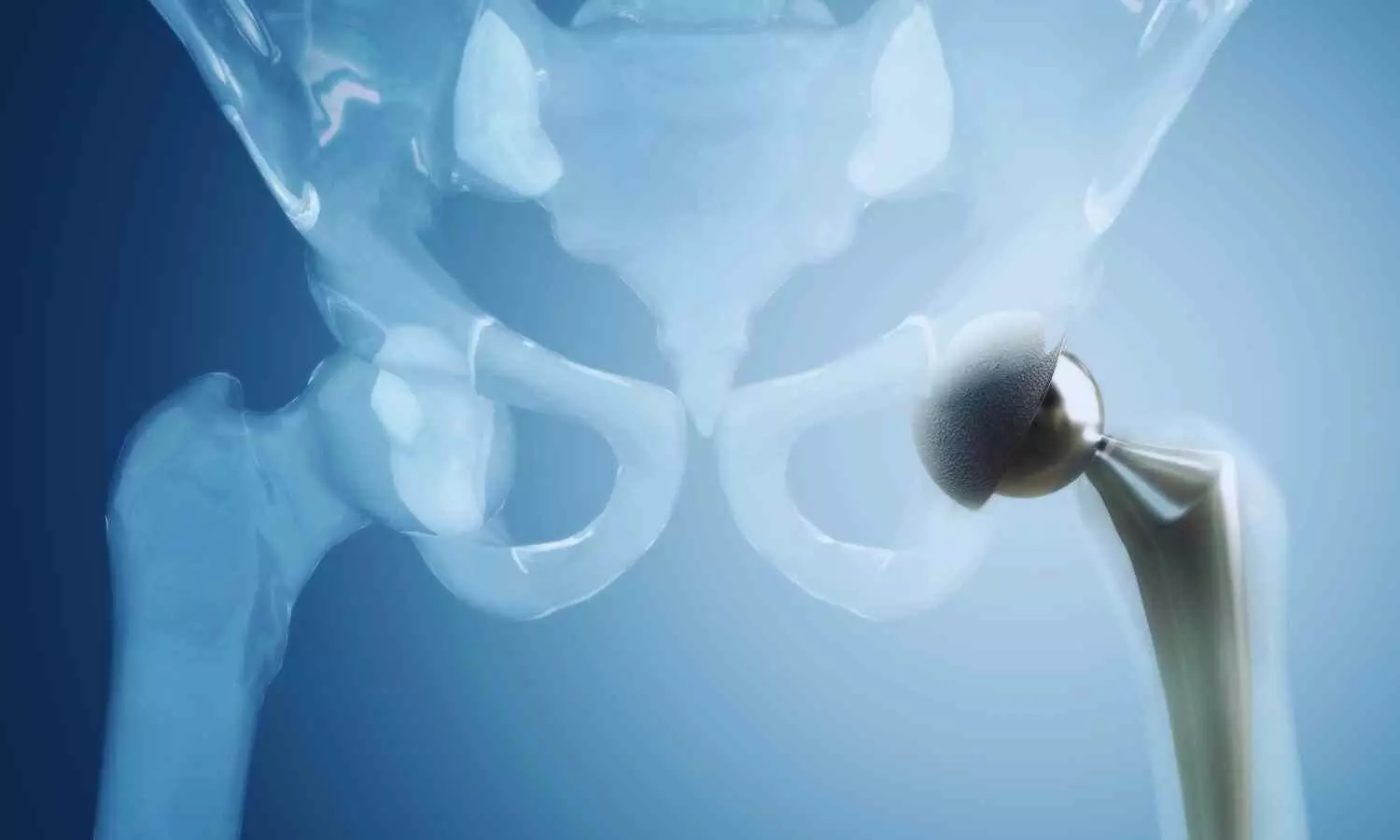


Cemented total hip arthroplasty (THA) is associated with lower rates of periprosthetic fractures, need for blood transfusion, and deep vein thrombosis, without an increase in other perioperative or medical complications. These findings suggest that, in appropriately selected patients, cemented fixation may provide more favorable short-term outcomes. The study was published in the Archives of Orthopaedic and Trauma Surgery journal by Hidetatsu and colleagues.
In order to perform a comparison of early postoperative results for the two types of fixations with high levels of accuracy, a retrospective cohort study was carried out using information extracted from the Japanese Diagnosis Procedure Combination database. Information about all the procedures performed in the Japanese clinics is collected by the state in this database. During this study, there were 198,102 patients found who were older than 65 and underwent elective primary THA due to osteoarthritis, osteonecrosis, or rheumatoid arthritis from December 2011 to March 2023.
In order to avoid possible confounders related to different initial health statuses, researchers performed very strict matching by applying the 1:1 propensity score matching according to age, gender, BMI, and Charlson Comorbidity Index. As a result, two matched cohorts were created that included 36,859 patients with cemented and uncemented fixation, respectively.
Key findings:
- In comparison to patients that underwent non-cemented fixation, those that had cemented fixation were less likely to have a periprosthetic fracture by 60%, as evidenced by an odds ratio (OR) of 0.40 (95% CI, 0.30–0.53; p < 0.001).
- Patients that had a cemented implantation were less likely to need a blood transfusion by 24% (OR, 0.76 [95% CI, 0.74–0.78; p < 0.001]). Patients that had a cemented implant had a 21% lower likelihood of having deep vein thrombosis (OR, 0.79 [95% CI, 0.74–0.84; p < 0.001) compared to those that had non-cemented fixation.
- There was no statistically significant difference between the two groups in joint dislocation, surgical site infection, pulmonary embolism, cardiac events, cerebrovascular accidents, or overall, in-hospital mortality.
This nation-wide study clearly shows that the use of cemented total hip replacement decreases the incidence of periprosthetic fractures, blood transfusions, and deep vein thrombosis without raising any other complications. These observations show that the application of cementing techniques provides extremely good short-term outcomes for some groups of patients, especially when it comes to bone health. While uncemented hip prostheses continue to maintain their high popularity, there are some evidences that one single solution might not be adequate for all demographic segments.
Reference:
Tanaka, H., Tarasawa, K., Mori, Y. et al. Cemented total hip arthroplasty reduces early complications: a Japanese nationwide propensity-matched study. Arch Orthop Trauma Surg 146, 168 (2026). https://doi.org/10.1007/s00402-026-06328-x