
Manual Testing Underestimates Flexion Laxity in Total Knee Arthroplasty, Suggests Study
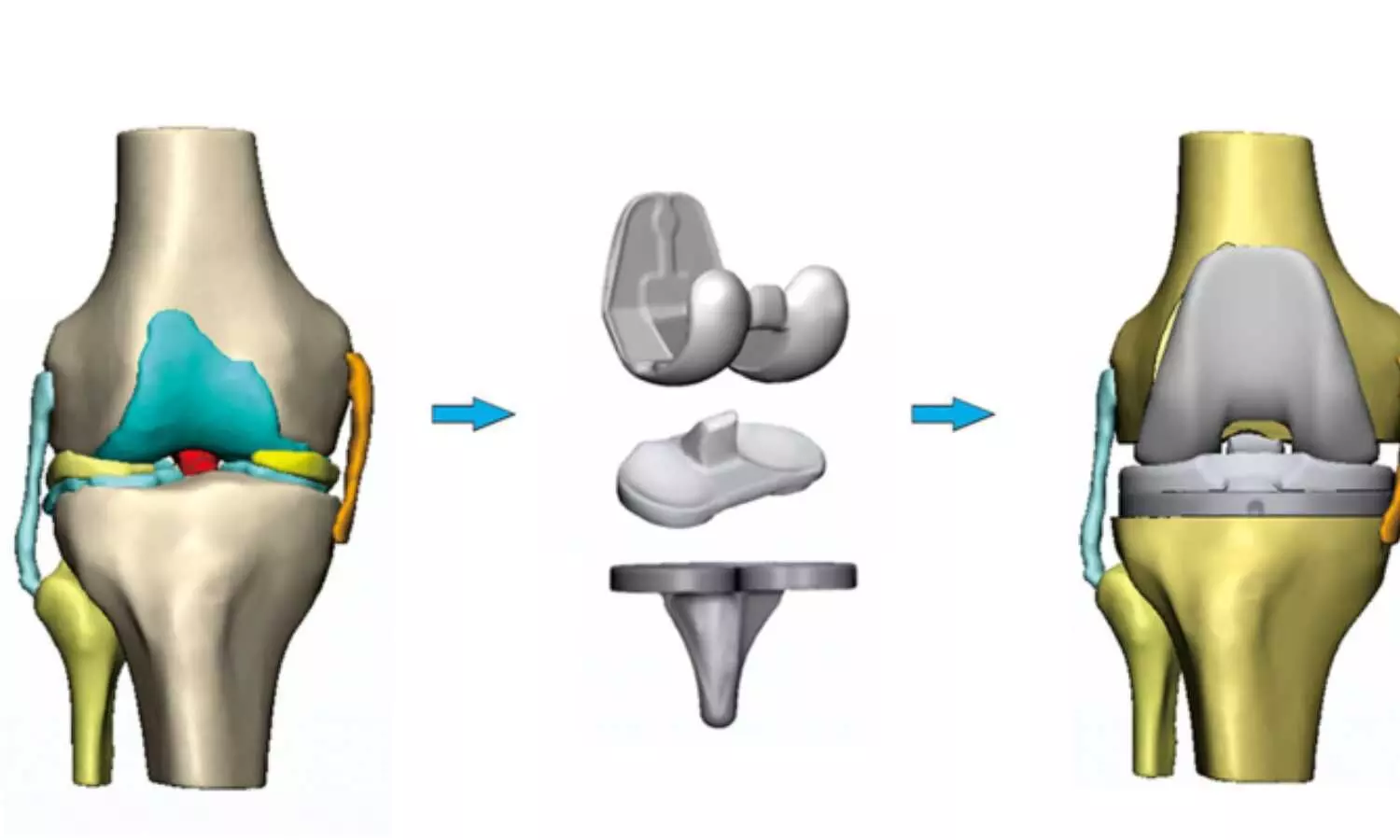


A recent study published in the Indian Journal of Orthopaedics in August 2026 found that relying on subjective manual stress testing during knee replacement can compromise surgical outcomes. The findings reveal that traditional "hand-feel" consistently underestimates joint laxity in flexion and overestimates lateral laxity near extension at 10, 30, 60, and 90 degrees.
While optimal soft-tissue balancing is crucial in total knee arthroplasty (TKA), the accuracy of subjective manual varus-valgus stress testing remains unclear. To address this, Kazushige Seki, Toshihiro Seki, Kei Sasaki, and Takashi Sakai compared subjective manual testing against objective measurements from an intraoperative tensor device.
Therefore, the study evaluated twenty-seven knees across twenty-six patients undergoing navigation-assisted, primary cruciate-retaining total knee arthroplasty (TKA). Medial and lateral joint gaps were measured at 10, 30, 60, and 90 degrees of flexion using both manual stress testing and a quantitative tensor to calculate observer reliability.
Key Clinical Findings of the Study Includes:
High Intra-observer Consistency: The study demonstrated that intraoperative manual stress assessments show high reproducibility when performed by the same surgeon.
Underestimated Flexion Joint Gaps: The study revealed that manual stress testing yielded significantly smaller medial and lateral compartment gap values during knee flexion compared to quantitative tensor-based measurements.
Overestimated Lateral Extension Laxity: The study showed that lateral compartment gap measurements were significantly larger with manual testing specifically at 10 degrees of flexion near extension.
Surgical Assessment Discrepancy: The study highlighted that manual examinations tend to underestimate joint laxity during flexion while simultaneously overestimating lateral compartment laxity near extension.
Soft-Tissue Balance Variance: The study established that manual evaluations diverge significantly from objective tensor-based data, exposing potential risks in relying purely on subjective tactile feedback.
The results suggest that intraoperative manual stress assessment in computer-assisted TKA can lead to predictable, systematic measurement errors, particularly by underestimating joint laxity in flexion and overestimating lateral laxity near extension at 10 degrees of flexion. Ultimately, these clinical findings indicate that relying solely on a surgeon's subjective tactile hand feel may result in inaccurate soft-tissue balancing during primary joint reconstructions.
Thus, the study concludes that clinicians should maintain a clear awareness of these inherent manual testing limitations and consider utilizing adjunctive quantitative assessments to facilitate more accurate intraoperative soft-tissue balancing.
Reference
Seki, K., Seki, T., Sasaki, K., & Sakai, T. (2026). Reliability of Intraoperative Manual Varus–Valgus Stress Assessment in Total Knee Arthroplasty. Indian Journal of Orthopaedics, Original Article, Published online August 18, 2026.
