Patch augmentation to rotator cuff repair, offers both biological and biomechanical benefits: study
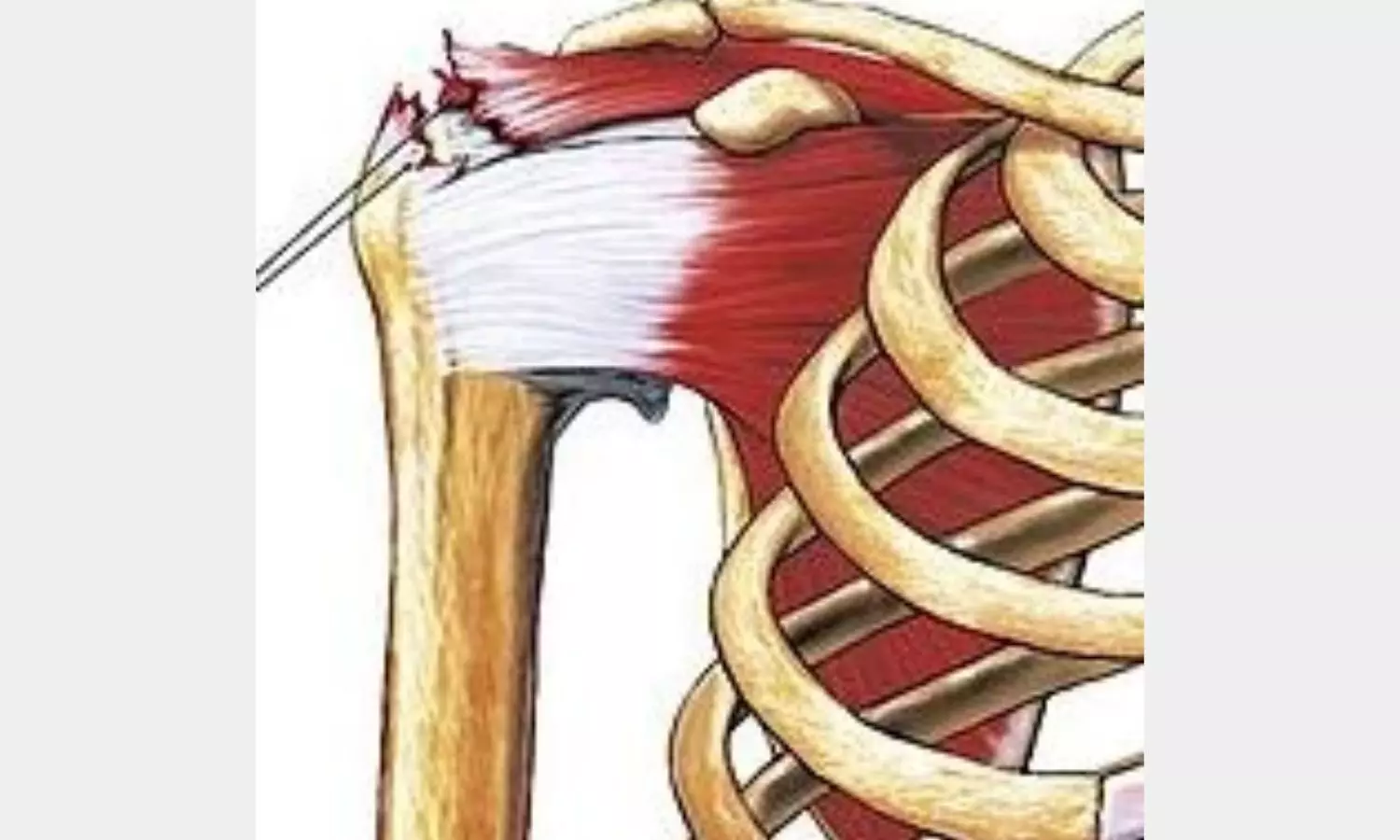


Rotator cuff tears are common in older adults, leading to significant pain and limitations. Despite advances in arthroscopic repair, high re-tear rates, especially in large tears, remain a challenge. This review examines biomaterial patches in rotator cuff repair, focusing on mechanisms that support tendon healing and lower re-tear rates.
Sung-Min et al conducted a study synthesizing recent literature on biomaterial patches in rotator cuff repair, covering their biological and biomechanical effects. It categorizes information on various patch types, including acellular dermal matrices, autografts, synthetic patches, and xenografts, and explores their application in irreparable tears and future technological developments. This initial search yielded 1686 articles. The main two authors conducted an independent screening of titles and abstracts based on predefined inclusion and exclusion criteria. Studies were included if they specifically focused on patch augmentations biomechanical or biological impacts, types of patch materials, or clinical outcomes in the context of rotator cuff repair. Exclusion criteria comprised studies published in languages other than English, conference abstracts, and publications that did not present original research data.
The key findings of the study were:
• Patch augmentation shows promise in promoting tendon-to-bone healing in rotator cuff repairs.
• Biological patches from human or animal tissues support key cellular processes like proliferation, collagen deposition, and vascularization, forming a scaffold beneficial for tendon repair. Biomechanically, these patches enhance repair integrity.
• Positive clinical outcomes have been observed with acellular dermal matrices, autograft biceps tendons, synthetic patches, and xenografts.
• For irreparable tears, patches facilitate bridging grafts or capsular reconstruction with encouraging results.
• Future developments include biologically enhanced patches that release growth factors or stem cells and biodegradable options that gradually dissolve within the body.
The authors concluded – “Patch augmentation has emerged as a valuable adjunct to rotator cuff repair, offering both biological and biomechanical benefits. By providing structural reinforcement and promoting tissue healing, patches can reduce re-tear rates and improve clinical outcomes, particularly in patients with large or massive tears.”
For further details on the article refer to:
Exploring Patches for Rotator CuffRepair: A Systematic Review Sung-Min et al Indian Journal of Orthopaedics (2026) 60:1879·1889 https://doi.org/10.1007/s43465-025-01605-0