Steroid Injection for Stenosing Flexor Tenosynovitis linked to risk of Ganglion formation: Study
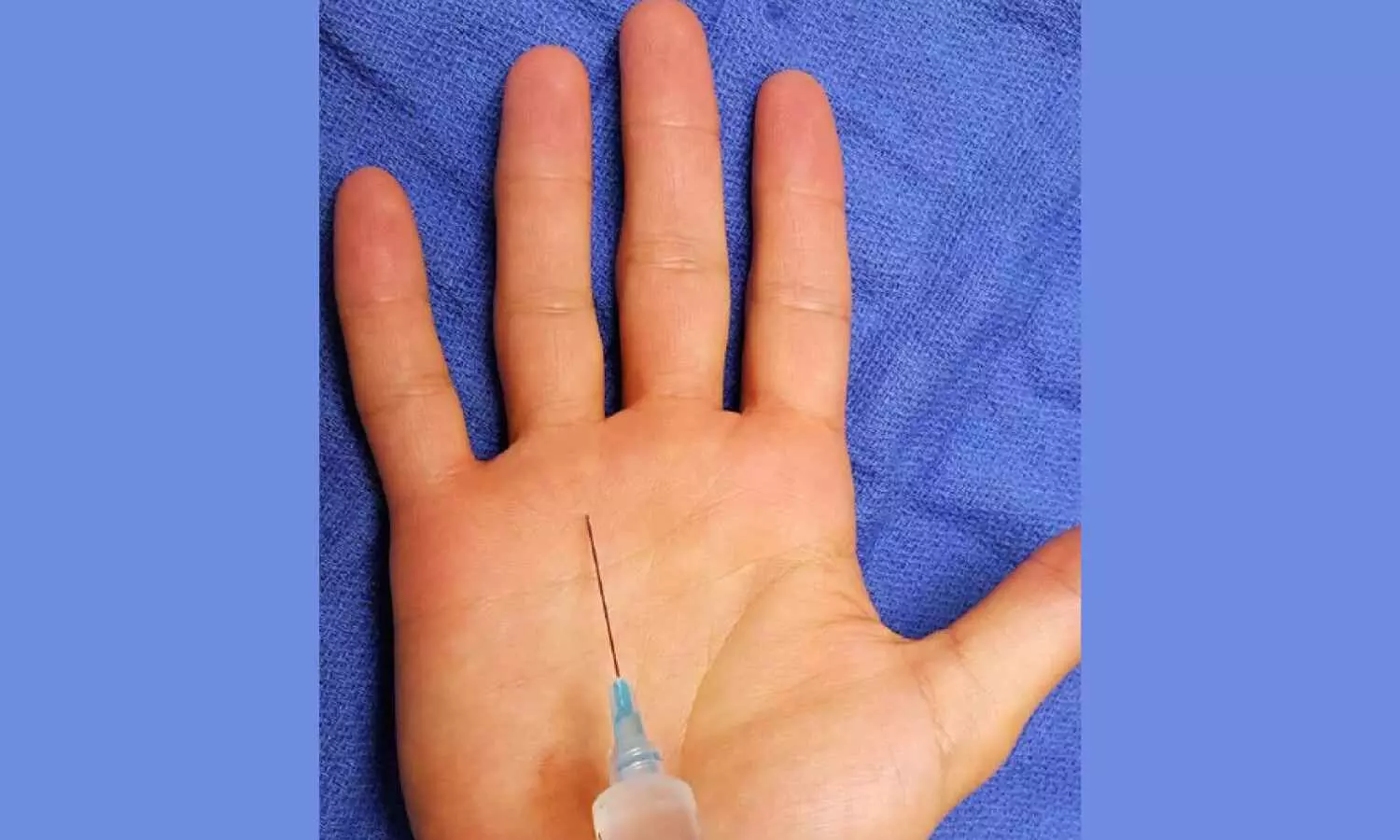


The exact mechanism underlying flexor tendon sheath ganglion (FTSG) formation remains unclear. Kazuhiro Kohata et al hypothesized that steroid injections into the A1 pulley are a cause of FTSG. They conducted a study to evaluate the risk of FTSG after steroid injections in patients with stenosing flexor tenosynovitis. It has been published in ‘JBJS Open access’
This prospective cohort study enrolled patients diagnosed with stenosing flexor tenosynovitis. A total of 128 fingers in 114 patients with no history of injections within the past 6 months consented to participate in the study. An initial ultrasound of the A1 pulley was performed, and patients with preexisting FTSG were excluded. Based on patient preference, the injection group received a steroid injection (5 mg of triamcinolone + 0.5 ml of 1% lidocaine) into the flexor tendon sheath, followed by a follow-up ultrasound at 3 months. The control group underwent ultrasonography at the same time points without injections.
The key findings of the study were:
• Three-month follow-up ultrasound evaluations were conducted on 53 fingers (43 patients) in the injection group and 22 fingers (21 patients) in the control group.
• The incidence of FTSG was significantly higher in the injection group, with 20 of 53 fingers (37.7%) developing FTSG compared with 1 of 22 fingers (4.5%) in the control group.
• The risk difference was 0.33 (95% confidence interval: 0.18-0.49; p < 0.01).
• Symptom improvement was observed in 93% of the injection group compared with 45% of the control group (p < 0.01), indicating more significant symptom relief in the injection group.
“In this study, the incidence of FTSG in the injection group was higher than that in the control group among patients with stenosing flexor tenosynovitis. Our results suggest that small punctures made by intrathecal injection may be one of the causes of FTSG formation. However, further studies are required to fully elucidate the clinical significance of ganglion formation” the authors commented.
Level of Evidence: Level II.
For further details on the article refer to: Ganglion Formation After Steroid Injection for Stenosing Flexor Tenosynovitis Kazuhiro Kohata et al JBJS Open Access 2025:e25.00152. http://dx.doi.org/10.2106/JBJS.OA.25.00152