
Study Links Declining Calf Circumference to Higher Fall Risk in Older Adults
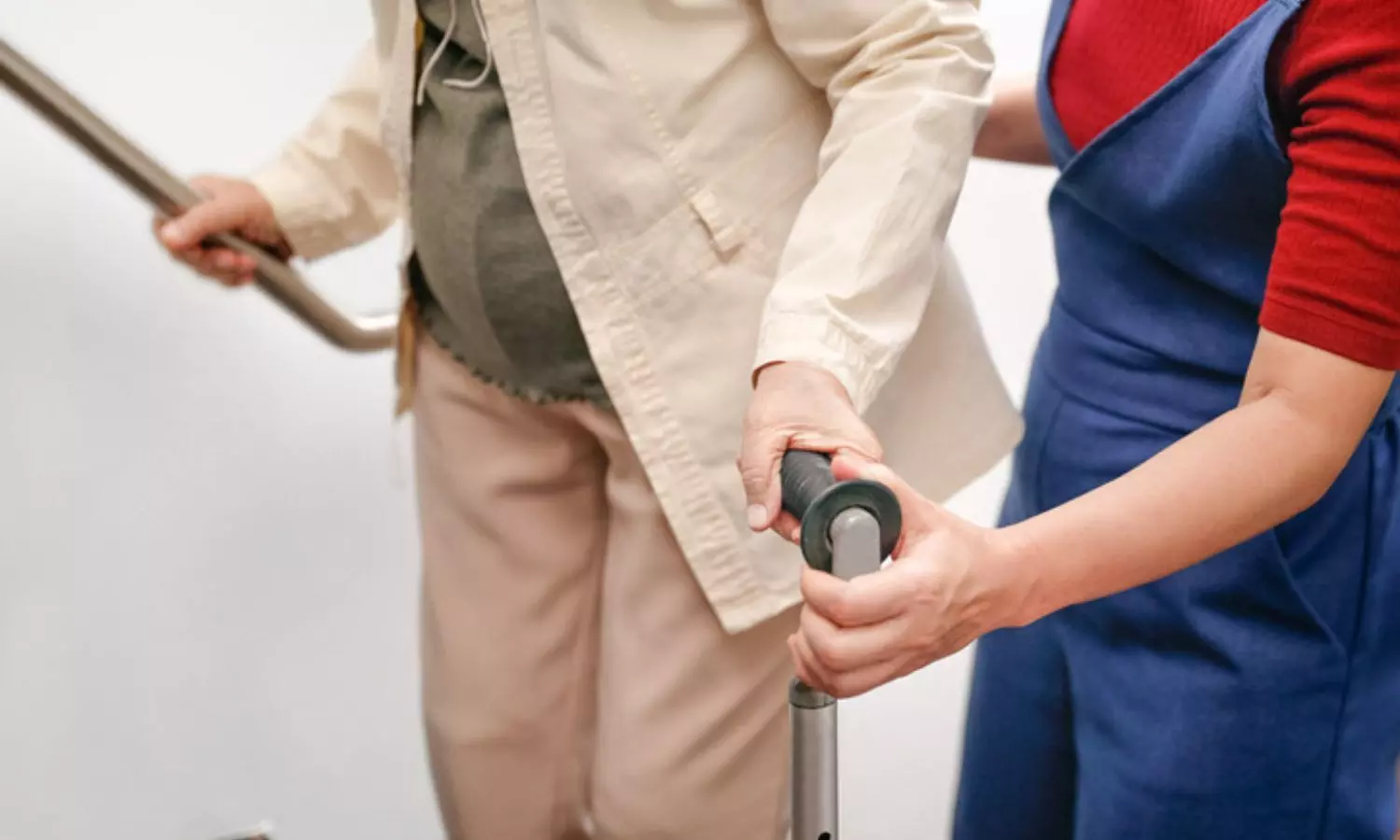


China: A decline in calf circumference over time is associated with a higher likelihood of falls among older adults, suggesting that routine calf measurements may offer a simple, low-cost way to identify individuals at increased risk. The findings are from a new study published in JAMA Network Open.
The study, led by Chi Zhang of the Institute of Geriatric Medicine, Chinese Academy of Medical Sciences, Beijing, China, and colleagues, examined whether changes in calf circumference (CC) could help identify community-dwelling older adults at risk of experiencing falls.
Calf circumference is a convenient, non-invasive indicator of lower-limb muscle mass. However, evidence linking changes in calf measurements over time with subsequent falls has remained limited.
For the study, researchers analysed data from 7,068 adults aged 60 years and older enrolled in the Chinese Longitudinal Healthy Longevity Survey. Participants had calf circumference measurements recorded in 2018 and 2021. The researchers assessed both the absolute reduction in circumference and the percentage decrease over the three years.
Fall incidents were identified through self-reported information collected during the 2021 follow-up. The analysis accounted for factors including age, sociodemographic characteristics, previous falls, health behaviours, functional abilities and chronic diseases. Statistical methods were also used to address potential survival bias.
The participants had a mean age of approximately 79.7 years, and 54.3% were women. During a median follow-up of just over three years, 1,671 participants, or 23.6%, reported experiencing falls.
The key findings were:
- Absolute decline: Every 1-cm reduction in calf circumference was associated with 3.2% higher odds of falling.
- Relative decline: Each 10% decrease in calf circumference was associated with 10.3% higher odds of falls.
- Larger reductions: Participants whose calf circumference decreased by at least 5 cm had 32.5% higher odds of falls than those without a decrease.
- Substantial percentage loss: A reduction of 20% or more was associated with 48.1% higher odds of falls compared with no decrease.
The researchers noted that these associations indicate that tracking changes in calf circumference may help identify older adults who could benefit from further fall-risk assessment and preventive interventions.
However, the study has several limitations. Falls were self-reported, making the findings susceptible to recall errors. Calf circumference cannot distinguish muscle loss from changes in fat or fluid accumulation, and the possibility that falls themselves contributed to reduced muscle mass cannot be excluded. Measurements were taken at only two time points, and the findings may not be generalisable to populations outside China.
The authors concluded that monitoring calf circumference over time could provide a practical addition to fall-risk screening in older adults. Further research is needed to validate its usefulness across different populations and clarify how changes in muscle mass contribute to falls.
Reference:
Zhang C, Shen J, Zhang Y, et al. Longitudinal Change in Calf Circumference and Incident Falls in Older Adults. JAMA Netw Open. 2026;9(10):e2640127. doi:10.1001/jamanetworkopen.2026.40127

Next Story