
- Home
- Medical news & Guidelines
- Anesthesiology
- Cardiology and CTVS
- Critical Care
- Dentistry
- Dermatology
- Diabetes and Endocrinology
- ENT
- Gastroenterology
- Medicine
- Nephrology
- Neurology
- Obstretics-Gynaecology
- Oncology
- Ophthalmology
- Orthopaedics
- Pediatrics-Neonatology
- Psychiatry
- Pulmonology
- Radiology
- Surgery
- Urology
- Laboratory Medicine
- Diet
- Nursing
- Paramedical
- Physiotherapy
- Health news
- Fact Check
- Bone Health Fact Check
- Brain Health Fact Check
- Cancer Related Fact Check
- Child Care Fact Check
- Dental and oral health fact check
- Diabetes and metabolic health fact check
- Diet and Nutrition Fact Check
- Eye and ENT Care Fact Check
- Fitness fact check
- Gut health fact check
- Heart health fact check
- Kidney health fact check
- Medical education fact check
- Men's health fact check
- Respiratory fact check
- Skin and hair care fact check
- Vaccine and Immunization fact check
- Women's health fact check
- AYUSH
- State News
- Andaman and Nicobar Islands
- Andhra Pradesh
- Arunachal Pradesh
- Assam
- Bihar
- Chandigarh
- Chattisgarh
- Dadra and Nagar Haveli
- Daman and Diu
- Delhi
- Goa
- Gujarat
- Haryana
- Himachal Pradesh
- Jammu & Kashmir
- Jharkhand
- Karnataka
- Kerala
- Ladakh
- Lakshadweep
- Madhya Pradesh
- Maharashtra
- Manipur
- Meghalaya
- Mizoram
- Nagaland
- Odisha
- Puducherry
- Punjab
- Rajasthan
- Sikkim
- Tamil Nadu
- Telangana
- Tripura
- Uttar Pradesh
- Uttrakhand
- West Bengal
- Medical Education
- Industry
1 Percent Chlorhexidine Reduces Maternal and Neonatal Bacterial Colonization, Reveals JAMA Study
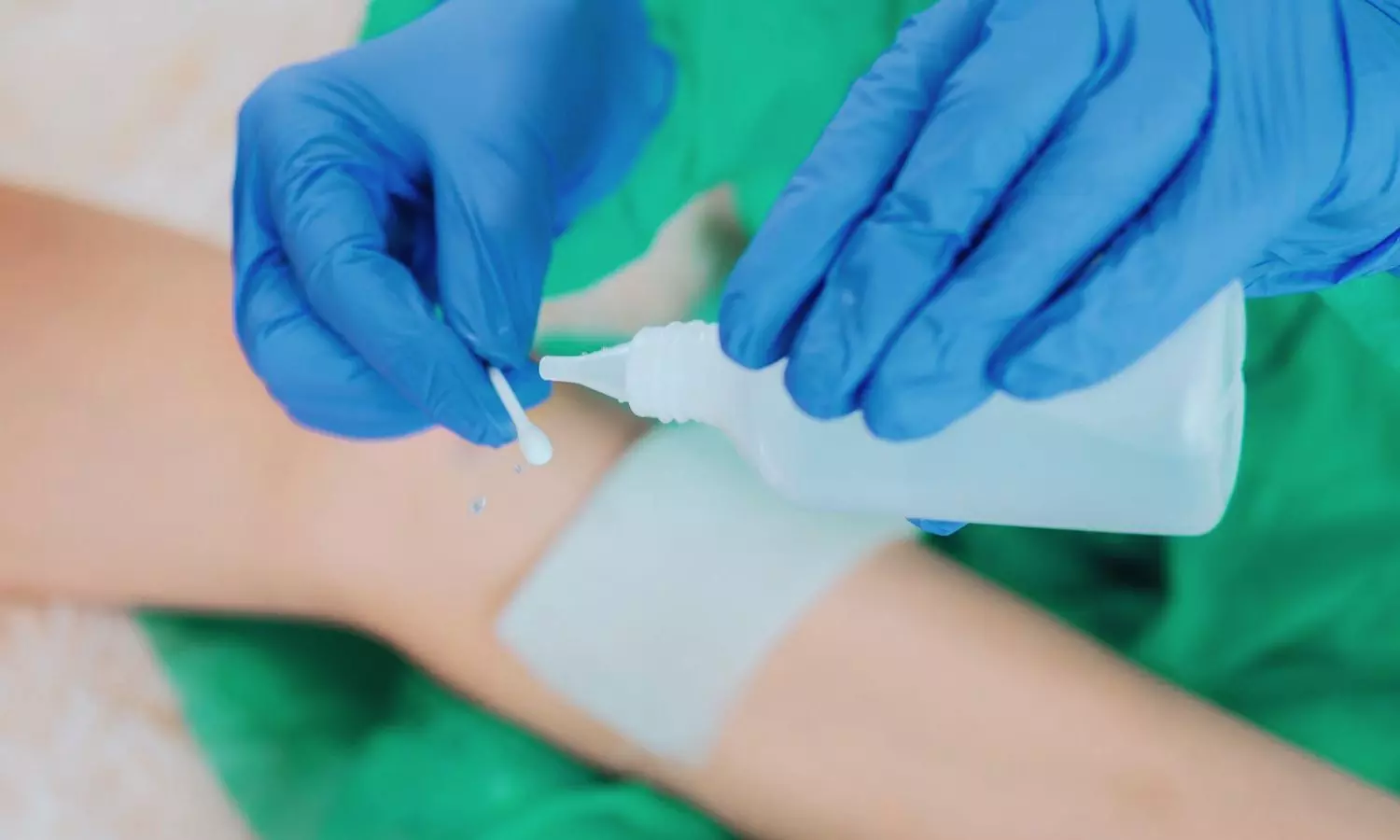
UK: A randomized clinical trial has found that the topical application of 1% chlorhexidine (CHG) in laboring women and newborns significantly reduced maternal and neonatal bacterial colonization without raising safety concerns.
The results suggest that 1% CHG is the most promising antiseptic regimen for evaluation in larger pragmatic trials aimed at assessing clinical outcomes. These findings support the potential inclusion of 1% chlorhexidine in future multimodal infection-prevention strategies in low-income countries.
The findings were published in JAMA Network Open by Emily Beales of the Centre for Neonatal and Paediatric Infection, City St George’s, University of London, and colleagues.
Neonatal sepsis remains a leading cause of newborn illness and death, particularly in low-resource settings. As bacterial transmission from mother to infant during childbirth may contribute to infection risk, researchers evaluated whether topical antiseptics could safely reduce bacterial colonization in both mothers and newborns.
For this purpose, the team conducted the NeoVT-AMR randomized clinical trial at Zomba Central Hospital, Malawi, between March 2022 and March 2023. The study included 149 laboring women and 147 facility-born newborns, who were followed for 28 days.
Participants were randomly assigned to receive 1% chlorhexidine, 2% chlorhexidine, or octenidine 0.1% with phenoxyethanol 2%, administered either once or repeatedly. Standard care consisted of sterile water application for mothers and no cleansing for newborns.
The researchers assessed changes in bacterial load on maternal genital skin and neonatal skin, while also monitoring skin condition, serious adverse events, and neonatal temperature.
The results identified 1% chlorhexidine as the most effective regimen. In laboring women, it reduced bacterial colonization more effectively than octenidine-based treatment and standard care, with similar effectiveness to 2% chlorhexidine. Among newborns, 1% chlorhexidine significantly lowered bacterial burden compared with standard care, and repeated applications provided greater benefits over time.
- 1% chlorhexidine significantly reduced bacterial colonization in both mothers and newborns compared with standard care.
- In mothers, bacterial load was markedly higher with octenidine-based treatment and standard care than with 1% chlorhexidine.
- In newborns, 1% chlorhexidine was more effective than standard care in lowering bacterial burden.
- Repeated antiseptic applications provided increasing benefits over time in newborns.
- Skin condition remained excellent across all treatment groups, with very low skin irritation scores.
- No increase in serious adverse events was observed with any antiseptic regimen.
- Researchers found no evidence that antiseptic use contributed to neonatal hypothermia.
MSc. Biotechnology
Medha Baranwal holds a Bachelor’s degree in Biomedical Sciences from the University of Delhi and a Master’s degree in Biotechnology from Amity University. Since May 2018, she has been contributing to Medical Dialogues, writing and editing medical news articles that translate complex research into clear, accessible information for healthcare professionals.
Dr Kamal Kant Kohli-MBBS, DTCD- a chest specialist with more than 30 years of practice and a flair for writing clinical articles, Dr Kamal Kant Kohli joined Medical Dialogues as a Chief Editor of Medical News. Besides writing articles, as an editor, he proofreads and verifies all the medical content published on Medical Dialogues including those coming from journals, studies,medical conferences,guidelines etc. Email: drkohli@medicaldialogues.in. Contact no. 011-43720751

