
Initial Oxygen Concentration Does Not Affect Respiratory Support Needs in Preterm Infants: JAMA
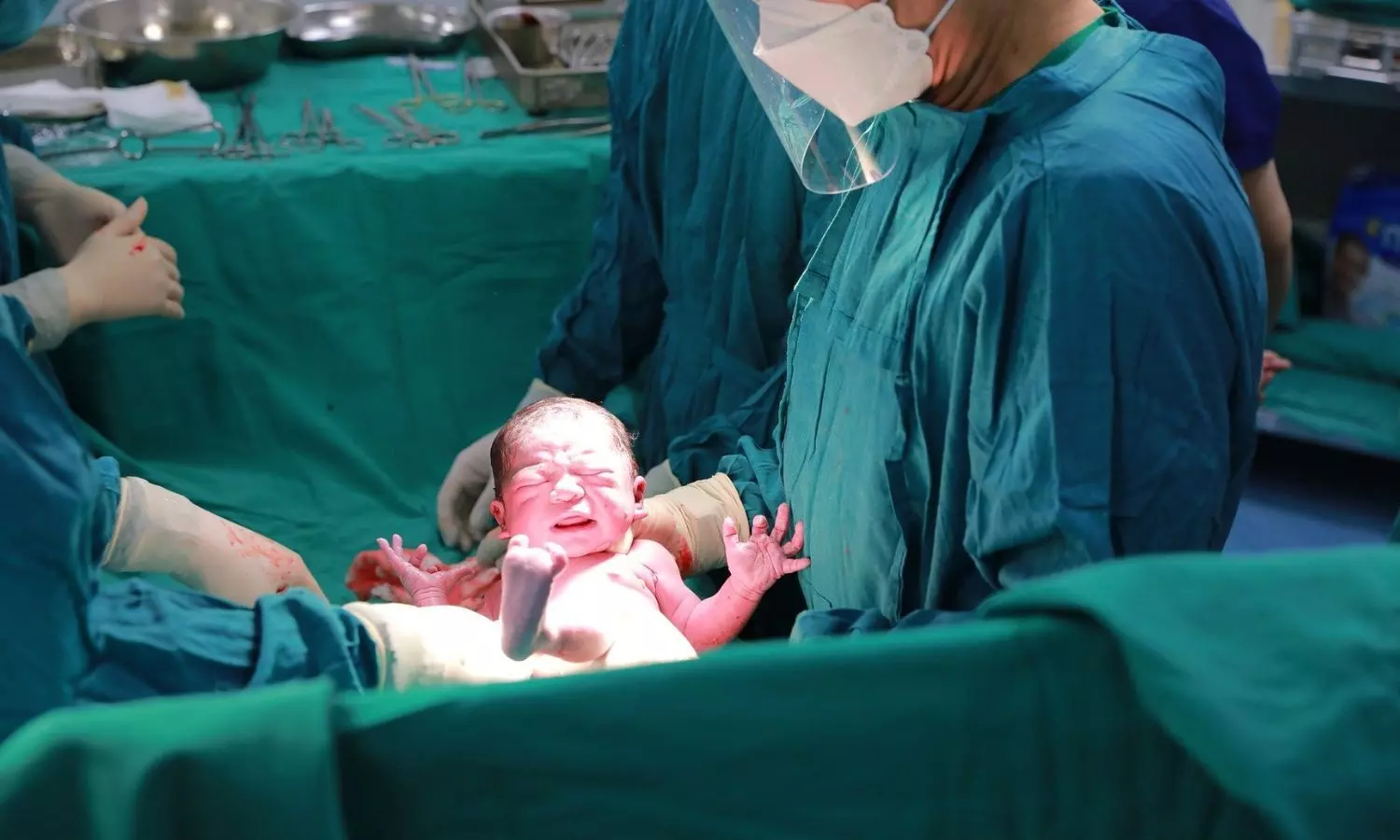


Australia: In neonates born at 32–35 weeks’ gestation, initiating resuscitation with an inspired oxygen concentration (FiO₂) of 30% versus 21% resulted in no difference in the proportion requiring ongoing respiratory support when leaving the delivery room.
The findings are from the AIROPLANE cluster randomized crossover trial, published in JAMA, by Stacey R. Peart, MBBS, of Newborn Services and Newborn Research at The Royal Women’s Hospital, Melbourne, Australia, and colleagues. The study investigated whether starting respiratory support with a higher oxygen concentration could improve immediate outcomes in moderate- to late-preterm infants.
The optimal initial oxygen concentration for resuscitating these newborns remains uncertain, making the choice between supplemental oxygen and room air an important clinical question.
The investigators conducted an unblinded, cluster-randomized crossover trial across 26 maternity hospitals in Australia, covering tertiary and non-tertiary centres in metropolitan and regional areas. The trial included newborns delivered between December 2022 and September 2025, with final follow-up completed in March 2026.
A total of 1,818 eligible neonates without known major congenital anomalies were included. Their mean gestational age was 34.1 weeks, and the mean birth weight was 2,165 g. Participating hospitals initially used either 30% oxygen or room air containing 21% oxygen during the first three minutes of respiratory support. Each hospital subsequently switched to the alternative concentration midway through recruitment. The primary outcome was the need for respiratory support when infants left the delivery room.
The results showed:
- No significant difference in the primary outcome: Ongoing respiratory support was required by 72.6% of infants in the 30% oxygen group compared with 73.3% in the 21% oxygen group.
- Reduced need for intensive resuscitation: Infants who initially received 30% oxygen were less likely to require higher levels of support, including non-invasive positive-pressure ventilation, invasive airway ventilation, cardiac compressions or epinephrine.
- Less ventilation after delivery room care: Endotracheal ventilation beyond the delivery room was required by 6.4% of infants in the 30% oxygen group compared with 9.3% in the room-air group.
- Similar outcomes across most secondary measures: Ten of the 12 secondary outcomes showed no statistically significant differences between the two groups.
Although the primary outcome was similar, the lower use of more intensive respiratory interventions in the 30% oxygen group suggests that the initial oxygen concentration may influence the level of resuscitation required by some infants. However, these secondary findings do not establish that starting with a higher oxygen concentration improves overall neonatal outcomes.
The trial's unblinded design is an important consideration, and the study did not assess outcomes after hospital discharge. Further research is needed to determine whether the observed differences in respiratory interventions translate into meaningful long-term benefits.
The researchers concluded that starting resuscitation with 30% oxygen rather than room air did not reduce the proportion of moderate- to late-preterm infants requiring respiratory support when leaving the delivery room. The findings provide comparative evidence to inform neonatal resuscitation practices, while leaving the optimal initial oxygen concentration for this population unresolved.
Reference:
Peart SR, Manley BJ, Cheong JLY, et al. Oxygen vs Air at Birth for Moderate- to Late-Preterm Infants: The AIROPLANE Cluster Randomized Crossover Trial. JAMA. 2026;336(15):1319–1328. doi:10.1001/jama.2026.14201

Next Story