
Why a life-threatening sedative is being prescribed more often for seniors?
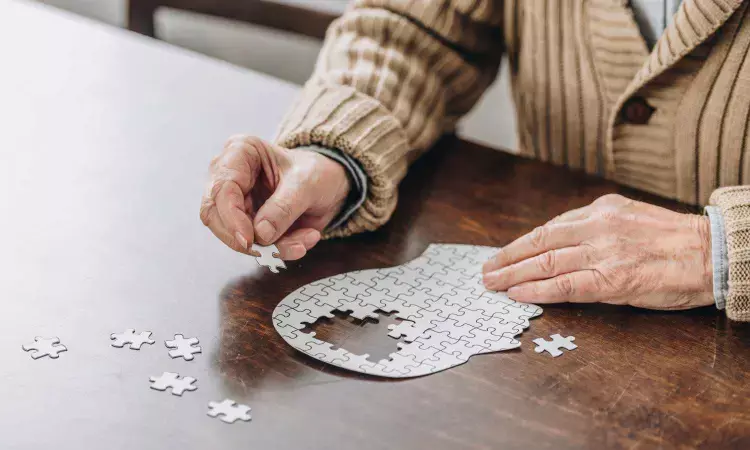


When agitated dementia patients wander or shout through the night, families and caregivers understandably feel the need to treat this frightening and potentially dangerous behavior. Antipsychotic medications are often resorted to with such patients, contributing to increases in antipsychotic treatment rates among older people.
Indeed, a research letter by Rutgers and Columbia University researchers in JAMA Psychiatry shows those prescriptions are becoming more common in the United States, even though antipsychotic drugs do little for dementia and carry a black-box warning on their labels stating they increase the risk of death in senior patients.
Using a national prescription-claims database that captures more than 90% of retail pharmacy fills, researchers tracked antipsychotic use among adults 65 and older from 2015 through 2024 and found that the annual rate of any antipsychotic use increased nearly 52% to 4.05 per 100 from 2015 to 2024. Long-term use, defined as at least 120 days a year, rose 65% to 2.45 per 100 older adults. Rates were highest among people 75 and older, rising from 3.42 to 5.12 per 100.
The trend is striking because antipsychotics have limited proven effectiveness in people 65 and older and serious risks, including falls, fractures, cardiovascular and cerebrovascular events, pulmonary embolism and death. Antipsychotics may be used as a last resort to manage severe behavioral and psychological symptoms of dementia, such as aggression, agitation, hallucinations, or delusions, especially when these symptoms pose a risk to the safety of the individual or others. However, such use carries substantial risk and should be avoided in most cases and limited to short-term use whenever possible.
“The evidence is pretty solid on the risks,” said Stephen Crystal, the letter’s co-author and director of the Center for Health Services Research at the Rutgers Institute for Health, Health Care Policy and Aging Research.
The claims data don’t include diagnoses, so the researchers couldn’t determine why each prescription was written or whether it was appropriate. Antipsychotics remain essential for some people, including those with schizophrenia, bipolar disorder with psychosis or other severe psychiatric illnesses.
However, Crystal noted those conditions aren’t common enough in older populations to explain the surging number of antipsychotic prescriptions.
“We think that conditions like schizophrenia that have FDA-approved indications for antipsychotic treatment are unlikely to account for the majority of the rates of use that we observed,” he said.
The biggest concern for the researchers is using antipsychotics for the behavioral and psychological symptoms that can accompany dementia: agitation, wandering, acting out behavior and shouting. In many cases, the medications are used to “damp down” behaviors that are distressing to caregivers and disruptive to facilities, said Crystal, who also holds endowed professorships at the Institute for Health and Rutgers School of Social Work.
Because the drugs can be highly sedating, they reduce the tendency to roam and act out, but that sedation comes with a steep tradeoff for frail patients, increasing fall risk and reducing physical activity.
The study also reveals a shift in who manages cases. Among patients who took an antipsychotic in a given year, the share with at least one prescription from a psychiatrist fell from 30% in 2015 to 20% in 2024. Over the same period, the share who filled an antipsychotic from a pharmacy in a long-term care facility rose from 14% to 21%.
Crystal said the decline in psychiatrist involvement matters because optimal care for behavioral symptoms in dementia often starts with careful evaluation rather than a quick prescription. Clinicians may need to confirm the diagnosis and look for treatable causes that can mimic or worsen confusion, including medication interactions, infections, depression and unmanaged pain. Even when dementia is the main driver, nondrug approaches can work, but they require training, staffing and time.
“This can look like managing symptoms,” Crystal said. “Which is common because it’s so much easier to write a prescription than do the work of addressing the underlying condition, particularly at nursing home and assisted living facilities that are dangerously short-staffed.”
There was one potentially encouraging sign in the data: the use of first-generation antipsychotics, which are associated with higher mortality risk in older patients than second-generation medications, declined from 22% to 14%.
Still, the overall rise in use and the growth in long-term prescribing suggest a system leaning more heavily on medication to solve problems that are often social, environmental and staffing-related. The authors have called for renewed efforts to evaluate and spread nonpharmacological interventions that can reduce reliance on antipsychotics in older adults.
For families contending with a new prescription, the study’s lead author, Mark Olfson of the Columbia University Department of Psychiatry, said that it is reasonable to ask what problem the drug is meant to address and what other steps have been tried. Just as important is what happens next: whether the clinician has a plan to reassess, taper and stop the medication once a crisis has passed.
“These are high-stakes decisions,” he said.
Reference:
Olfson M, Xie F, Bushnell G, Hua J, Miles J, Crystal S. Antipsychotic Medication Use by Older Adults. JAMA Psychiatry. Published online December 03, 2025. doi:10.1001/jamapsychiatry.2025.3658
