Combined Airway Clearance and Thermal Therapy Improves AECOPD Outcomes: Study
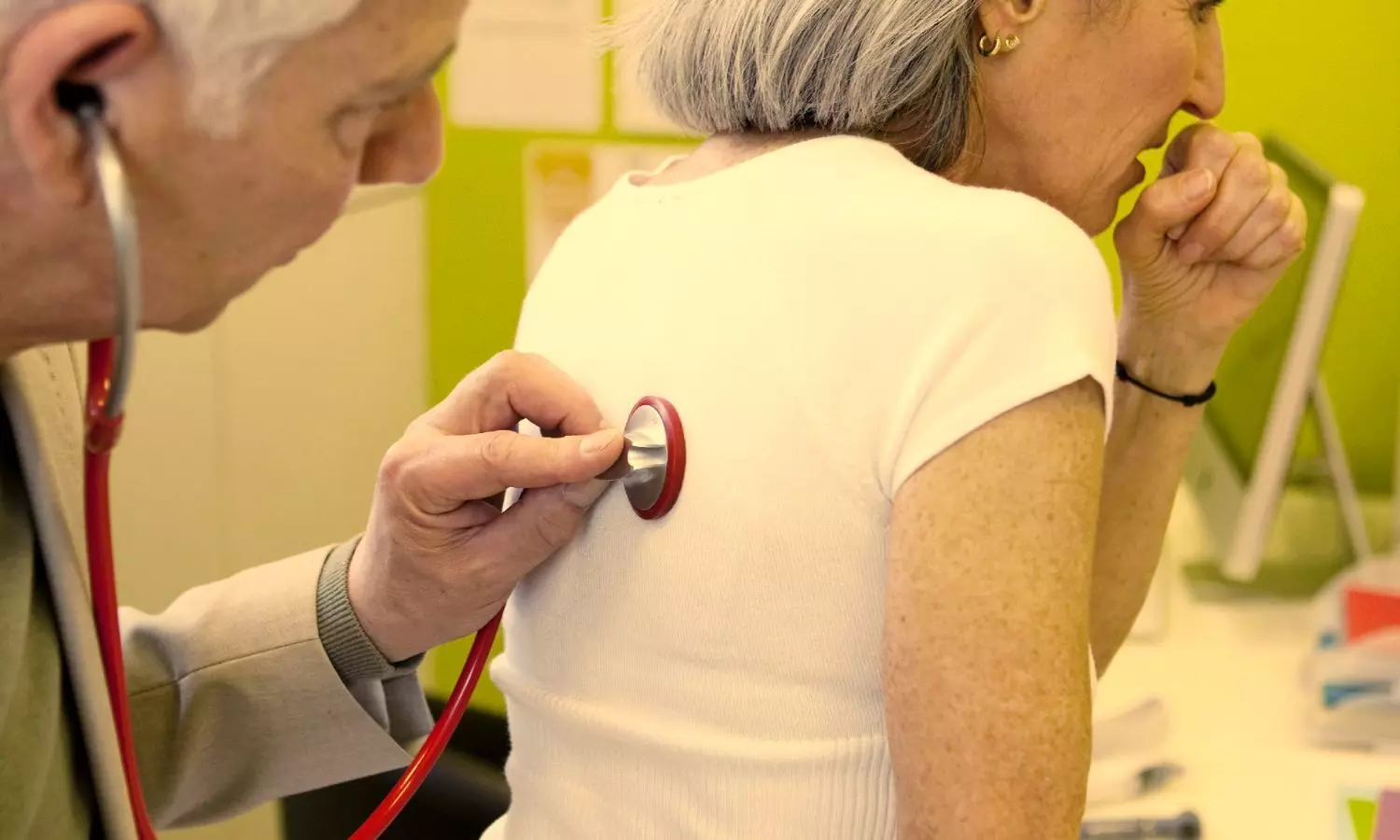


A new study published in the Canadian Respiratory Journal showed that in patients experiencing acute exacerbations of COPD (AECOPD), the addition of thermal therapy to high-frequency chest wall oscillation (HFCWO) led to notable enhancements in respiratory symptoms, arterial oxygen levels, and sputum elimination when contrasted with just HFCWO or usual care.
Episodes of severe worsening in chronic obstructive pulmonary disease (COPD) lead to considerable illness despite usual drug therapy. HFCWO improves the removal of mucus from the airways, whereas short-wave diathermy (SWD) could decrease sputum thickness and enhance the movement of mucus. Combining these two treatments could offer additional advantages. In this randomized study, the effectiveness of combining SWD and HFCWO versus using HFCWO alone and standard care is being assessed to enhance symptoms, lung function, and the clearance of mucus during acute exacerbations of COPD.
In a single-center trial, 89 patients with AECOPD were randomly divided into three groups: one receiving routine care alone (control group), another receiving routine care plus HFCWO (HFCWO group), and the third receiving routine care plus SWD and HFCWO combined (combined group) for 72 hours.
Primary and secondary outcomes were evaluated at the beginning and after 72 hours of treatment, with comparisons made within and between the groups. Primary outcomes consisted of alterations in CAT and BCSS scores, while secondary outcomes included lung function measures (FEV1, FVC, and FEV1/FVC), blood gas levels (PaO2 and PaCO2), markers of inflammation (IL-6, CRP, and WBC count), and sputum characteristics (volume, cell count, and differential counts).
Following the 72-hour intervention, the group receiving the combined therapy showed notably more substantial decreases in CAT and BCSS scores in comparison to both the HFCWO group and the control group (p < 0.05).
The combined therapy also outperformed in enhancing arterial blood gas measures (PaO2 and PaCO2) and sputum clearance indicators (24-hour sputum quantity and percentages of neutrophils and eosinophils) when contrasted with HFCWO alone or standard treatment.
However, there were no significant variances found in lung function parameters (FEV1 and FVC) or levels of inflammatory markers (IL-6, CRP, and WBC).
Overall, a combination of SWD and HFCWO resulted in more significant enhancements in respiratory symptoms, blood gas levels, and sputum removal compared to just HFCWO or standard care for patients with AECOPD who were hospitalized.
Source:
Li, Q., Sun, J., Ying, L., & Ying, Z. (2026). Adjunctive short-wave diathermy to high-frequency chest wall oscillation for acute exacerbation of COPD: A randomized controlled trial. Canadian Respiratory Journal: Journal of the Canadian Thoracic Society, 2026(1), e6813132. https://doi.org/10.1155/carj/6813132