Prone Positioning Fails to Reduce Ventilation Need in Infants With Bronchiolitis: JAMA
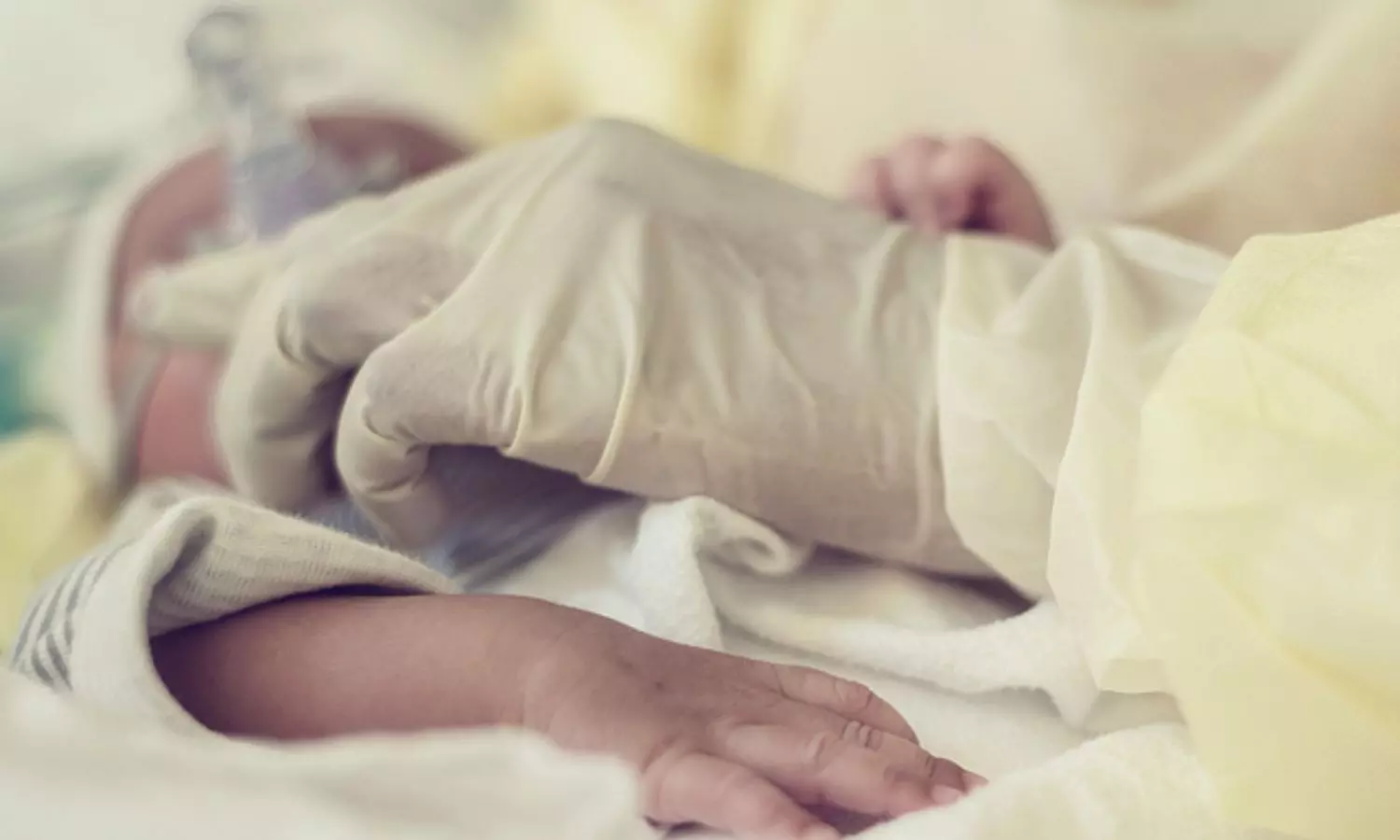


A new study published in the Journal of American Medical Association showed that the prone (face-down) posture did not significantly lower the chance of transitioning to positive-pressure breathing in babies undergoing high-flow nasal cannula oxygen treatment for bronchiolitis.
Although prone posture has been demonstrated to enhance oxygenation and respiratory mechanics, its therapeutic value in babies with acute viral bronchiolitis receiving high-flow nasal cannula (HFNC) assistance is still uncertain. Thus, this study determined if prone posture lowers the escalation to noninvasive or invasive ventilation in babies with moderate to severe acute bronchiolitis with HFNC support.
15 pediatric intermediate or intensive care units in France participated in this study. Between January 2021 and November 2023, infants 6 months of age or younger who were admitted for 24 hours or less and diagnosed with acute bronchiolitis with moderate to severe respiratory distress requiring HFNC support were enrolled. They were monitored until their hospital discharge (the last patient was discharged on December 11, 2023). Participants were randomized to either the supine posture (n = 230) or the prone position (n = 221). During the first 48 hours, infants in the prone position group were placed in a prone posture for at least 24 hours. Standardized HFNC support at 2 L/kg/min was given to each participant.
The main result was that, in accordance with predetermined criteria, treatment had to be escalated to either invasive or noninvasive ventilation within the first 72 hours. Treatment failure, as assessed by an impartial clinical adjudication committee, prone positional tolerance, hospital stay duration, respiratory support duration, newborn comfort, and adverse events were examples of secondary outcomes.
446 of the 451 randomly assigned newborns (median age, 41 [IQR, 19-72] days; 54% male) were included in the primary analysis. 80 babies (17.9%) had escalation of care; there was no significant difference between the prone position (33/220 [15.0%]) and supine position (47/226 [20.8%]) groups (adjusted odds ratio, 0.66 [95% CI, 0.40-1.07]; P =.09).
According to the safety analysis, two out of 180 babies (1.1%) in the prone position group and two out of 264 (0.8%) in the supine position group experienced major adverse events. Overall, a statistically meaningful advantage of prone posture in babies with moderate to severe bronchiolitis receiving HFNC was not seen in this large randomized clinical study. More research should be done on the use of prone posture in babies with mild to severe bronchiolitis.
Source:
Baudin, F., Pouyau, R., Subtil, F., Jarrasse, C., Tochon, M., Afanetti, M., Milési, C., Piloquet, J.-E., Mortamet, G., Nallet Amate, M., Launay, V., Cour Andlauer, F., Roche, S., Levy, M., Rambaud, J., Portefaix, A., Javouhey, E., PROPOSITIS Investigators, Brossier, D., … Wiedemann, A. (2026). Prone positioning in infants with acute bronchiolitis: The PROPOSITIS randomized clinical trial. The Journal of the American Medical Association. https://doi.org/10.1001/jama.2026.11078