
Researchers explore potential link between COVID-19 and lung cancer risk: Study
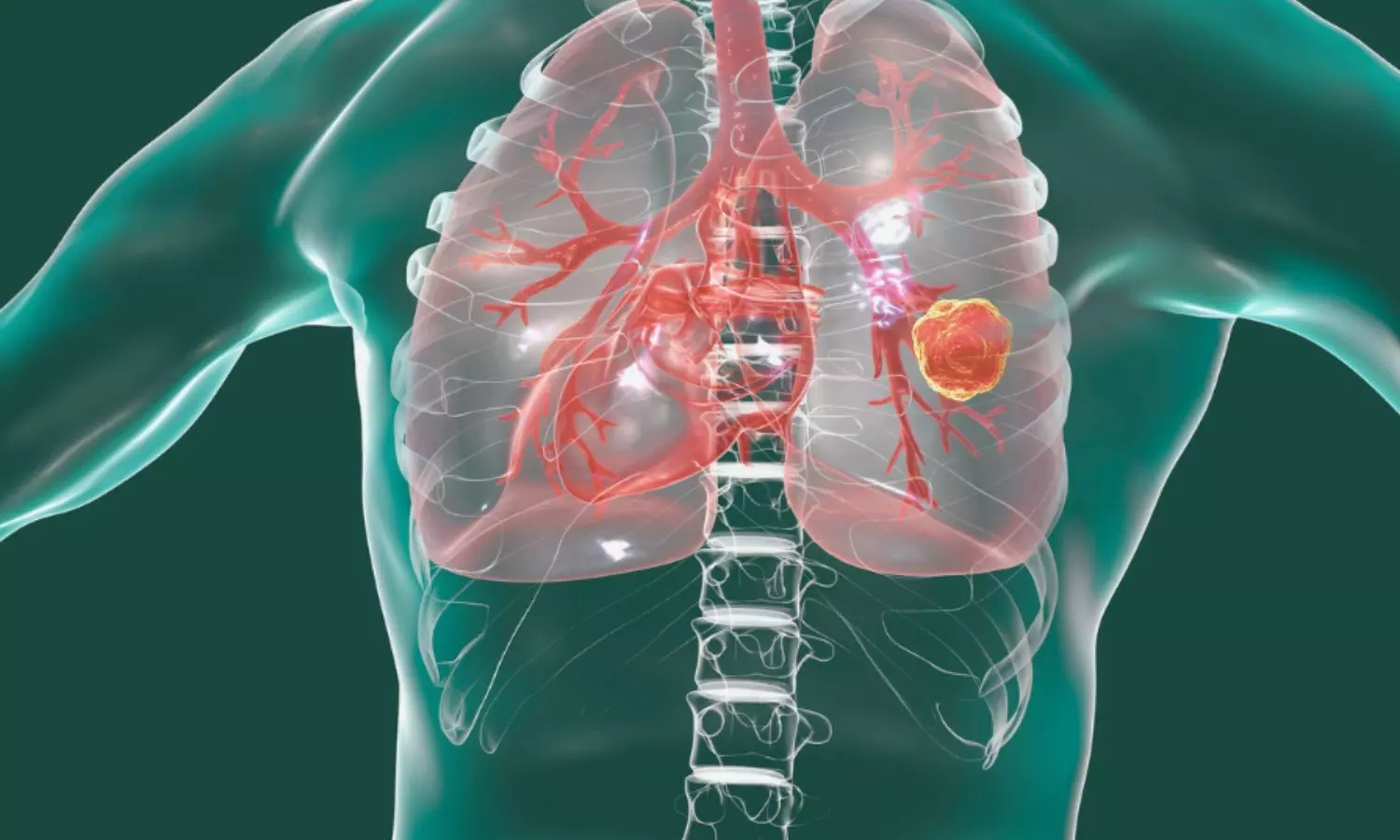


New findings from researchers at the Marshall University Joan C. Edwards School of Medicine and The Hebrew University of Jerusalem have identified a potential association between COVID-19 and increased lung cancer risk, driven by underlying biological mechanisms in the lung.
The study, published in Frontiers in Immunology, integrates human clinical data with mechanistic research in animal and cellular models to better understand how SARS-CoV-2, the virus that causes COVID-19, may contribute to long-term lung disease.
“Our findings suggest that COVID-19 may do more than cause acute illness-it may also create biological conditions in the lung that could contribute to increased cancer risk over time,” said Wei Li, Ph.D., professor of biomedical sciences at the Joan C. Edwards School of Medicine and co-corresponding author on the study. “Understanding these pathways is critical as we continue to study the long-term health impacts of the virus.”
The study identified a key role for thymidine phosphorylase (TYMP), a protein that may interact with the SARS-CoV-2 spike protein to promote inflammation, fibrosis and tumor-related pathways in the lung. Researchers found that this interaction may activate processes associated with cancer growth and alter the lung’s immune environment in ways that could support tumor formation.
Using a large clinical dataset from the TriNetX Research Network, the research team also observed a higher incidence of lung cancer among patients with a history of COVID-19, particularly among current and former smokers. The authors note that additional research is needed to better understand this relationship and its long-term implications.
Cayleigh Wallace of Marshall University and Alex Gileles-Hillel, M.D., of Hebrew University and Hadassah Medical Center served as co-first authors on the study. Li and Hong Yue, Ph.D. of Marshall University served as co-corresponding authors. This work supports a pending NIH R03 grant application led by Yue, with David Gozal, M.D., M.B.A., Ph.D. (Hon) of Marshall University serving as a consultant.
“The collaboration between basic and translational scientists and clinicians enabled the identification of mechanisms underlying epidemiological evidence linking COVID-19 infection to the potential increased risk of lung cancer,” said Gozal, who serves as vice president for health affairs and dean of the Joan C. Edwards School of Medicine at Marshall University. “This is exactly the type of research the School of Medicine aims to expand in the coming years.”
The findings provide a foundation for future studies focused on understanding long-term cancer risk and identifying potential targets for prevention and treatment.
Reference:
Wallace C, Gileles-Hillel A, Cox A, Gozal D, Li W and Yue H (2026) Thymidine phosphorylase promotes SARS-CoV-2 spike protein-driven lung tumor development. Front. Immunol. 17:1798566. doi: 10.3389/fimmu.2026.1798566
