Prone Positioning Improves Oxygenation in Postoperative ARDS After Cardiac Surgery: Study
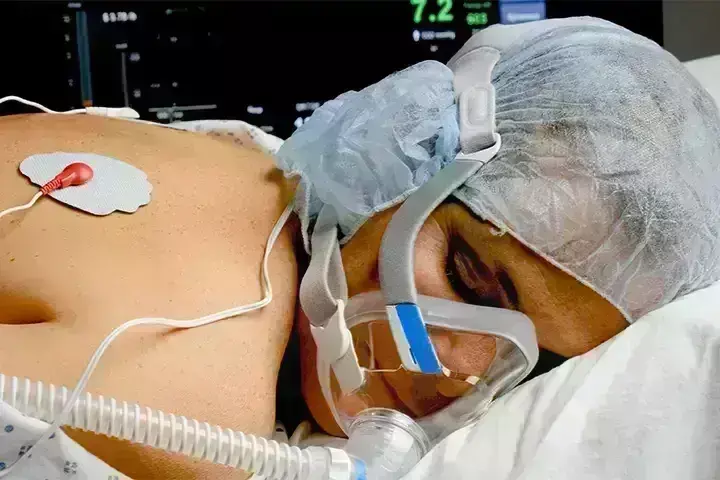


A new study published in the Journal of Cardiothoracic and Vascular Anesthesia showed that placing patients in the prone position (PP) after a median sternotomy is secure and notably enhances oxygen levels without raising sternal problems.
The patients who undergo cardiac surgery may experience respiratory issues after the operation caused by anesthesia, mechanical ventilation, and limited lung expansion. Placing patients in a prone position could enhance oxygen levels and respiratory function. This study assessed the safety of prone positioning and its impact on breathing and heart function in patients with significant respiratory problems following cardiac surgery involving a median sternotomy.
38 adult patients in a row who had undergone prone positioning (PP) for sudden breathing difficulties within a month of having heart surgery through median sternotomy were included in the study from 2004 to 2024. The patients underwent structured PP sessions while deeply sedated, with muscle relaxants, and advanced monitoring of their blood circulation. The typical PP session lasted for 24 hours on average (with a range of 16 to 26 hours); nearly half of the participants (47.4%) had their first session within five days after their heart surgery.
The main goal was to assess complications related to prone positioning, such as mediastinitis and sternal dehiscence. Other goals included evaluating gas exchange, vasoactive medication needs, and mortality during the hospital stay. Mediastinitis was seen in one patient (2.6%), which was similar to patients not placed in the prone position.
Oxygen levels significantly improved with PP, as shown by the increase in the PaO₂/FiO₂ ratio from 82.8 ± 26.1 mmHg initially to 177.5 ± 68.9 mmHg after 4 hours in the prone position, and to 175.0 ± 70.8 mmHg at the end of the maneuver (both P < 0.001). There were no notable negative effects on blood circulation or an increase in the need for vasoactive support.
The overall mortality rate was 44.7%. Older age (≥75 years) and high baseline levels of carbon dioxide in the blood (PaCO₂ ≥50 mmHg) were identified as factors independently associated with mortality.
Overall, the use of prone positioning in patients who underwent a recent median sternotomy was found to be safe and resulted in a significant enhancement in oxygen levels without raising the risk of sternal complications. These results suggest that the implementation of PP could be beneficial for specific individuals experiencing moderate to severe acute respiratory distress syndrome (ARDS) after cardiac surgery.
Source:
Prieto-Cabrera, A., Palazón-Blanco, A., Janeiro-Lumbreras, D., Morales-Sorribas, E., Cantor-García, A. V., Martín-Benítez, J. C., & Martínez-Sagasti, F. (2026). Safety and outcomes of prone positioning in the early postoperative period following cardiac surgery. Journal of Cardiothoracic and Vascular Anesthesia. https://doi.org/10.1053/j.jvca.2026.10.007