Distinct Facial Types Dictate Orthodontic Planning, Suggests Study


A recent cross-sectional study published in the Indian Journal of Dental Sciences in July 2026 reveals how distinct facial shapes dictate orthodontic planning, showing that long-faced individuals exhibit greater vertical growth and steeper incisor proclination (IMPA 100.88° vs. 98.00°). In contrast, broad-faced subjects display horizontal growth tendencies with flatter, more restrained soft-tissue profiles.
While classic cephalometric analyses by pioneers such as Downs, Steiner, and Burstone established essential diagnostic baselines, their reliance on homogeneous Caucasian samples created a critical clinical gap by overlooking ethnic and phenotypic variability. To address this diagnostic limitation, Dr. Amit Nilgar and Dr. Kanhoba Keluskar from the Department of Orthodontics and Dentofacial Orthopaedics at KLE VK Institute of Dental Sciences, Belagavi, conducted research to establish facial-type-specific cephalometric norms using the Morphological Facial Index and evaluate sex-specific relationships among skeletal, dental, and soft-tissue parameters in young Indian adults.
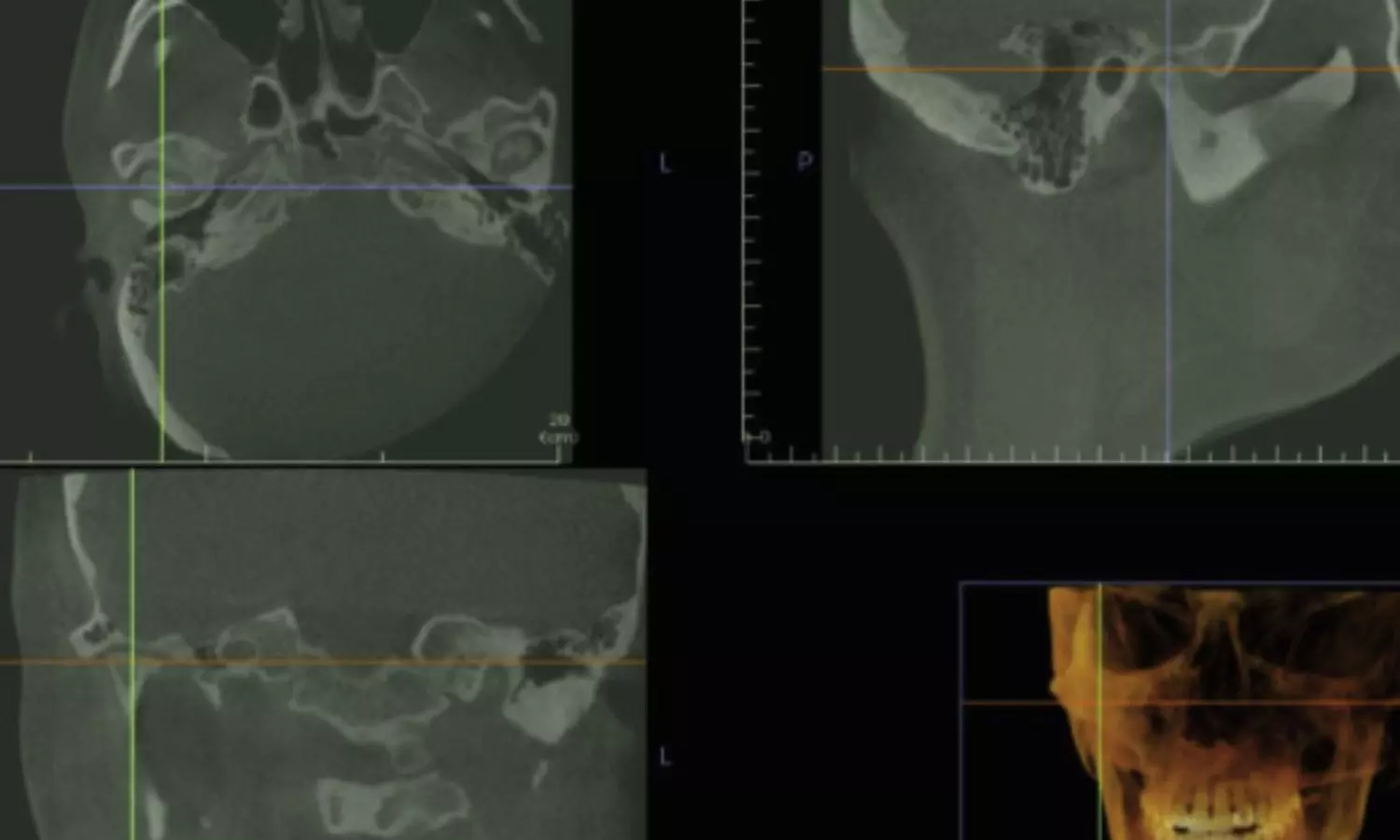
Therefore, the cross-sectional study categorized 396 untreated young adults with Class I occlusion into three facial phenotypes using standardized anthropometry and digital cephalometrics. After excluding individuals with prior treatment or craniofacial anomalies, statistical modeling established phenotype-specific norms and primary predictors of soft-tissue outcomes.
Key Clinical Findings of the Study Includes:
- Soft-Tissue Profile Divergence: Study-wise, leptoprosopic females demonstrated significantly reduced nasolabial angles (103.74° ± 11.78°) and increased upper lip thickness (3.48 ± 1.10 mm) compared to euryprosopic females (111.28° ± 10.17° and 2.62 ± 1.12 mm, respectively; p < 0.001).
- Vertical Skeletal Variations: Investigators noted that leptoprosopic males exhibited a hyperdivergent growth pattern with significantly higher Sella-Nasion to Gonion-Gnathion angles (29.01° ± 4.64°) and anterior facial height (113.70 ± 6.63 mm) than euryprosopic males (22.68° ± 6.42° and 106.84 ± 7.10 mm; p ≤ 0.001).
- Dentoalveolar Compensation Mechanics: Researchers observed greater incisor proclination in leptoprosopic females, characterized by higher upper central incisor-to-nasion-point linear distance (7.40 ± 2.48 mm vs 6.42 ± 2.53 mm in euryprosopic females; p = 0.013) to compensate for vertical discrepancies.
- Predictors of Facial Convexity: Analysis identified the A Point-Nasion-B Point angle as the primary independent predictor of soft-tissue facial convexity, explaining 45% of variance in females (β = 0.41, p < 0.001) and 49% in males (β = 0.44, p < 0.001).
- Determinants of Lip Position: Findings revealed that upper lip position relative to the E-plane was predominantly dictated by Upper Central Incisor to Nasion-A Point position in both females (β = 0.37, p < 0.001) and males (β = 0.33, p < 0.001).
The results suggest that morphological facial types present distinct cephalometric characteristics, with leptoprosopic individuals exhibiting reduced interincisal angles (110.33° ± 8.83° in females; 110.71° ± 16.39° in males) and increased lower lip protrusion relative to the E-plane compared to euryprosopic subjects (116.67° ± 10.72° and 119.33° ± 16.48°, respectively). Consequently, facial divergence fundamentally shapes soft-tissue aesthetics and dental positions across both sexes.
Integrating morphological facial index categorization and sex-specific multivariable models into routine orthodontic diagnostics can optimize treatment mechanics, prevent unwanted profile overcorrection, and enhance aesthetic outcomes for diverse patient populations.
While the single-center cross-sectional design focused on a North Karnataka cohort limits immediate geographic generalizability, undertaking future multi-center longitudinal evaluations across diverse regional populations will refine these phenotype-specific diagnostic benchmarks.
Reference
Nilgar A, Keluskar K. Composite cephalometric analysis according to facial types among orthodontic patients in north Karnataka. Indian J Dent Sci 2026;18:175-83.